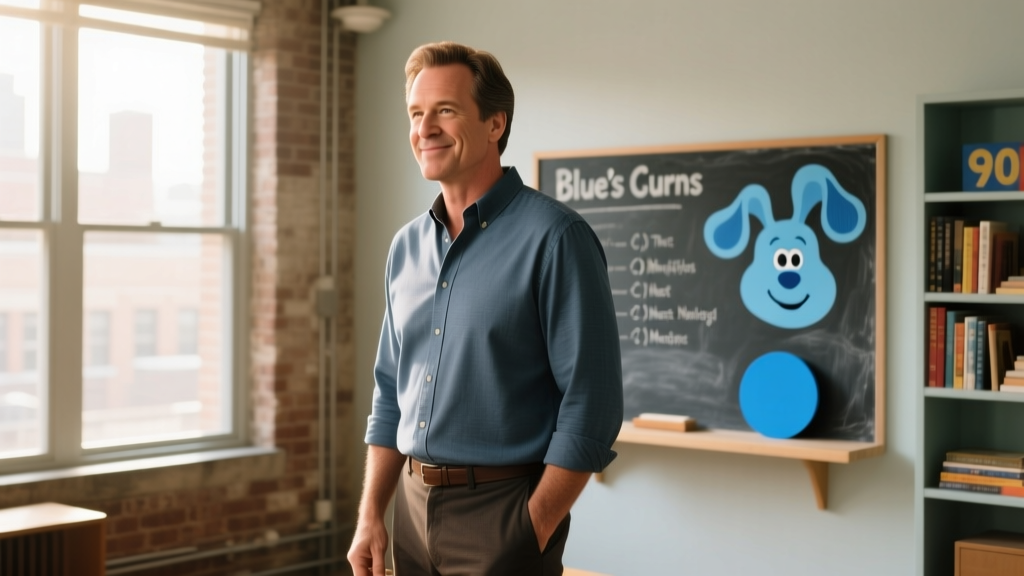
When you think of viral social media comebacks, you might picture pop stars or controversial influencers. But the undisputed king of the modern digital resurgence is Steve Burns. In September 2021, the original host of Nickelodeon’s Blue’s Clues posted a simple, direct-to-camera video asking his former preschool audience, 'Hey, remember me?' The internet exploded. But beyond the viral tears and nostalgia, Burns executed a masterclass in personal branding and bio optimization. This moment wasn't just a fleeting meme; it signaled a massive shift in the current landscape of creator economy trends, proving that radical sincerity and legacy nostalgia outperform hyper-curated aesthetics.
Quick Facts: The Man Behind the Green Striped Shirt
| Attribute | Details |
|---|---|
| Full Name | Steven Michael Burns |
| Born | October 9, 1973 (Quakertown, Pennsylvania) |
| Nationality | American |
| Known For | Original host of Blue's Clues, Indie Musician |
| Primary Social Handles | @steveburns (TikTok, Instagram, YouTube) |
| Notable Discography | Songs for Dustmites (2003), Foreverywhere (2009) |
The Current Landscape: Steve Burns and the Nostalgia Economy
In the current social media landscape, 'Millennial Nostalgia' is a highly monetized commodity. Brands constantly attempt to resurrect 90s and early 2000s pop culture to capture the attention of adults with disposable income. However, the trend report on modern personal branding shows that audiences are highly sensitive to corporate cash-grabs. They crave authenticity, vulnerability, and parasocial intimacy.
This is where the Steve Burns strategy becomes a vital case study. Rather than leveraging his past purely to sell merchandise or promote a new corporate gig, Burns utilized platforms like TikTok and YouTube to offer a 'parasocial check-in.' He acknowledged the passage of time, spoke directly to the mental health struggles of growing up, and validated the life experiences of his audience. According to a 2021 feature in The New York Times, his viral video resonated precisely because it bypassed the traditional PR filter. In an era of highly produced TikTok transitions and AI-generated content, a man sitting on the floor in a striped shirt, speaking softly to the camera, became a disruptive act of radical sincerity. For personal branding, this highlights a massive current trend: the shift from 'aspirational' profiles to 'relational' profiles.
Social Media Presence: Analyzing the Steve Burns Bio and Strategy
If you visit the social media profiles of Steve Burns today, you will notice a stark contrast to the typical influencer playbook. His TikTok and Instagram handles (@steveburns) boast millions of followers, yet his bio architecture is remarkably minimalist.
Instead of a cluttered Linktree filled with affiliate codes, podcast promos, and brand partnerships, his bio often features a simple, warm greeting or a direct link to his music and charitable endeavors. This bio choice is intentional. It reinforces his core brand archetype: The Caregiver and The Old Friend. By keeping his bio uncluttered, he reduces the cognitive load on his audience, making his profile feel like a safe, quiet space rather than a digital billboard.
His posting cadence is equally unconventional. Burns does not adhere to the 'post three times a day' algorithm-chasing strategy. He posts sporadically, often treating his social channels like a digital time capsule or a personal video diary. When he does post, the engagement metrics are staggering because his audience knows the content will be substantive and emotionally resonant. He frequently uses the 'reply to comment' feature on TikTok not to drive algorithmic reach, but to offer genuine, personalized advice to users struggling with anxiety, career changes, or heartbreak. This transforms his comment section into a community support group, a highly sought-after metric for modern community managers and brand strategists.
Career Evolution: From Children’s Television to Indie Music
To truly understand his personal brand, one must look beyond television. When Steve Burns left Blue's Clues in 2002, famously telling his audience he was 'going to college,' he didn't just disappear; he pivoted to indie rock. In 2003, he released Songs for Dustmites on PIAS Recordings. The album was produced by Dave Fridmann (The Flaming Lips, MGMT) and featured Steven Drozd on drums. As noted in retrospective reviews by music critics at Pitchfork, the album was a legitimate, psychedelic-tinged indie rock record that showcased his serious musical chops.
This career pivot is a crucial element of his current branding. It proves he is a multidimensional artist, not just a children's entertainer trapped in a nostalgic loop. When he references his music on his social channels today, it bridges the gap between his legacy audience and new listeners who appreciate his artistic depth. It gives his personal brand a layer of credibility and artistic integrity that elevates him above standard 'former child stars.'
Personal Branding Takeaways for Your Own Profile
What can creators, professionals, and everyday users learn from the Steve Burns digital renaissance? Here are the core personal branding takeaways you can apply to your own social media bios and profiles:
1. Embrace Your History (Don't Hide Your Past)
Many professionals try to scrub their early, less polished work from their digital footprint to appear more 'serious.' Burns leans entirely into his legacy. He wears the green striped shirt ironically and affectionately. The Takeaway: Use your bio to acknowledge your journey. If you started in one industry and pivoted to another, weave that narrative into your bio. Authenticity about your past builds trust in your present.
2. Practice Bio Minimalism
The Steve Burns bio is a masterclass in restraint. He doesn't use 15 different emojis or demand you 'SMASH that subscribe button.' The Takeaway: Audit your current Instagram or TikTok bio. Remove the aggressive calls-to-action and clutter. Opt for a warm, concise statement of who you are and what you value. A simple, confident bio signals that you don't need to try too hard to earn the audience's respect.
3. Cultivate Parasocial Intimacy Over Virality
Burns uses his platform to check in on his audience's mental health and life milestones. He treats his followers like old friends rather than metrics. The Takeaway: Shift your content strategy from 'broadcasting' to 'conversing.' Use your stories, captions, and bio links to ask genuine questions and foster a community. People follow accounts for content, but they stay for connection.
4. Diversify Your Creative Identity
Because Burns pursued his passion for indie music, he avoided being permanently boxed into a single demographic. The Takeaway: Use your social media to highlight your multifaceted interests. If you are an accountant who paints, or a software engineer who bakes, let those secondary passions breathe in your content and bio. It makes you memorable in a sea of one-dimensional industry profiles.
Ultimately, the trend report on Steve Burns proves that the most powerful personal brand you can build is one rooted in genuine care, artistic evolution, and the courage to simply ask your audience, 'How are you doing?'
Sources:
1. The New York Times: "Steve From ‘Blue’s Clues’ Checks In on the Kids" (September 2021).
2. Pitchfork Media: Album Review and retrospective coverage of 'Songs for Dustmites' (2003).
3. Nickelodeon Official Press Releases: Blue's Clues 25th Anniversary Campaign Materials (2021).