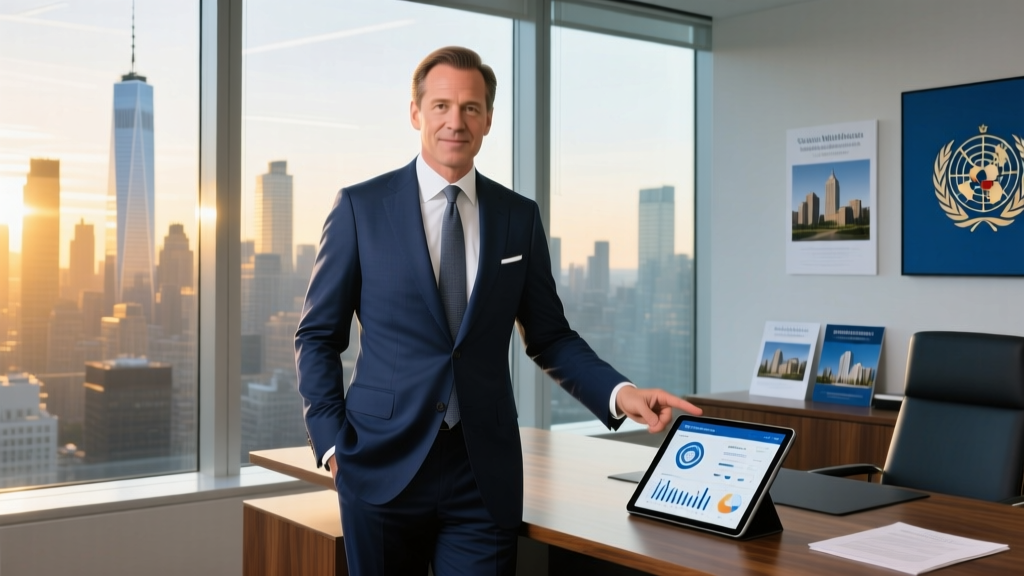
When analyzing the personal brands of billionaires and political appointees, few trajectories are as fascinating as that of Steve Witkoff. Unlike modern influencers who build their empires on viral short-form videos or curated lifestyle grids, Witkoff’s origin story is rooted in the gritty, high-stakes world of New York City commercial real estate. Today, as the founder of the Witkoff Group and a prominent geopolitical envoy, his approach to public perception offers a masterclass in elite, high-net-worth personal branding. For professionals looking to elevate their own digital presence, understanding how he leverages institutional prestige over personal social media clout provides invaluable, actionable lessons.
The Origin Story: How Steve Witkoff Built an Empire
To understand the personal brand of a titan, you must first look at their foundation. Born on Long Island in 1957, Witkoff did not inherit a real estate empire; he built one through sheer grit and market intuition. After graduating from Hofstra University, he entered the New York real estate market in the early 1980s. He co-founded Stellar Management, focusing on residential properties in the Bronx and Queens. This era was defined by unglamorous, boots-on-the-ground property management and the acquisition of distressed assets.
The true test of his brand’s foundational resilience came during the devastating New York real estate crash of the early 1990s. While many developers went bankrupt, Witkoff and his partners survived by aggressively managing their portfolio and restructuring debt. This period forged a reputation for financial prudence and crisis management—traits that would later become the bedrock of his personal brand among institutional investors.
In 2003, he founded the Witkoff Group, pivoting from residential management to high-end commercial development and luxury hospitality. His portfolio soon included iconic, complex projects like the residential conversion of the historic Woolworth Building in Manhattan, the development of 1 Hotel South Beach, and the massive Fontainebleau Las Vegas. Witkoff’s origin story is not just about accumulating wealth; it is a narrative of evolving from a neighborhood landlord to a curator of global luxury and a trusted steward of billions in sovereign and institutional capital.
| Attribute | Details |
|---|---|
| Full Name | Steven Charles Witkoff |
| Born | March 1, 1957 (Long Island, New York) |
| Nationality | American |
| Known For | Founder of Witkoff Group, U.S. Special Envoy to the Middle East |
| Primary Corporate Handle | @witkoffgroup (Instagram/LinkedIn) |
| Brand Archetype | The Ruler / The Sage |
The Witkoff Group: Institutional Branding Over Personal Clout
For high-net-worth individuals (HNWIs) and top-tier executives, the line between personal brand and corporate identity is often intentionally blurred. Witkoff employs a strategy where his company, the Witkoff Group, acts as his primary public avatar. If you want to see his 'bio,' you do not look at a personal Instagram account; you look at his corporate portfolio.
The Witkoff Group’s social media channels and press releases serve as a highly curated extension of his personal reputation. The content is dominated by high-resolution architectural photography, behind-the-scenes development milestones, and ribbon-cutting ceremonies alongside mayors, governors, and global business leaders. This strategy achieves two things: it showcases his capability to execute massive, complex projects, and it associates his personal name with institutional-grade reliability. By letting the corporate entity absorb the public-facing marketing burden, Witkoff maintains an aura of exclusivity and seriousness that is often diluted when executives try to become 'personal brands' in the traditional, influencer sense.
Steve Witkoff on Social Media: The Power of Strategic Silence
Search for Steve Witkoff on Instagram, X (formerly Twitter), or TikTok, and you will notice a glaring omission: there is no verified, highly active personal account broadcasting his daily life, meals, or personal opinions. In an era where business leaders are told they must 'post daily to stay relevant,' Witkoff’s approach is a masterclass in strategic silence.
In the upper echelons of global finance, real estate, and diplomacy, oversharing is a massive liability. A poorly timed tweet, a controversial political opinion, or a casual Instagram story can derail months of delicate negotiations with sovereign wealth funds or foreign governments. Witkoff’s target audience is not the general public; it is institutional investors, family offices, and heads of state. These stakeholders do not care about his morning routine; they care about his yield on investment, his discretion, and his ability to close deals.
His digital footprint is characterized by strategic silence. He allows his achievements to be documented by tier-one financial media outlets like Bloomberg, Forbes, and The Wall Street Journal, rather than self-publishing his accolades. This creates a brand built on third-party validation and mystique, which is infinitely more valuable in high-stakes deal-making than a high follower count.
The Diplomatic Pivot: Branding for the Global Stage
In late 2024, Witkoff’s personal brand underwent a massive paradigm shift when he was appointed as the U.S. Special Envoy to the Middle East. How does the personal brand of a Manhattan real estate developer translate to the geopolitical stage? The answer lies in the universal currency of his brand: Trust Capital.
Throughout his real estate career, Witkoff built a reputation as a pragmatic dealmaker who could navigate complex, multi-party negotiations involving entrenched bureaucracies, wealthy stakeholders, and intense public scrutiny. These are the exact same skills required in international diplomacy. His brand did not need to be 'repackaged' for the political sphere; it simply needed to be redirected. His history of discretion, his established relationships with global power brokers, and his reputation for executing the 'impossible deal' made his transition to diplomacy a natural evolution of his personal brand narrative.
Personal Branding Takeaways for High-Level Professionals
While most lovemebio.com readers may not be negotiating billion-dollar Las Vegas resorts or Middle Eastern peace treaties, the core tenets of Witkoff’s branding strategy can be adapted for any professional looking to elevate their career and digital presence.
1. Let Your Portfolio Be Your Bio
Instead of writing a lengthy, boastful summary on your LinkedIn or personal website, let your work speak for itself. Create a digital portfolio, a case-study page, or a dedicated company profile that highlights the tangible results you have delivered. High-level clients and employers hire based on proven execution, not clever social media captions.
2. Master the Art of Strategic Silence
You do not need to post every thought, meal, or minor career update online. Curate your digital footprint. By posting less frequently but with higher quality and relevance, you train your network to pay attention when you do speak. Silence projects confidence; oversharing projects insecurity.
3. Leverage Institutional Authority
If you are a founder or an executive, invest heavily in your company’s branding. A strong, professional corporate LinkedIn page or Instagram account reflects directly on you. When potential partners research you, they will look at the entity you lead. Ensure your corporate branding is as polished as your personal resume.
4. Cultivate Trust Capital Over Follower Count
Stop chasing vanity metrics. A network of 500 highly relevant industry peers, investors, and decision-makers is vastly more valuable than 50,000 random followers. Focus your networking and digital engagement on building deep, trust-based relationships within your specific niche. Witkoff’s power comes from his Rolodex, not his follower count.
Sources & Further Reading:
Witkoff Group Corporate Profile
Forbes Real Estate & Billionaire Coverage
Bloomberg Real Estate & Geopolitical Reporting