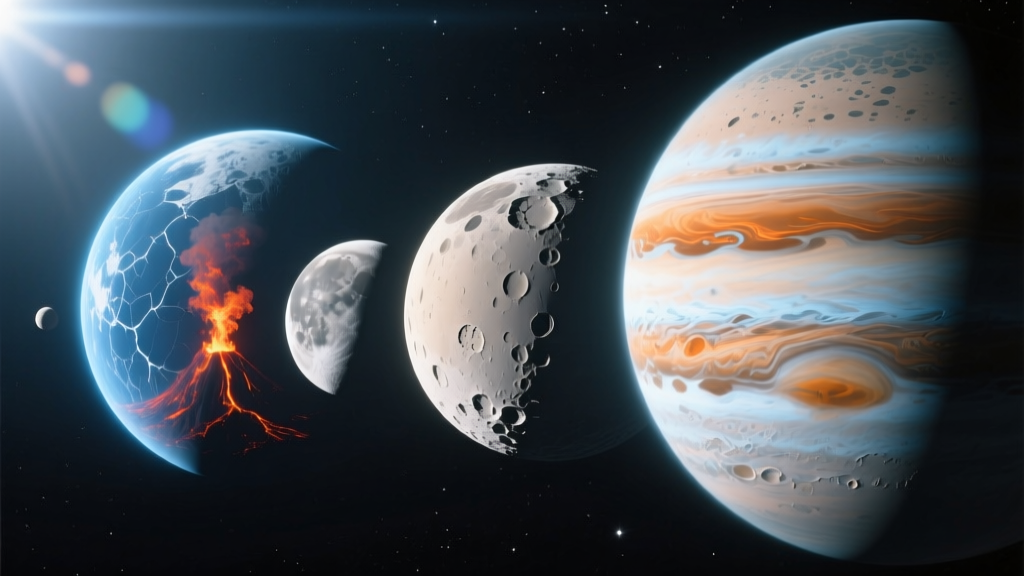
When we analyze iconic personal brands, we typically look toward Hollywood actors, chart-topping musicians, or tech visionaries. However, some of the most enduring and recognizable 'influencers' in history are not human at all. First observed in 1610, the Jupiter Moons completely revolutionized our understanding of the universe. More than just celestial bodies, the Galilean moons represent a masterclass in origin stories, archetypal branding, and visual identity. At lovemebio.com, we study how entities present themselves to the world. Today, we are analyzing the history, origin story, and modern social media presence of the Jupiter Moons to uncover unique personal branding takeaways you can apply to your own Instagram bio and digital footprint.
The Origin Story: Galileo and the Celestial Rebrand
The origin story of the Jupiter Moons is inextricably linked to one of the greatest networking and branding pivots in scientific history. In January 1610, astronomer Galileo Galilei pointed his newly improved telescope at Jupiter and observed three distinct 'stars' aligned near the planet. Over the following weeks, he realized these bodies were orbiting Jupiter, not the Earth. This discovery shattered the geocentric model of the universe.
But Galileo was not just a scientist; he was a master of personal branding and patronage. Knowing he needed financial backing to continue his work, he branded these newly discovered moons as the Sidera Medicea (Medicean Stars), naming them in honor of Cosimo II de' Medici and his three brothers. By attaching the powerful Medici family name to a permanent celestial discovery, Galileo secured a lifetime stipend and the prestigious title of Chief Mathematician and Philosopher to the Grand Duke of Tuscany. This 17th-century maneuver is the ultimate historical equivalent of tagging a major brand or industry leader in your portfolio to secure a lucrative partnership.
Shortly after, astronomer Simon Marius claimed to have observed the moons around the same time. Marius rebranded them using mythological figures associated with the Roman god Jupiter: Io, Europa, Ganymede, and Callisto. While Galileo's political branding secured his immediate funding, Marius's mythological branding provided the timeless, archetypal narrative that stuck in the public consciousness for centuries.
Quick Facts: The Galilean Four
| Full Name | The Galilean Moons (Io, Europa, Ganymede, Callisto) |
|---|---|
| Discovered (Born) | January 7, 1610 (by Galileo Galilei) |
| Nationality (System) | Jovian System, Milky Way Galaxy |
| Known For | Orbiting Jupiter, Tidal Heating, Subsurface Oceans, Mythological Namesakes |
| Social Media Handles | Managed via @NASA (Instagram/X) and @ESA (Twitter/X) |
The Archetypes: Io, Europa, Ganymede, and Callisto
To understand how the Jupiter Moons are presented today, we must look at their distinct 'personalities.' Just as a band has distinct members or a film ensemble has specific character tropes, the four Galilean moons possess unique physical traits that space agencies leverage for storytelling.
Io: The Fiery Rebel. Io is the most volcanically active body in the solar system. Its surface is constantly reshaped by eruptions, painted in striking yellows, reds, and blacks. In branding terms, Io represents disruption, high energy, and unapologetic visibility. It doesn't blend in; it demands attention through constant activity.
Europa: The Mysterious Enigma. Europa is encased in a smooth, bright shell of water ice, hiding a vast subsurface ocean that scientists believe could harbor life. Europa's brand is built on intrigue, depth, and the unknown. It represents the 'quiet luxury' of the cosmos—minimalist on the outside, but holding profound secrets beneath the surface.
Ganymede: The Gentle Giant. Ganymede is the largest moon in our solar system, even bigger than the planet Mercury, and is the only moon known to generate its own magnetic field. Ganymede's archetype is the authoritative leader. It doesn't need to be the most colorful or the most mysterious; its sheer scale and magnetic presence command respect.
Callisto: The Ancient Historian. Callisto's surface is the most heavily cratered in the solar system, bearing the scars of billions of years of impacts without geological resurfacing. Callisto represents heritage, resilience, and storytelling through experience. Every crater is a testament to survival and history.
Social Media Presence: How NASA Manages the Jupiter Moons Brand
Because celestial bodies cannot manage their own Instagram accounts, their 'social media managers' are the public affairs teams at NASA and the European Space Agency (ESA). When analyzing the NASA Solar System Exploration archives and their official social channels, a clear pattern of archetype-driven content emerges.
On Instagram and X (formerly Twitter), NASA tailors its visual and tonal presentation to match the specific moon being featured. When highlighting Io, the imagery is heavily saturated, focusing on thermal hotspots and volcanic plumes, accompanied by captions that emphasize chaos, energy, and extreme environments. When the spotlight shifts to Europa, the visual palette cools into stark whites, deep blues, and high-contrast shadows of ice ridges. The captions adopt a tone of mystery and scientific anticipation, frequently teasing the upcoming Europa Clipper mission.
The ESA's JUICE (Jupiter Icy Moons Explorer) mission takes this branding a step further by creating distinct visual identities and mission patches that incorporate the mythological roots of the moons. By treating the moons not as dead rocks, but as dynamic characters in a cosmic drama, these agencies drive massive engagement. They use the 'Jupiter Moons' as a collective brand to advocate for funding, inspire STEM education, and maintain public fascination with deep-space exploration.
Personal Branding Takeaways for Your Own Bio
What can creators, entrepreneurs, and professionals learn from the history and social media management of the Jupiter Moons? Here are four actionable takeaways to elevate your lovemebio.com profile:
1. Find Your Archetype and Own It
Just as NASA categorizes the moons into distinct archetypes (The Rebel, The Enigma, The Giant, The Historian), you should distill your personal brand into a core archetype. Are you the disruptive innovator (Io) or the deep-thinking strategist (Europa)? Once you choose your archetype, ensure your Instagram bio, profile picture, and grid aesthetic all align with that specific energy. Do not mix signals; let your audience know exactly what 'moon' they are landing on.
2. The 'Medicean' Networking Strategy
Galileo didn't just discover the moons; he used them to align his personal brand with the most powerful family in Florence. In your own career, use your digital bio to highlight strategic alignments. Tagging mentors, featuring collaborations with established brands, or listing prestigious advisory boards in your bio acts as your modern-day Sidera Medicea, instantly elevating your perceived authority.
3. Leverage Mythological and Evocative Language
Simon Marius's decision to use mythological names transformed the moons from mere data points into legendary figures. When writing your bio, avoid dry, corporate jargon. Instead of saying 'I make videos about tech,' try 'Translating the future of tech for the everyday creator.' Evocative language creates a narrative hook that makes your profile memorable.
4. Visual Consistency is Non-Negotiable
NASA never uses a chaotic, fiery color palette when promoting the icy mysteries of Europa. Your social media grid and bio aesthetics must match your niche. If your brand is about minimalist productivity, your bio formatting and highlights should be clean and uncluttered. If your brand is high-energy fitness or streetwear, use bold emojis, high-contrast link-in-bio designs, and dynamic language. Match the visual temperature of your content.
The Jupiter Moons remind us that a powerful origin story, combined with distinct archetypal branding, can make an entity unforgettable for over four centuries. Apply these cosmic lessons to your own digital presence, and watch your personal brand achieve escape velocity.