
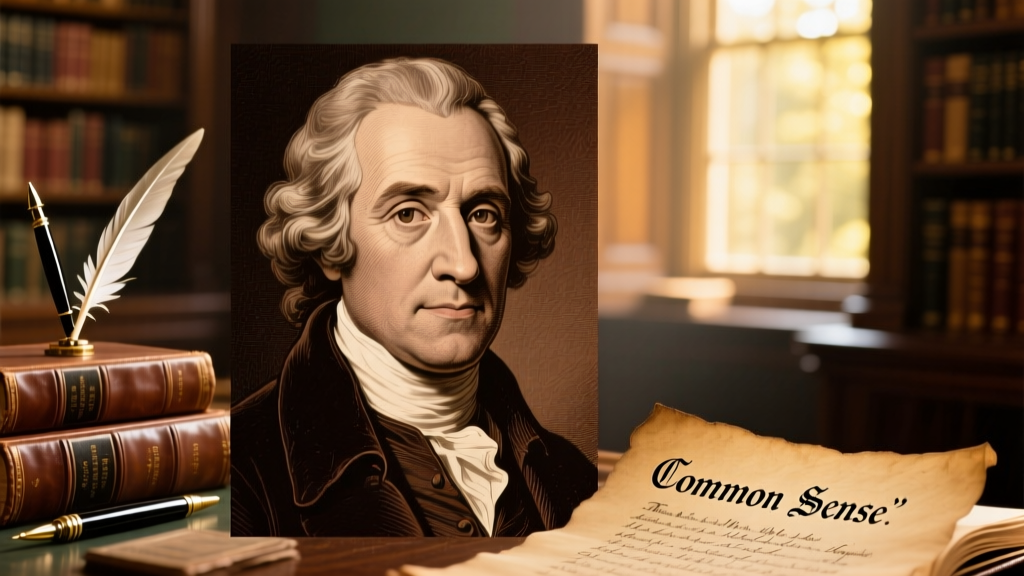
When you search for Thomas Paine, you are looking up one of the most influential political philosophers and pamphleteers in human history. But long before the advent of Instagram bios, TikTok hooks, and personal branding agencies, Paine was the ultimate master of the viral message. He didn't have a digital profile, yet his 'bio' was written through his actions, his controversial essays, and his unwavering commitment to universal human rights. In this comprehensive FAQ and misconception-busting guide, we explore the man behind the revolution, debunk persistent historical myths, and extract actionable personal branding lessons from the 18th century's most persuasive copywriter. Whether you are a history buff or a modern creator looking to sharpen your online presence, understanding how Paine built his legacy offers profound insights into the art of influential communication.
Quick Facts: The Original Revolutionary Bio
Let us start with the foundational data that would make up his historical profile if he were alive today.
| Full Name | Thomas Paine |
|---|---|
| Born | February 9, 1737 (Thetford, England) |
| Died | June 8, 1809 (New York City, USA) |
| Nationality | British-American (Honorary French Citizen) |
| Known For | Common Sense, The American Crisis, The Age of Reason |
| Modern Digital Footprint | Millions of quote shares; managed by historical societies and academic archives. |
Thomas Paine FAQ & Common Misconceptions
Because Paine was such a polarizing figure, his legacy is clouded by centuries of political spin. Let us clear the air with some historical facts.
Misconception: Thomas Paine was a staunch atheist.
Fact: This is one of the most persistent myths about his life. Paine was actually a Deist. In his highly controversial work, The Age of Reason, he explicitly stated his belief in a creator and the equality of all human beings, but he vehemently rejected supernatural elements, miracles, and the rigid dogmas of organized religion. He believed in a God of nature and science, not the vengeful deity often preached in 18th-century pulpits. For modern personal brands, this highlights the danger of being pigeonholed by critics who misunderstand your core philosophy.
Misconception: He was an American-born Founding Father.
Fact: Paine was born in Thetford, England, and lived there for nearly four decades. He did not arrive in the American colonies until 1774, at the age of 37, armed with little more than a letter of introduction from Benjamin Franklin. His brand was not built on native soil, but on the universal ideals of liberty that transcended borders.
Misconception: He died a celebrated, wealthy hero of the Revolution.
Fact: Tragically, Paine's later years were marked by poverty and ostracization. His critiques of organized religion and his opposition to the execution of Louis XVI during the French Revolution alienated many of his former allies. He died in 1809 in relative obscurity, with only a handful of attendees at his funeral. It took decades for his reputation to be fully rehabilitated by historians.
The Digital & Social Media Presence of a Historical Giant
How does an 18th-century philosopher have a 'social media presence' today? While Paine himself never held a smartphone, his digital footprint is massive, carefully curated by historical societies, academic institutions, and quote aggregators. Accounts managed by organizations like the Thomas Paine National Historical Association or the Thomas Paine Cottage Museum serve as his modern verified profiles. On platforms like Instagram and X, his brand is defined by high-contrast typography featuring his most biting quotes. His rhetoric was naturally optimized for social media: short, punchy, and emotionally resonant. Phrases like 'These are the times that try men's souls' generate millions of impressions. His modern digital presence proves that if your core message is strong enough, your audience will carry your brand forward for centuries, turning your historical 'bio' into an evergreen legacy.
Career Highlights: The Original Viral Campaigns
Paine's career can be viewed as a series of masterful, viral copywriting campaigns that shifted global politics.
- 1776: Common Sense. This pamphlet was the 18th-century equivalent of a viral manifesto. Written in plain language rather than academic jargon, it sold an estimated 500,000 copies in just a few months, effectively shifting public opinion toward independence.
- 1776-1783: The American Crisis. A series of papers designed to boost morale during the darkest days of the Revolutionary War. George Washington had the first essay read aloud to his troops to inspire them before crossing the Delaware.
- 1791: Rights of Man. A fierce defense of the French Revolution and a critique of the British government, which resulted in Paine being charged with seditious libel in England and forcing him to flee to France.
Personal Branding Takeaways for Your Own Bio
What can modern creators, entrepreneurs, and professionals learn from Thomas Paine when crafting their own social media bios and personal brands?
- Clarity Over Complexity: Paine didn't use ten-dollar words when a five-cent word would do. Your Instagram bio should instantly communicate who you are and what you do. Avoid industry jargon; speak directly to your audience's needs.
- The Power of a Defining Hook: The title Common Sense is a masterclass in positioning. It framed the complex argument for independence as an obvious, undeniable truth. Your bio needs a hook that frames your unique value proposition as the logical choice for your followers.
- Stand for a Clear Mission: Paine's brand was synonymous with universal human rights and anti-authoritarianism. He wasn't afraid to be polarizing. Today's most memorable personal brands aren't vanilla; they stand firmly for specific values. Use your bio to state your mission, not just your job title.
- Consistency in Voice: Whether writing for American rebels or French revolutionaries, Paine's voice remained urgent, accessible, and deeply empathetic to the working class. Ensure your tone remains consistent across your LinkedIn, X, and Instagram profiles.
Sources & Further Reading
To dive deeper into the historical realities of his life, we recommend consulting the Stanford Encyclopedia of Philosophy, the biographical archives at History.com, and the primary documents preserved by the Thomas Paine National Historical Association. Ultimately, Thomas Paine teaches us that true personal branding isn't about aesthetic perfection; it is about the relentless, courageous pursuit of truth and the ability to communicate that truth in a way that moves the masses.