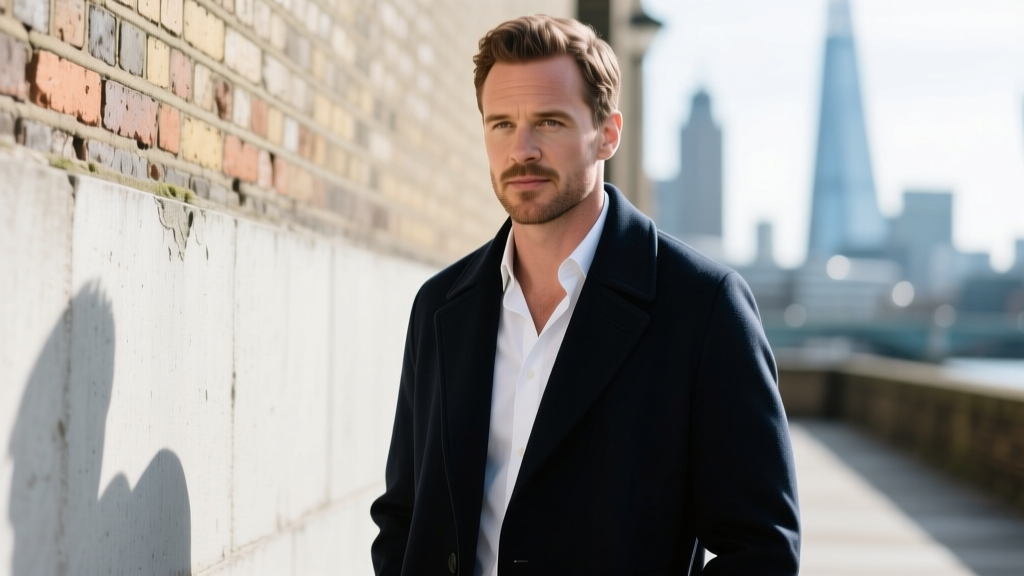
Toby Kebbell is not your typical Hollywood leading man, and his approach to personal branding reflects a deliberate departure from the modern influencer-actor model. Best known for his intense, chameleon-like performances in projects ranging from Black Mirror to Dawn of the Planet of the Apes, Kebbell has cultivated a career built on raw talent rather than viral moments. For those looking to build a personal brand, studying Kebbell offers a masterclass in digital scarcity, professional mystique, and letting a high-quality portfolio serve as your ultimate biography.
The Origin Story of Toby Kebbell: From Yorkshire to the Screen
Born Tobias Alistair Patrick Kebbell on July 9, 1982, in Pontefract, West Riding of Yorkshire, and raised in Nottinghamshire, his early life was far from the glitz of the entertainment industry. Kebbell faced significant challenges with dyslexia during his early education, which made traditional academic paths difficult and often frustrating. However, this hurdle inadvertently steered him toward the arts. A local workshop at the Nottingham Arts Theatre became his sanctuary, providing an environment where his emotional intelligence and physical expressiveness could thrive without the constraints of traditional classroom learning.
His professional origin story is deeply rooted in the British indie film and music scenes. One of his earliest notable appearances was not in a feature film, but in music videos directed by Richard Ayoade for the UK hip-hop artist The Streets (specifically the tracks 'Fit But You Know It' and 'Dry Your Eyes'). This early exposure to rhythm, timing, and character-driven micro-narratives laid the groundwork for his screen presence. His true cinematic breakthrough arrived when acclaimed director Shane Meadows cast him in the gritty, emotionally devastating thriller Dead Man's Shoes (2004). Meadows recognized a raw, unpredictable energy in the young actor, a trait that would become the cornerstone of the Toby Kebbell brand.
Career Highlights & Breakthrough Roles
Unlike actors who build a brand around a single, marketable persona, Kebbell's career is defined by radical transformations. His filmography reads like a map of distinct, often troubled, and deeply complex characters.
- RocknRolla (2008): As the chaotic, drug-addled rock star Johnny Quid in Guy Ritchie's crime caper, Kebbell stole scenes from an ensemble cast of veterans. His unhinged monologues and physical commitment to the role proved he could hold his own in high-octane commercial cinema.
- Black Mirror (2011): Kebbell played Liam in 'The Entire History of You,' the groundbreaking episode that helped launch Charlie Brooker's anthology series into global phenomenon status. His portrayal of a man consumed by jealousy and digital memory-recall technology remains one of the most haunting performances in the show's history.
- Dawn of the Planet of the Apes (2014): Taking on the role of Koba required Kebbell to master performance capture under the mentorship of Andy Serkis. He didn't just play an ape; he channeled deep-seated trauma, rage, and political ambition, creating one of the most compelling villains in modern sci-fi.
- Warcraft (2016) & Fantastic Four (2015): Stepping into the massive IP world, he portrayed the noble Orc chieftain Durotan and the infamous Victor Von Doom (Doctor Doom), respectively, showcasing his willingness to take risks in blockbuster franchise filmmaking.
Quick Facts: Tobias Alistair Patrick Kebbell
| Attribute | Details |
|---|---|
| Full Name | Tobias Alistair Patrick Kebbell |
| Born | July 9, 1982 (Pontefract, England) |
| Nationality | British |
| Known For | Koba (Apes), Johnny Quid (RocknRolla), Liam (Black Mirror) |
| Representation | Curtis Brown Group |
| Social Media Handles | Largely absent/Unverified (Relies on agency & IMDb) |
Social Media Presence: The Power of the 'Ghost' Brand
In an era where actors are often pressured to become lifestyle influencers, document their morning routines, and engage in parasocial relationships with fans on Instagram and TikTok, Toby Kebbell employs what branding experts call a 'Ghost Strategy.' A search for his official, verified personal social media accounts yields virtually nothing. There is no mega-verified Instagram account with millions of followers, nor is there an active X (formerly Twitter) feed sharing his daily thoughts.
This absence is not a failure of marketing; it is a highly intentional branding choice. By refusing to overexpose his personal life, Kebbell preserves his mystique. When audiences sit down to watch a film, they are not distracted by the actor's recent vacation photos or brand sponsorships. They see the character. His 'digital bio' is effectively curated by his talent agency, the Curtis Brown Group, and his comprehensive IMDb profile. When he does engage with the press, the interviews are strictly focused on his craft, such as the grueling physical and psychological toll of motion-capture acting or his collaboration with directors like Shane Meadows and Matt Reeves.
This approach signals to casting directors and audiences alike that he is a serious, dedicated craftsman. His brand is built on output, not noise.
Personal Branding Takeaways for Your Own Profile
You do not need to be a Hollywood actor to learn from Kebbell's approach to personal branding. Whether you are a freelancer, a creative, or a corporate professional, his strategy offers valuable lessons for crafting your own bio and online presence.
1. Embrace Digital Scarcity
There is a pervasive myth that you must post daily across five different platforms to remain relevant. Kebbell's career proves that scarcity can breed value. If you are an introvert or a professional who prefers privacy, do not force a highly visible, overly personal social media strategy. A clean, well-optimized LinkedIn profile or a sleek digital portfolio website can serve as a powerful, authoritative 'bio' without requiring you to overshare.
2. Let Your Portfolio Be Your Biography
Instead of writing a long-winded 'About Me' section filled with buzzwords, let your work speak. Kebbell's 'bio' is his filmography. For your own profile, prioritize case studies, links to published work, or a curated gallery of your best projects. Show, don't just tell. A link to a successful project holds more weight than a paragraph claiming you are a 'visionary thought leader.'
3. Master a High-Value Niche
Kebbell didn't just become a generic actor; he became one of the industry's premier motion-capture performers, studying animal movement and physical theater to master the art form. Identify a high-value niche in your own industry. Update your social media bios and website headers to highlight this specific expertise. Being the 'go-to' person for a specialized skill makes you infinitely more memorable than being a generalist.
4. Control the Narrative Through Professional Channels
Notice how Kebbell's professional narrative is maintained through respected industry channels like his agency and major publications like The Guardian. You can replicate this by focusing your networking efforts on industry-specific platforms, contributing to respected trade blogs, or securing features in niche newsletters, rather than chasing viral fame on consumer-facing apps.