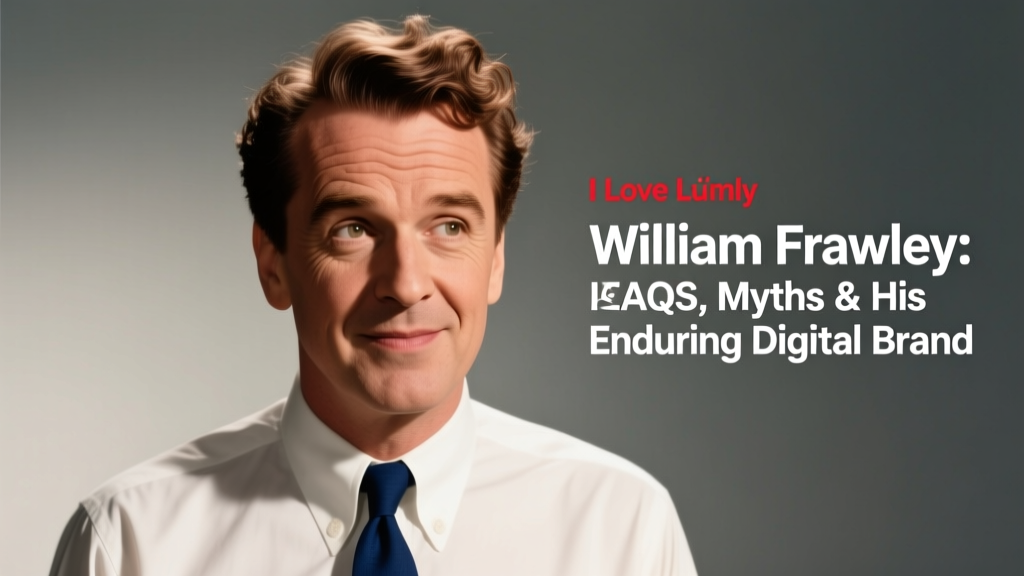
When you think of classic television’s most iconic curmudgeons, William Frawley immediately comes to mind. Best known for his legendary role as Fred Mertz on I Love Lucy, Frawley’s career spanned vaudeville, Broadway, and over 100 films. Yet, decades after his passing, his personal brand remains surprisingly relevant in the digital age. At lovemebio.com, we often analyze living influencers, but exploring the legacy of a classic Hollywood star offers unique insights into archetypal branding. In this deep dive, we tackle the most common William Frawley FAQs, debunk persistent myths about his off-screen life, and analyze how his grumpy-but-lovable persona translates to modern meme culture and digital archives.
Quick Facts: The Man Behind Fred Mertz
| Full Name | William Clement Frawley |
|---|---|
| Born | February 26, 1887 (Burlington, Iowa) |
| Died | March 3, 1966 (Los Angeles, California) |
| Nationality | American |
| Known For | Fred Mertz (I Love Lucy), Bub O'Casey (My Three Sons) |
| Social Media Handles | N/A (Deceased; legacy managed by fan archives, CBS, and meme curators) |
William Frawley FAQ: Separating Fact from Fiction
Because William Frawley played such a distinct, larger-than-life character on television, the line between the actor and the role often blurred for the public. Here are the answers to the most frequently asked questions and common misconceptions about his life and career.
Myth 1: He despised his TV wife, Vivian Vance.
The Reality: It is a well-documented Hollywood rumor that Frawley and Vance, who played Ethel Mertz, hated each other. While it is true that they did not socialize off-set and occasionally clashed over comedic styles, the idea of a bitter, lifelong feud is largely exaggerated. Vance came from a theatrical, highly rehearsed background, while Frawley was a seasoned vaudevillian who preferred to learn his lines, hit his marks, and go home. Their friction was primarily professional and methodological, not deeply personal. In fact, both actors respected each other’s impeccable comedic timing, which is precisely why their on-screen chemistry remains legendary.
Myth 2: He was just a sitcom actor who got lucky.
The Reality: Before he ever stepped onto the Desilu soundstage, Frawley was a massive star in his own right on the vaudeville circuit and Broadway. He appeared in over 100 feature films throughout the 1930s and 1940s, often playing fast-talking press agents, cynical cops, or lovable rogues. His transition to television was not a lucky break; it was the culmination of a 40-year grind in the entertainment industry. He was a highly sought-after character actor long before Fred Mertz made him a household name.
Myth 3: He was exactly like Fred Mertz in real life.
The Reality: While Frawley did share Fred’s love for baseball, a good cigar, and a stiff drink, he was far more astute than the bumbling landlord he played. Frawley was a sharp businessman who negotiated his own contracts. He famously secured a highly lucrative deal for I Love Lucy that included a pension and lifetime residuals, showcasing a financial literacy that Fred Mertz could only dream of.
The Digital Afterlife: William Frawley on Social Media
How do we analyze the social media presence and 'bio' of a star who passed away in 1966? In the modern digital landscape, William Frawley’s brand is no longer defined by a personal Instagram bio or a verified Twitter account. Instead, his digital footprint is defined by archetypal visual shorthand.
On platforms like TikTok, Instagram, and Reddit, Frawley lives on through reaction GIFs, meme templates, and fan-curated tribute pages. His 'digital bio' is essentially the collective metadata of his exasperated sighs, his cigar-chomping stares, and his scheming grins. When Gen Z and Millennial users interact with his content, they are engaging with a masterclass in visual communication. Frawley’s face conveys an entire mood—skepticism, exhaustion, or begrudging affection—without a single word of text. For modern personal branding, this highlights a crucial lesson: your visual assets (profile pictures, reel expressions, aesthetic consistency) often communicate your brand identity long before a user reads your actual bio.
Furthermore, legacy accounts and classic TV networks (like the official I Love Lucy social channels) act as the custodians of his brand. They consistently frame him using nostalgic, warm, and humorous copy, ensuring his legacy remains associated with comfort and classic comedy rather than outdated Hollywood tropes.
Career Highlights & Defining Roles
To understand Frawley’s brand, one must look at the sheer volume and consistency of his work. His career trajectory is a blueprint for character actors.
- Vaudeville & Broadway (1910s–1920s): Cut his teeth in live theater, developing the loud, expressive physical comedy that would later define his television work.
- Classic Hollywood Films (1930s–1940s): Appeared in classics like Miracle in the Rain (1956) and The Lemon Drop Kid (1951), establishing himself as Hollywood’s go-to cynical sidekick.
- I Love Lucy (1951–1957): Immortalized the role of Fred Mertz, earning a star on the Hollywood Walk of Fame and cementing his place in pop culture history.
- My Three Sons (1960–1965): Successfully pivoted to a new demographic as 'Bub' O'Casey, proving his grumpy-but-lovable archetype had cross-generational appeal.
Personal Branding Takeaways from a Classic Curmudgeon
What can a modern creator, entrepreneur, or professional learn from a classic Hollywood character actor? Surprisingly, a great deal.
- 1. Lean Into Your Archetype: Frawley knew exactly what he was good at. He didn’t try to play the romantic lead; he perfected the 'lovable curmudgeon.' In your own Instagram or LinkedIn bio, don't try to be everything to everyone. Identify your unique niche or personality trait (the witty observer, the data-driven strategist, the empathetic listener) and lean into it heavily.
- 2. Master the 'Reaction': In an era dominated by short-form video and meme culture, relatable reactions drive engagement. Frawley’s ability to convey complex emotions with a simple look is the 1950s equivalent of a viral TikTok reaction video. Ensure your visual branding is expressive and instantly recognizable.
- 3. Build a Brand That Outlasts the Platform: Frawley’s brand survived the transition from radio to film, from film to television, and now, from television to internet meme culture. By focusing on core human traits (humor, skepticism, loyalty) rather than fleeting trends, you build a personal brand that remains relevant regardless of which social media algorithm is currently in charge.
- 4. Let Your Contracts Speak for Your Worth: Frawley’s behind-the-scenes negotiation for his I Love Lucy contract is a reminder that personal branding isn't just about public perception; it's about knowing your value. Your bio gets you in the door, but your professional boundaries and negotiations define your long-term career.