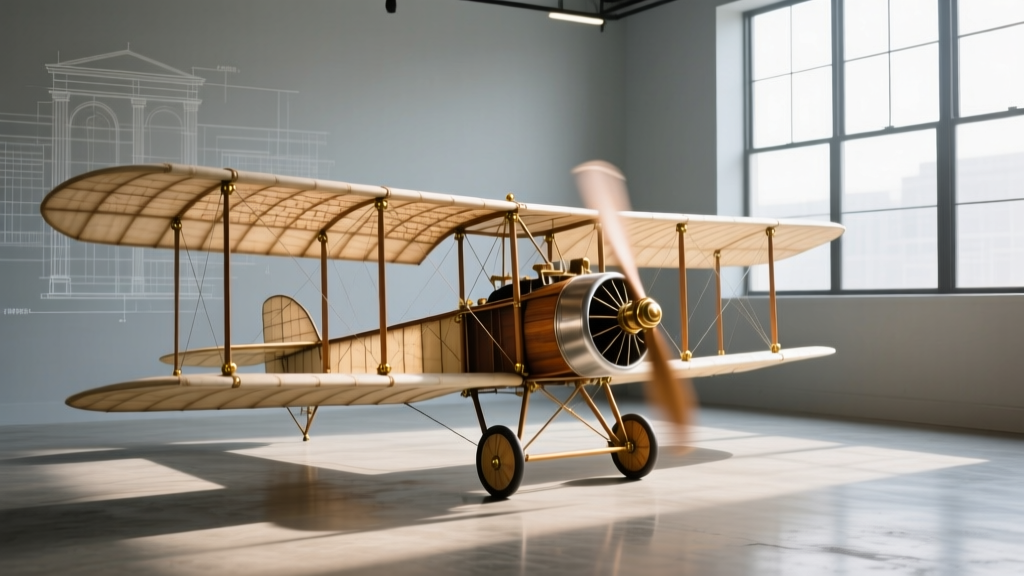
When analyzing the personal branding of historical icons, the Wright Brothers Inventors stand as the ultimate case study in credibility over hype. While modern tech founders often rely on viral social media posts and visionary Instagram bios to secure venture capital, Orville and Wilbur Wright took a radically different, evidence-based approach. By comparing their meticulous public relations strategy to their well-funded contemporaries and today’s startup culture, we can uncover profound lessons for crafting a trustworthy digital presence. Here is a deep dive into how these aviation pioneers built an unshakeable personal brand that outlasted their lifetimes.
The Wright Brothers Inventors vs. The Alternatives
To understand the brilliance of the Wright brand, we must compare it to the premier alternative of their era: Samuel Pierpont Langley. Langley was the Secretary of the Smithsonian Institution, possessed multiple honorary degrees, and secured a massive $50,000 grant from the U.S. War Department. In modern terms, Langley had the ultimate LinkedIn bio, institutional backing, and a massive PR machine. The press was convinced Langley would be the first to fly. Yet, his 'Aerodrome' crashed unceremoniously into the Potomac River twice in 1903.
Contrast this with Orville and Wilbur. Their 'bio' lacked traditional authority markers. They were bicycle mechanics from Dayton, Ohio, without college degrees. Recognizing they could not compete on institutional prestige, they pivoted their personal branding strategy to focus entirely on verifiable proof. They did not issue grandiose press releases about changing the world; instead, they filed U.S. Patent 821,393 for a 'Flying Machine.' This historical alternative analysis highlights a core branding truth: when you lack traditional credentials, your work product must be undeniably bulletproof.
Today, the alternative to the Wright approach is the 'visionary' tech CEO persona—think of the hype-driven bios that promise to 'disrupt global paradigms' before a working prototype exists. The Wright Brothers represent the ultimate antidote to this 'fake it till you make it' culture. They famously kept their 1904 and 1905 flights largely secret, refusing to invite the press until their patent was secured and they had a buyer. This calculated silence frustrated journalists but protected their intellectual property and brand integrity. They understood that a premature product launch with a flawed demo could permanently destroy an inventor's reputation.
Quick Facts: The Architects of Flight
| Attribute | Details |
|---|---|
| Full Names | Wilbur Wright & Orville Wright |
| Born | April 16, 1867 (Wilbur) / August 19, 1871 (Orville) |
| Nationality | American |
| Known For | Inventing, building, and flying the first successful motor-operated airplane |
| Startup Incubator | Wright Cycle Company, Dayton, Ohio |
| Digital Custodians | @SmithsonianAirSpace, @NASA, @LOCMaps (Library of Congress) |
Social Media Presence & The Digital Legacy
How do you analyze the social media presence of men who died before the internet existed? You analyze the digital custodians who manage their enduring brand. Today, the 'social media bio' of the Wright brothers is curated by institutions like the Smithsonian National Air and Space Museum and NASA. On platforms like Instagram and X (formerly Twitter), the Wright Flyer is presented not as a mythical artifact, but as a triumph of engineering iteration.
The posting style of these institutional accounts relies heavily on high-resolution archival scans, blueprint breakdowns, and direct quotes from Orville’s meticulous diaries. For instance, on the anniversary of the December 17, 1903 flight, engagement spikes not because of sensationalized captions, but because audiences crave the raw, unfiltered reality of the struggle. The digital brand of the Wrights is defined by authenticity. They took their own photographs at Kitty Hawk because they did not trust the press to accurately capture the technical reality of their wing-warping mechanism. This early form of 'content creation' ensured that their visual legacy remained accurate, providing a masterclass in controlling your own visual narrative.
Personal Branding Takeaways for Modern Creators
What can modern engineers, founders, and creatives learn from the Wright Brothers Inventors when crafting their own Instagram or LinkedIn bios? The lessons are profound and highly actionable.
First, ditch the buzzwords for tangible metrics. The Wrights did not describe themselves as 'Aviation Disruptors' or 'Sky Paradigm Shifters.' They were 'Mechanics' and 'Inventors.' If your bio is filled with abstract jargon, strip it back. State exactly what you build, who you build it for, and the tangible results you have achieved. Let your patent, your code repository, or your portfolio be the loudest part of your profile.
Second, let your 'Le Mans' speak for itself. In 1908, the Wright brothers finally needed to prove their claims to a skeptical European market and the U.S. Army. They didn't launch a massive PR campaign; they traveled to Le Mans, France, and simply flew in circles for hours, executing complex figure-eights that no other aviator could match. The crowd was stunned, and the press did the marketing for them. For your personal brand, this means prioritizing public demonstrations of your work over self-promotion. Post case studies, behind-the-scenes build logs, and verifiable results on your feed. Show, don't tell.
Third, embrace strategic silence. In an era where creators feel pressured to post daily opinions on every trending topic, the Wrights remind us of the power of focused silence. They ignored the media circus during their testing phases to focus entirely on solving the problem of three-axis control. Curate your digital presence to reflect deep work. It is better to post one highly detailed, well-researched breakdown of your creative process per month than to dilute your brand with daily, low-value noise.
Sources & Further Reading
- Library of Congress: Wright Brothers Negatives Collection (loc.gov/collections/wright-brothers) - Primary source for their visual branding and personal photography.
- Smithsonian National Air and Space Museum: The Wright Flyer (airandspace.si.edu) - Archival data on their engineering and historical legacy.
- NASA Glenn Research Center: Wright Brothers Aeroplane Company (nasa.gov) - Technical analysis of their iterative design process.