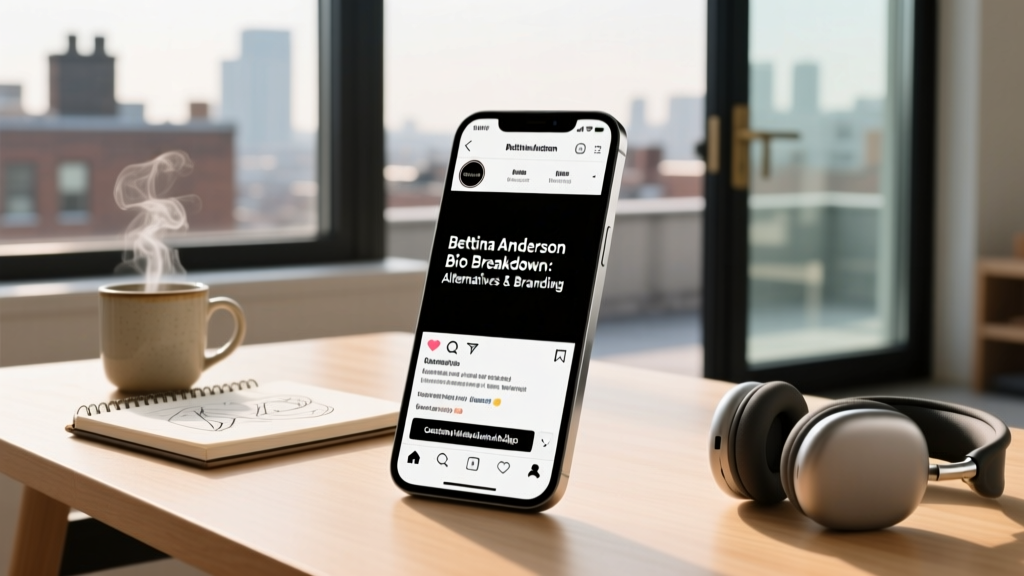
When analyzing the intersection of contemporary fine art and digital personal branding, Yvonne McGuinness stands as a fascinating case study in the power of restraint. While the general public frequently searches for her name due to her marriage to acclaimed actor Cillian Murphy, within the international art community, McGuinness has cultivated a deeply respected, independent legacy. For creators, freelancers, and professionals looking to build a personal brand, her approach offers a masterclass in what we call 'quiet branding.' In an era where oversharing and algorithmic chasing are the default, McGuinness demonstrates how institutional prestige, gallery representation, and digital exclusivity can create a highly sought-after professional identity. This deep dive explores how she presents herself to the world and the actionable lessons you can apply to your own social media bios and digital portfolios.
Quick Facts: The Life and Career of Yvonne McGuinness
| Attribute | Details |
|---|---|
| Full Name | Yvonne McGuinness |
| Born | 1972, Kilkenny, Ireland |
| Nationality | Irish |
| Known For | Contemporary mixed-media art, installation, video, and printmaking |
| Education | National College of Art and Design (NCAD), Dublin; MA from Chelsea College of Arts, London |
| Gallery Representation | Fenton Gallery, Cork |
| Social Media Presence | Minimalist / Proxy-managed via institutional galleries |
Artistic Evolution and Exhibition Highlights
Born in Kilkenny in 1972, McGuinness developed a profound interest in the psychology of space, memory, and boundaries. Her academic foundation is rigorous; she studied at the prestigious National College of Art and Design (NCAD) in Dublin before relocating to London to earn a Master of Arts degree from the Chelsea College of Arts. This dual-city educational background deeply influenced her aesthetic, blending traditional Irish narrative sensibilities with the avant-garde, conceptual frameworks of the London contemporary art scene.
McGuinness is celebrated for her intricate printmaking—particularly her mastery of etching and aquatint—as well as her expansive video and mixed-media installations. Her work does not merely hang on a wall; it often demands that the viewer physically navigate the space it occupies. She has exhibited extensively across Ireland and the UK, with her work featured in prominent institutions and highly regarded commercial galleries. Her long-standing representation by the Fenton Gallery in Cork provides a vital anchor for her career, offering a physical and digital home for her evolving portfolio. This institutional backing is the cornerstone of her personal brand, signaling to collectors and curators that her work has passed the rigorous vetting processes of the established fine art world.
Social Media Presence: The Power of Digital Restraint
If you search for Yvonne McGuinness on Instagram or TikTok, you will not find a verified account with millions of followers, daily vlogs, or a link-in-bio packed with affiliate merchandise. This absence is not a failure of modern marketing; it is a deliberate and highly effective branding strategy native to the upper echelons of the fine art world.
In the commercial influencer space, visibility equals currency. In the fine art space, exclusivity equals currency. McGuinness’s digital footprint is what branding experts call a 'Ghost Profile' or 'Proxy Brand.' She does not manage a loud personal social media presence. Instead, her 'social media bio' is effectively managed by the prestigious institutions that represent her. When collectors, curators, or fans search for her online, they encounter her work through the Fenton Gallery’s curated Instagram feed, the Royal Hibernian Academy’s digital archives, and exhibition catalogs published by arts councils.
This strategy achieves three vital branding goals. First, it maintains an aura of mystery and exclusivity, which drives up the perceived value of her physical artworks. Second, it ensures that every piece of digital content associated with her name is of the highest curatorial quality, free from the casual, unpolished noise of daily social media posting. Third, it allows her to fiercely protect her family’s privacy, drawing a hard boundary between her public artistic output and her private life. For high-level creatives, this separation is crucial for long-term mental health and brand integrity.
Personal Branding Takeaways for Creatives
How can a freelance designer, an independent architect, or an emerging artist apply the 'Yvonne McGuinness Method' to their own Instagram bio and digital presence? Here are the core takeaways for elevating your personal brand from 'influencer' to 'authority.'
1. Adopt the 'Gallery Plaque' Bio Structure
High-end artists do not use their Instagram bios to beg for engagement or list their zodiac signs. They use them like a brass plaque next to a museum exhibit. If you are a premium service provider or fine artist, strip the emojis and the hype from your bio. Adopt this minimalist structure:
[Name] | [Primary Medium/Discipline]
Represented by [Gallery/Agency Name]
Current Exhibition/Project: [Location/Title]
[Link to pristine digital portfolio]
This immediately signals to high-ticket clients that you are an established professional, not an amateur looking for a quick gig.
2. Leverage Third-Party Validation
McGuinness’s brand is amplified by the institutions that vouch for her. Instead of using your bio to tell people how great you are, use it to highlight who trusts you. If you are an architect, your bio should read 'Featured in Architectural Digest' rather than 'I design cool houses.' If you are a consultant, list your top-tier clients or the universities where you have guest-lectured. Let established entities do the bragging for you. Your link-in-bio should direct users to a press page or a curated portfolio of these institutional partnerships.
3. Embrace Digital Restraint and Scarcity
There is a pervasive myth that you must post daily to remain relevant. McGuinness’s career proves the opposite. In premium creative fields, scarcity breeds value. Posting less frequently, but only sharing highly polished, deeply considered work, trains your audience to view your updates as 'events' rather than 'content.' If you are building a luxury brand or a high-end freelance practice, give yourself permission to step off the content treadmill. A dormant profile with a masterful portfolio link is infinitely more profitable than an active profile filled with mediocre behind-the-scenes reels.
4. Separate the Art from the Artist
One of the most profound lessons from McGuinness’s public life is the strict boundary between the creator and the creation. You do not need to monetize your personal life, your relationships, or your daily routines to sell your work. Your social media bio can reflect your professional achievements without exposing your private life. Use your platform strictly as a digital gallery for your output, and protect your personal time fiercely. This boundary not only preserves your privacy but also forces your audience to engage with the actual quality of your work, rather than your personality.
Sources and Further Reading
To explore the institutional frameworks that support high-end artistic branding, and to view the type of gallery representation that anchors a quiet brand, refer to the following resources:
- Fenton Gallery – The premier contemporary art gallery in Cork, Ireland, representing Yvonne McGuinness and demonstrating how galleries act as brand proxies for their artists.
- Royal Hibernian Academy (RHA) – Explore the exhibition archives and institutional validation that forms the backbone of a traditional fine artist's public resume.
- Irish Museum of Modern Art (IMMA) – A benchmark for how national institutions archive, present, and legitimize contemporary Irish artists on a global scale.