The Great Debate: Link in Bio Hub vs. Direct Website Landing Page
For modern digital creators, entrepreneurs, and brands, Instagram remains one of the most powerful platforms for building an audience and driving revenue. However, the platform inherently limits your external linking capabilities, offering only one primary clickable link in your profile. This limitation has sparked a massive strategic debate across the digital marketing landscape: should you use a link in bio aggregator tool, or should you point users directly to a dedicated website landing page? Understanding the nuances of the link in bio vs website call to action strategy is critical for maximizing your conversion rates, reducing user friction, and ultimately growing your business. In this comprehensive guide, we will explore the psychology behind user clicks, the technical advantages of both methods, and the best practices for optimizing your Instagram profile to drive measurable results.
When a user visits your profile, they are already exhibiting a high level of intent. They have consumed your content, resonated with your message, and taken the extra steps to click on your username and view your page. At this pivotal moment, your call to action (CTA) must be flawlessly executed. A confusing or cluttered link strategy can result in lost sales, abandoned email signups, and wasted traffic. Conversely, a highly optimized, strategically chosen link destination can transform casual scrollers into loyal customers and dedicated community members. Whether you are selling digital products, promoting a podcast, or driving traffic to a comprehensive e-commerce store, the decision between a link hub and a direct website CTA will shape your entire Instagram marketing funnel.
Understanding the Core Differences
Before diving into advanced optimization strategies, it is essential to clearly define the structural and functional differences between a link in bio aggregator and a direct website landing page. Both serve the purpose of moving traffic off the social platform, but they do so in fundamentally different ways.
What is a Link in Bio Aggregator?
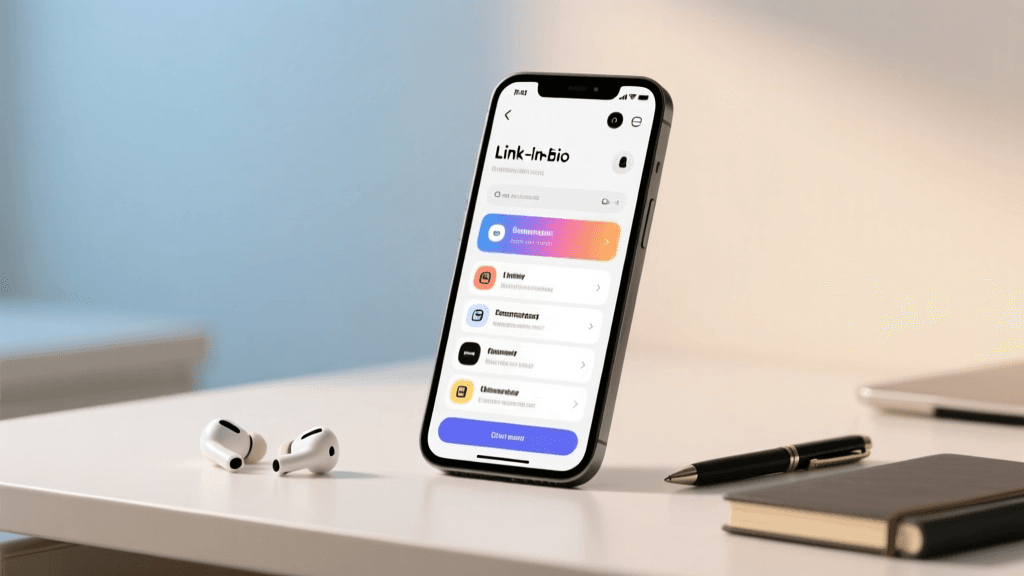
A link in bio aggregator is a third-party microsite designed specifically to house multiple links under a single URL. Platforms like Linktree, Beacons, and Bio.link allow users to create a mobile-optimized directory of their various online destinations. Instead of forcing a user to choose between your latest YouTube video, your Shopify store, and your email newsletter, an aggregator presents all these options in a neat, vertical list. The primary advantage of this approach is versatility. It acts as a digital business card, providing a holistic view of your digital footprint. However, this versatility can sometimes come at the cost of focused conversion, as users are presented with multiple choices rather than a single, compelling directive.
What is a Direct Website CTA?
A direct website call to action involves linking your Instagram profile directly to a specific, owned landing page on your custom domain. This could be your homepage, a specific product page, a lead magnet squeeze page, or a custom-built link page hosted on your own WordPress or Shopify site. The primary advantage of a direct website CTA is absolute control. You control the branding, the page load speed, the SEO benefits, and the pixel tracking. By eliminating the middleman, you reduce the number of clicks required for a user to reach their final destination, which is a critical factor in maintaining high conversion rates.
The Psychology of the Call to Action and User Friction
To truly master the link in bio vs website call to action debate, we must look at the psychological principles that govern user behavior online. The most relevant concept here is Hick's Law, which states that the time it takes for a person to make a decision increases logarithmically with the number of choices presented to them. In the context of Instagram, decision fatigue is a very real threat to your conversion rates.
When you use a link in bio hub with fifteen different buttons, you are placing a heavy cognitive load on your visitor. They must read each option, evaluate its relevance to their current desire, and then make a choice. If the choices are too overwhelming, the user may experience analysis paralysis and simply close the app without clicking anything. On the other hand, a direct website CTA eliminates this friction entirely. If your Instagram post specifically promoted a new e-book, and your bio link leads directly to the checkout page for that exact e-book, the user's path to conversion is clear, linear, and unobstructed.
Furthermore, the concept of 'user friction' plays a massive role in mobile browsing. Every additional click, every extra second of page load time, and every unfamiliar interface introduces friction. Third-party link aggregators introduce an extra layer of navigation. The user clicks your bio link, waits for the third-party microsite to load, scans the options, and then clicks again to reach your actual website. By utilizing a direct website CTA, you bypass the microsite entirely, delivering the user straight to your optimized, branded environment where you have full control over the checkout or signup process.
When to Deploy a Link in Bio Hub
Despite the psychological advantages of a direct link, link in bio hubs remain incredibly popular and highly effective for specific types of creators and business models. The decision to use an aggregator should be based on your overarching business goals and the diversity of your content offerings.
- Multi-Hyphenate Creators: If you are a podcaster who also streams on Twitch, sells merchandise, and offers one-on-one coaching, a single landing page cannot adequately capture the breadth of your business. A link hub allows you to segment your audience and provide clear pathways to each distinct revenue stream.
- Content Teasing and Discovery: For creators who use Instagram primarily as a top-of-funnel discovery engine, a link hub acts as a curated portfolio. It allows new followers to quickly understand who you are and what you offer across the entire web.
- Aesthetic and Profile Alignment: Many creators spend hours perfecting their visual brand. Utilizing a clean, well-organized link directory can complement specific profile styles. For instance, if you are drawing inspiration from aesthetic bio ideas, a beautifully themed link hub with custom backgrounds and cohesive iconography can extend your visual branding beyond the confines of the Instagram app.
- Frequent Link Updates: If your promotional focus changes daily or weekly, updating a link hub is often faster and requires less technical knowledge than building and publishing new landing pages on your core website.
When using a link hub, it is crucial to practice restraint. Limit your visible links to the top four or five most important actions you want your users to take. You can use collapsible menus or secondary pages for older content, ensuring that the primary view remains uncluttered and focused.
When to Deploy a Direct Website Landing Page
There are distinct scenarios where bypassing the aggregator and using a direct website call to action is the undisputed best practice. If your primary objective is immediate conversion, data collection, or brand immersion, a direct link is the superior choice.
- High-Intent Product Launches: When you are launching a new course, a physical product, or a limited-time offer, your Instagram content will be heavily focused on this single item. Your bio link must match this singular focus. Sending users to a link hub where they have to hunt for the launch page will result in a massive drop-off in sales.
- Lead Generation and Squeeze Pages: If your goal is to capture email addresses in exchange for a free resource, you need a dedicated squeeze page. These pages are designed with one single form and zero navigation links to prevent users from wandering off. A link hub dilutes the power of a squeeze page by offering alternative exits.
- Advanced Pixel Tracking and Retargeting: While some premium link aggregators allow you to add tracking pixels, hosting the landing page on your own domain ensures that your Meta Pixel, TikTok Pixel, and Google Analytics tags fire correctly and consistently. This data is vital for building retargeting audiences and understanding user behavior.
- Search Engine Optimization (SEO): Every time a third-party link hub ranks for your brand name instead of your actual website, you lose valuable SEO equity. By linking directly to your domain, you pass authority and traffic signals directly to your own site, improving your overall search engine rankings.
For brands that prefer a highly curated, distraction-free profile, adopting strategies from minimalist bio ideas pairs perfectly with a direct website link. A minimalist profile with a single, powerful CTA pointing to a beautifully designed, owned landing page creates a premium, high-end user experience that builds immense trust with potential customers.
Crafting the Perfect Instagram Bio CTA
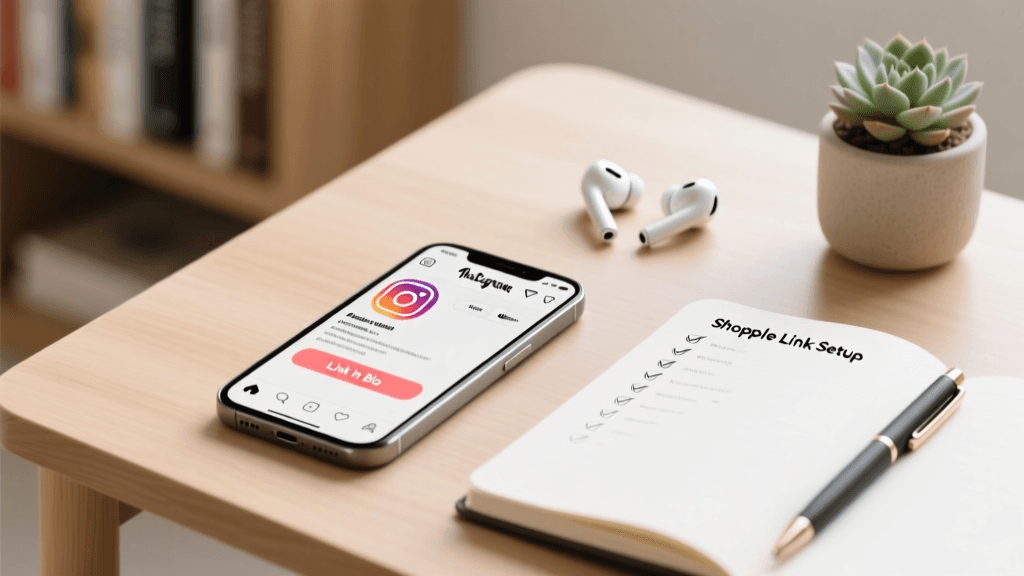
The link itself is only half the battle. The text, emojis, and formatting within your actual Instagram bio dictate whether a user will even bother to click the link in the first place. Learning how to write an Instagram bio that converts is an essential skill for any digital marketer. Your bio must act as a billboard, clearly stating who you are, what value you provide, and exactly what the user should do next.
To optimize your bio for your chosen link strategy, follow these structural best practices:
- The Hook (Line 1): Clearly state your value proposition or target audience. Example: 'Helping freelancers scale to six figures.'
- The Authority (Line 2): Provide social proof or credentials. Example: 'Featured in Forbes | 10k+ Students.'
- The Call to Action (Line 3): Use an action-oriented verb and an emoji pointing down to the link. Example: '👇 Grab the Free Scaling Playbook' or '👇 Shop the New Collection.'
If you struggle with formatting, character limits, or finding the right words, utilizing a specialized bio generator tool can help you brainstorm compelling hooks and structure your profile for maximum impact. Remember, the CTA in your text must perfectly align with the destination of your link. If your text says 'Download the Free Guide' but your link goes to a generic Linktree homepage, you have created a broken promise that will destroy user trust and tank your conversion rate.
Design and Visual Hierarchy Best Practices
Whether you choose a third-party hub or a custom website landing page, the visual design of the destination page plays a critical role in user retention and conversion. Mobile optimization is non-negotiable, as the vast majority of Instagram users will be accessing your link from a smartphone.
For link in bio hubs, utilize custom backgrounds that match your brand colors, and ensure your button text is concise and action-driven. Instead of labeling a button 'My Website', use 'Shop the Sale' or 'Read the Blog'. Incorporate thumbnail images or GIFs next to your most important links to draw the eye and break up the monotony of text-heavy buttons.
For direct website landing pages, ensure the page loads in under two seconds. Compress all images, utilize lazy loading, and minimize heavy scripts. The primary CTA button on your landing page should be above the fold, meaning the user does not have to scroll to see it. Use high-contrast colors for your buttons so they stand out against the background. The visual hierarchy should guide the user's eye naturally from the headline, to the supporting copy, and directly to the conversion button.
Analytics, Tracking, and A/B Testing
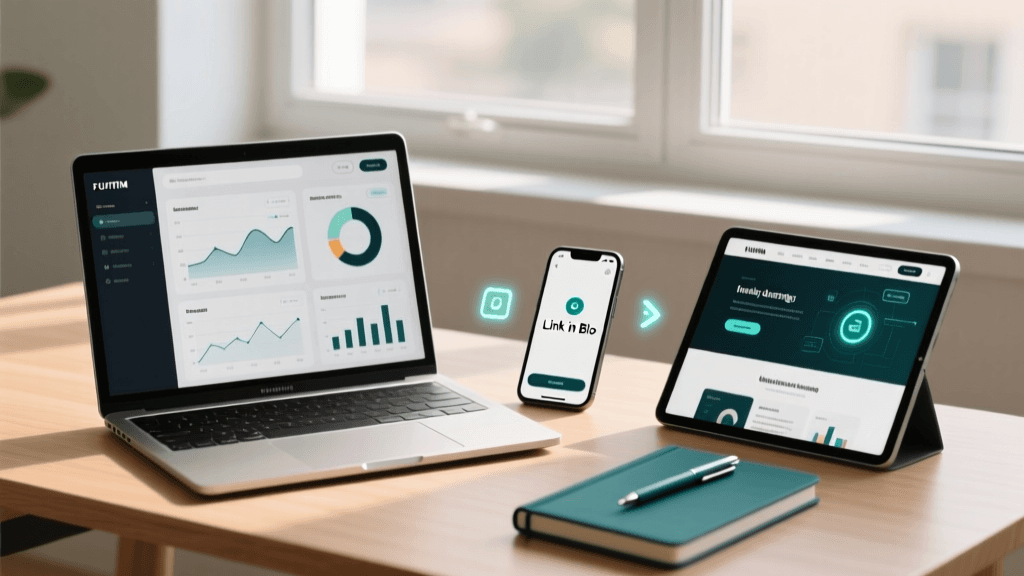
You cannot improve what you do not measure. The only way to definitively know whether a link in bio hub or a direct website CTA is better for your specific audience is through rigorous A/B testing and analytics tracking.
To conduct a proper test, dedicate two weeks to using your link aggregator. Track the total number of clicks from Instagram, the bounce rate on the hub, and the final conversion rate on your end goals (sales, signups, etc.). Next, spend two weeks linking directly to your most important landing page. Compare the metrics. You will often find that while a link hub generates more overall 'link clicks' on Instagram, a direct website link generates a significantly higher number of actual conversions and sales.
Utilize UTM parameters to track your Instagram traffic inside Google Analytics. By appending UTM tags to the URLs you place in your bio or link hub, you can see exactly how Instagram traffic behaves compared to traffic from TikTok, Pinterest, or organic search. Pay close attention to the 'time on page' and 'pages per session' metrics to gauge the quality of the traffic your bio is generating.
E-commerce and Platform Integrations
For creators and brands selling physical or digital goods, the integration between your link strategy and your e-commerce platform is paramount. If you use Shopify, many modern link in bio tools offer direct API integrations that allow you to display your products directly within the link hub, complete with images, prices, and a quick-add-to-cart feature. This reduces friction by allowing users to initiate the checkout process without leaving the microsite environment.
Similarly, if you sell digital downloads or handmade crafts on Etsy, linking directly to your Etsy storefront or a specific high-converting listing is often more effective than a link hub. Etsy's native interface is already highly optimized for mobile conversions and buyer trust. Sending a user from Instagram to a link hub, and then to Etsy, adds an unnecessary step that could result in an abandoned cart. Always consider the native conversion optimization of the final destination platform when planning your link strategy.
Frequently Asked Questions (FAQ)
Does using a Linktree or link aggregator hurt my website SEO?
Indirectly, it can. When you use a third-party aggregator, that third-party domain often ranks for your brand name in search engines, pushing your actual website further down the search results. Furthermore, you are passing valuable link equity and traffic signals to the aggregator's domain rather than your own. If SEO is a primary pillar of your marketing strategy, hosting your own link page on your custom domain or linking directly to your core pages is highly recommended.
Can I use both a link hub and a direct website link?
Instagram only allows one primary clickable link in your bio. However, you can utilize Instagram Stories highlights to feature direct links to specific pages, or use the 'Link' sticker in Stories to drive traffic to specific landing pages while keeping your main bio link as a general hub. Additionally, some creators use their bio link for a direct landing page and put their link hub URL in their website's footer or a dedicated 'Connect' page.
How often should I change my bio link?
Your bio link should reflect your current primary business objective. If you are running a two-week promotional campaign, change your link to point directly to the campaign landing page. Once the campaign is over, revert it to your evergreen link hub or your core website homepage. Constantly changing the link multiple times a day can confuse your audience and trigger spam filters, so align your link changes with your broader content calendar.
What is the best call to action text for an Instagram bio?
The best CTA text is specific, action-oriented, and value-driven. Avoid generic phrases like 'Click here' or 'My website'. Instead, use phrases like 'Grab the Free SEO Checklist 👇', 'Book Your Discovery Call 👇', or 'Shop the Summer Collection 👇'. The CTA should clearly tell the user what they will get when they click the link.
Do link in bio tools work well for B2B & B2C service providers?
Yes, but the strategy differs. B2C providers (like fashion brands or fitness coaches) often benefit from visual link hubs that showcase multiple products or programs. B2B service providers (like consultants or SaaS companies) usually see better results with direct website CTAs pointing to a high-converting lead magnet, a webinar registration page, or a case study portfolio. B2B audiences generally prefer direct, frictionless paths to professional resources.
How can I track clicks on my link in bio?
Instagram Insights provides a basic metric showing how many times your profile link was tapped. However, this does not tell you what users did after they clicked. To track actual behavior, you must use UTM parameters on your URLs and monitor the traffic in Google Analytics, or use the built-in analytics dashboards provided by premium link in bio tools, which track individual button clicks and click-through rates.
Conclusion
The choice between a link in bio aggregator and a direct website call to action is not a one-size-fits-all decision. It requires a deep understanding of your audience, your current business objectives, and the psychological principles of user friction. Link hubs offer unparalleled versatility for multi-faceted creators, while direct website landing pages provide the focused, high-converting environment necessary for targeted campaigns and lead generation. By carefully crafting your bio text, optimizing your visual hierarchy, and rigorously testing your strategies, you can transform your single Instagram link into a powerful engine for growth and revenue. Evaluate your current funnel, apply these expert tips, and ensure that every click from your profile is a step closer to achieving your ultimate business goals.