Introduction to the Link-in-Bio Ecosystem
In the modern digital landscape, social media platforms like Instagram and TikTok impose a strict limitation on creators and brands: the single-link restriction in your profile biography. This bottleneck has given rise to the multi-billion-dollar micro-landing page industry, commonly known as the link-in-bio ecosystem. What started as simple URL redirect scripts has evolved into sophisticated, conversion-optimized digital storefronts. Choosing the right platform is no longer just about hosting a few hyperlinks; it is about establishing a centralized hub for your digital identity, monetizing your audience, and tracking vital marketing analytics.
However, a highly optimized link-in-bio page is only as effective as the profile that drives traffic to it. Before you even begin configuring your digital storefront, you must master how to write an Instagram bio that converts. Your bio sets the context, establishes your value proposition, and creates the psychological trigger that compels users to click your sole available link. Once your profile is optimized, selecting the right link-in-bio tool becomes your next critical strategic decision.
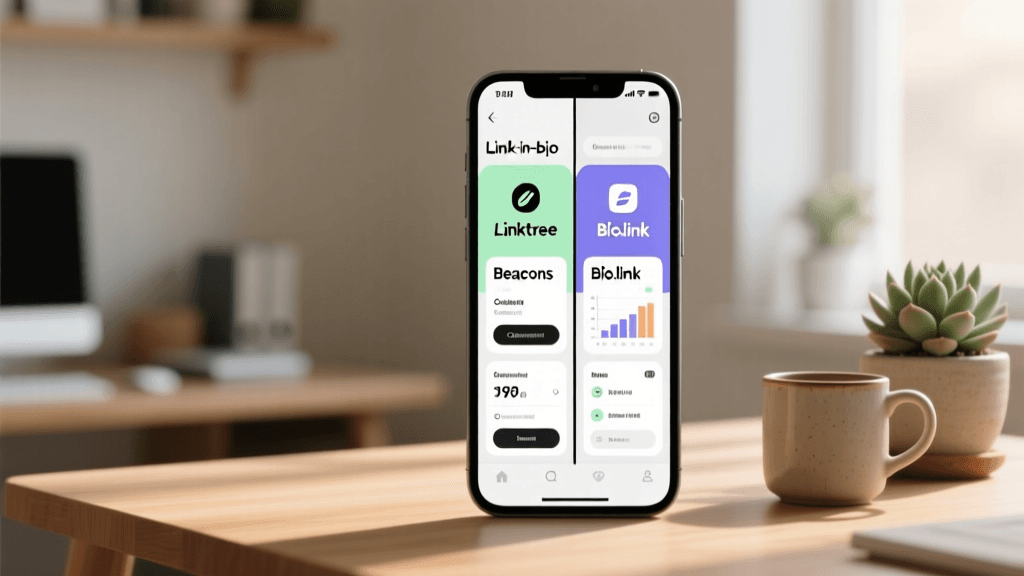
This comprehensive trend report and analysis dives deep into the three most prominent players in the market: Linktree, Beacons, and Bio.link. We will dissect their feature sets, analyze their pricing structures, evaluate their target demographics, and provide actionable, niche-specific recommendations to help you maximize your digital real estate.
The Contenders: Market Positioning and Trend Analysis
Linktree: The Industry Pioneer and Enterprise Leader
Linktree is the undisputed pioneer of the link-in-bio space. Having coined the category, it boasts the largest market share and the highest brand recognition among consumers and creators alike. From a trend analysis perspective, Linktree has been aggressively pivoting toward enterprise solutions and massive e-commerce partnerships. They are no longer just a tool for individual influencers; they are a scalable solution for global brands, record labels, and major retail corporations.
The platform excels in reliability, uptime, and seamless integrations with major third-party applications like Spotify, YouTube, and Shopify. Its analytics suite is robust, offering brands the deep-dive data required to justify marketing spend. However, its sheer size means that the user interface can sometimes feel cluttered, and the most powerful features are strictly gated behind premium paywalls.
Beacons: The Creator Economy Powerhouse
Beacons emerged as a direct response to the specific needs of the solo-creator economy. While Linktree focused on enterprise, Beacons focused on the individual entrepreneur, influencer, and digital artist. The prevailing trend with Beacons is its heavy investment in native monetization and AI-driven utility. It operates less like a simple list of links and more like a comprehensive business-in-a-box.
Beacons allows users to sell digital products, accept bookings, and host media kits directly on their link-in-bio page without requiring external website infrastructure. Its drag & drop interface is highly customizable, allowing for a more unique, website-like feel. For creators looking to diversify their income streams and own their audience data, Beacons represents the cutting edge of creator-centric technology.
Bio.link: The Minimalist Challenger
Bio.link represents the anti-clutter movement within the link-in-bio space. In an era where consumers are experiencing severe digital fatigue, Bio.link capitalizes on the trend of extreme minimalism and lightning-fast load times. It strips away the bloat, complex animations, and overwhelming customization options in favor of a clean, highly readable, and conversion-focused interface.
Despite its minimalist approach, Bio.link offers a surprisingly generous free tier, making it highly attractive to small businesses, local artists, and creators who want a professional presence without the recurring financial overhead. Its philosophy is simple: get the user to their destination as quickly and frictionlessly as possible.
Feature-by-Feature Comparative Analysis
Customization, Design, and User Experience
When it comes to design flexibility, the three platforms offer distinctly different philosophies. Linktree provides a vast library of pre-designed themes, background animations, and button styles. While this makes it easy to match your brand colors, the underlying structure remains a rigid, vertical list of buttons. It is highly polished but can feel homogenous across different profiles.
Beacons takes a modular, block-based approach. Users can embed videos, create image galleries, add email signup forms, and design custom layouts that mimic a traditional website. This design & functionality combo makes Beacons the most visually versatile, though it requires a steeper learning curve to master the layout engine.
Bio.link champions the minimalist aesthetic. The customization options are intentionally limited to typography, basic color palettes, and simple card layouts. This limitation is actually a strategic advantage for brands that pair their link-in-bio with minimalist bio ideas, ensuring a cohesive, distraction-free user journey from the Instagram profile to the final destination.
Monetization and E-commerce Integrations
Monetization is where the divergence in target audiences becomes most apparent. Linktree has secured high-level integrations with platforms like Shopify and Spring, allowing retail brands to feature dynamic product carousels directly on their link page. When a user clicks a product, they are seamlessly routed to the brand's native checkout flow. This makes Linktree the superior choice for traditional e-commerce.
Beacons, conversely, is built for the digital creator. It features a native storefront for selling e-books, presets, courses, and exclusive content. It also includes built-in scheduling tools for coaching calls and a native tipping system. Beacons takes a small transaction fee on the free tier, but the ability to run a digital business without a separate website is a massive value proposition for solopreneurs.
Bio.link keeps monetization simple and direct. It supports basic link routing to external stores and offers simple donation or tipping buttons. It does not attempt to be a full e-commerce platform, which keeps the user interface clean and the page load speeds exceptionally fast.
Analytics, Tracking, and Data Ownership
Data is the lifeblood of digital marketing, and your link-in-bio tool must provide actionable insights. Linktree offers comprehensive analytics on its premium tiers, including click-through rates, geographic data, and device types. Crucially, Linktree allows for seamless integration with Facebook Pixels and Google Analytics, enabling brands to track the entire user journey from a social media impression to a final website purchase.
Beacons provides excellent native analytics, focusing heavily on audience demographics and engagement metrics. It tells you not just what people clicked, but who they are, which is invaluable for creators pitching to brand sponsors. The ability to export this data into a professional media kit is a standout feature.
Bio.link provides essential, no-nonsense analytics. You can see total views, unique clicks, and individual link performance. While it lacks the deep-dive cohort analysis of Linktree, it provides exactly what a small business needs to measure campaign effectiveness without overwhelming the user with vanity metrics.
SEO, Domain Management, and Discoverability
An often-overlooked aspect of link-in-bio tools is their impact on Search Engine Optimization (SEO). All three platforms allow you to use a custom domain (e.g., links.yourbrand.com), which is critical for brand consistency and trust. However, Linktree and Beacons have invested heavily in ensuring their pages are crawlable and indexable by search engines, effectively turning your link-in-bio into a legitimate SEO asset.
Bio.link also supports custom domains but focuses more on the immediate user experience rather than long-tail search discoverability. For brands relying on social traffic rather than organic search, this is perfectly adequate. For those looking to capture search intent, Linktree and Beacons hold a slight technical edge.
Pricing Structures and Value Proposition
Understanding the pricing models is essential for calculating your return on investment. Linktree operates on a classic freemium model. The free tier is functional but heavily branded and lacks advanced analytics. The Pro and Premium tiers unlock custom branding, SEO tools, and advanced integrations. For enterprise brands, Linktree offers custom pricing with dedicated account management and API access.
Beacons also offers a robust free tier that includes native monetization features, though it takes a higher transaction percentage on sales. Its Pro tier removes transaction fees, unlocks advanced AI tools, and provides deeper analytics. Beacons represents the highest potential ROI for digital creators who are actively selling products directly through their link page.
Bio.link is widely considered to have the most generous free tier in the industry. It offers premium-level features, such as custom domains and email capture, at little to no cost. Their paid tier is exceptionally affordable and is geared towards users who want to remove all platform branding and access priority support. For bootstrapped startups and local businesses, Bio.link offers unmatched financial value.
Niche-Specific Strategic Recommendations
For E-commerce and Retail Brands
If you are running a Shopify store or a physical product brand, Linktree is the optimal choice. Its deep e-commerce integrations allow you to showcase dynamic product catalogs, sync your inventory, and drive traffic directly to optimized landing pages. The ability to retarget link-in-bio visitors using advanced tracking pixels makes it an indispensable tool for performance marketers.
For Influencers, Coaches, and Digital Creators
For those building a personal brand, selling digital downloads, or pitching sponsorships, Beacons is the undisputed champion. The integrated media kit, native digital storefront, and email capture forms allow you to run your entire creator business from a single URL. The platform's design flexibility also allows you to create a highly personalized experience that resonates with your specific audience.
For Minimalist and Aesthetic Profiles
If your brand identity revolves around clean lines, high-end aesthetics, and frictionless user experiences, Bio.link is your best option. It pairs beautifully with aesthetic bio ideas, ensuring that the transition from your carefully curated Instagram grid to your link page feels natural and premium. By avoiding the clutter of excessive animations and pop-ups, Bio.link respects the user's time and attention, often resulting in higher click-through rates for minimalist brands.
Conversion Optimization Strategies for Your Micro-Landing Page
Choosing the right platform is only half the battle; optimizing the page for conversions is where the real magic happens. Here are actionable strategies to maximize your link-in-bio performance:
- The Rule of Three: Analytics consistently show that the top three links on any link-in-bio page receive the vast majority of clicks. Place your highest-converting, most time-sensitive, or most profitable links at the very top. Push secondary or evergreen content further down the page.
- Visual Anchors: Utilize thumbnail images or custom icons next to your links. The human brain processes visual information significantly faster than text. A small product image or a recognizable brand logo next to a link can increase click-through rates dramatically.
- Action-Oriented Copy: Avoid generic link titles like 'My Website' or 'Blog'. Use compelling, action-oriented verbs. Change 'Newsletter' to 'Join 10,000+ Subscribers' or 'Get Weekly Tips & Tricks'. Create a sense of urgency and value.
- Temporal Rotations: Treat your link-in-bio as a dynamic billboard, not a static directory. Update your top links weekly to align with your latest social media content, seasonal promotions, or trending topics. Consistency in your social posts must be mirrored by relevance in your link page.
- Optimize the Source: Your link page cannot save a poorly optimized profile. Ensure your profile picture, highlight covers, and bio text are cohesive. If you are struggling to articulate your value proposition, utilizing an Instagram Bio Generator can help you craft a compelling, keyword-rich biography that drives immediate action.
Future Trends in Link-in-Bio Technology
As we look toward the future of social commerce, the link-in-bio ecosystem is poised for massive disruption. The most significant trend is the integration of Artificial Intelligence. Platforms are beginning to use AI to dynamically reorder links based on the individual visitor's past behavior, geographic location, or the specific social media post they just clicked from. This hyper-personalization ensures that every user sees the most relevant version of your digital storefront.
Another emerging trend is headless commerce integration. Rather than just linking out to an external store, platforms are developing native, in-page checkout experiences powered by digital wallets like Apple Pay and Shop Pay. This reduces friction to near-zero, allowing impulse purchases to happen without the user ever leaving the link-in-bio environment.
Finally, the integration of augmented reality (AR) and interactive 3D elements is on the horizon. For fashion and beauty brands, allowing users to virtually try on products or interact with 3D models directly from the link-in-bio page will bridge the gap between social discovery and e-commerce conversion.
Frequently Asked Questions (FAQ)
Can I use multiple link-in-bio tools simultaneously?
Technically, you can only place one clickable link in your Instagram or TikTok bio. However, some advanced users utilize link-rotation services or smart-routing domains that direct traffic to different link-in-bio pages based on the user's device or geographic location. For the vast majority of users, consolidating your efforts into a single, highly optimized platform is the best strategy for maintaining brand consistency and accurate analytics.
How do link-in-bio tools affect my website SEO?
Link-in-bio pages are generally treated as separate entities from your main website. While they do not directly boost your main domain's authority, using a custom subdomain (e.g., links.yourdomain.com) can help maintain brand trust. Furthermore, driving high-quality, engaged traffic from your link-in-bio to your main website can positively impact your main site's behavioral metrics, which search engines use as a ranking factor.
Is it better to link directly to my website or use a link-in-bio?
This depends entirely on your current marketing objective. If you are running a highly specific, single-focus ad campaign (e.g., launching one new product), linking directly to that specific landing page is best. However, if you are managing an organic social media presence with diverse content streams, a link-in-bio tool is essential for routing different segments of your audience to different destinations.
How often should I update my link-in-bio page?
You should treat your link-in-bio page as a living extension of your content calendar. Review and update your top links at least once a week to ensure they align with your most recent social media posts, reels, or stories. Archive outdated links to keep the page clean and prevent user frustration.
Do link-in-bio tools slow down my mobile loading speed?
All major link-in-bio platforms are heavily optimized for mobile performance, as the vast majority of social media traffic originates from smartphones. However, adding excessive custom animations, high-resolution background videos, or too many embedded third-party widgets can degrade load times. Prioritize speed and simplicity to reduce bounce rates.
Can I capture emails directly through these platforms?
Yes, email capture is a core feature for both Beacons and Bio.link, and it is available on the premium tiers of Linktree. Building an email list directly from your social media traffic is one of the most effective ways to protect your business from algorithm changes and platform volatility. Always offer a lead magnet, such as a free guide or discount code, to incentivize sign-ups.