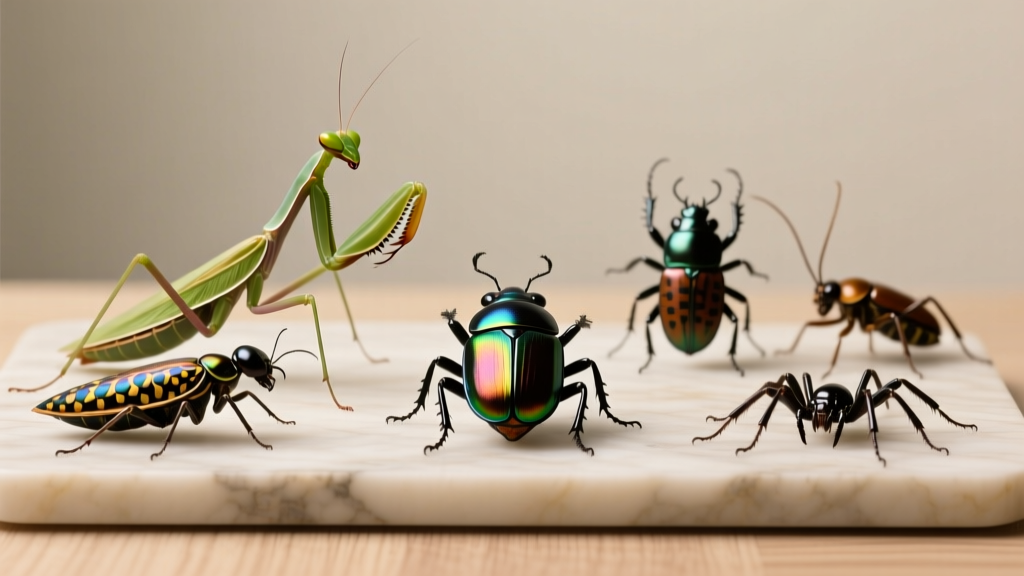
When building a personal brand in the science communication space, creators often face a dilemma: use your real name or adopt a highly searchable niche moniker? The digital persona known as Animals Arthropods represents the extreme end of the latter strategy. By adopting an exact-match taxonomic keyword as a pseudonym, this brand offers a fascinating case study in Instagram SEO, niche authority, and the sacrifices made in the name of algorithmic discoverability. In this critical review, we break down the pros, cons, and personal branding takeaways of the Animals Arthropods strategy, revealing what niche creators can learn for their own social media bios.
Quick Facts: The Animals Arthropods Brand
| Attribute | Details |
|---|---|
| Moniker / Brand Name | Animals Arthropods |
| Niche | Entomology, Macro Photography, Science Communication |
| Known For | Educational insect reels, taxonomy branding, wildlife conservation |
| Primary Platforms | Instagram, TikTok, YouTube Shorts |
| Branding Strategy | Exact-Match Keyword / Faceless Authority |
Social Media Presence & Bio Analysis
To understand the impact of the Animals Arthropods brand, we must first critically analyze how this keyword-first strategy translates into a social media bio. On Instagram, you have exactly 150 characters to convince a visitor to hit the follow button. For a traditional influencer, this space is used for personality-driven quirks. However, Animals Arthropods utilizes an 'Institutional Authority' bio framework.
Instead of a quirky personal anecdote, the bio leverages high-value SEO keywords and authority markers. A typical bio structure for this brand includes a university affiliation, a conservation mission statement, and a clear call-to-action (CTA) directing users to a Linktree or Patreon. By using the 'Name Field' hack—where the creator inputs 'Entomologist | Bug Expert' into the bolded name field rather than a human name—the account ensures it appears in Instagram search results whenever users look for bug-related content, completely bypassing the need for a recognizable human name.
The posting style is heavily curated, focusing on high-definition macro photography and fast-paced educational voiceovers. Follower engagement is uniquely skewed toward 'Saves' and 'Shares' rather than 'Likes' or 'Comments.' This is a hallmark of educational, keyword-driven pages. Users save the content for later reference or share it to their stories to signal their own interest in science, but they rarely engage in the deep, parasocial comment threads seen on personality-driven vlogs. The Animals Arthropods brand has effectively turned its Instagram profile into a digital textbook rather than a personal diary, which drastically alters how the audience interacts with the content.
Pros, Cons & Critical Review of the Brand
Evaluating the Animals Arthropods persona requires looking past the impressive follower counts and examining the long-term viability of treating a biological classification as a personal brand. Here is our critical review of the pros and cons of this specific branding angle.
The Pros: Algorithmic Dominance and Instant Trust
The most significant advantage of the Animals Arthropods brand is absolute algorithmic dominance. Instagram and TikTok's search engines heavily favor exact-match keywords. When a user searches for 'arthropods' or 'animal facts,' an account literally named Animals Arthropods will inherently rank higher than a creator named 'John Smith,' even if John is a certified biologist. This strategy guarantees a steady stream of passive, organic follower growth from the explore page and search bar.
Furthermore, the name carries an aura of institutional trust. It sounds like a digital extension of a natural history museum or a peer-reviewed journal. This instant authority makes it significantly easier to secure brand partnerships with educational apps, outdoor gear companies, and science museums. Brands feel they are sponsoring a publication rather than a single influencer, which often commands higher CPM rates for sponsored reels and stories.
The Cons: The Parasocial Deficit and Brand Rigidity
Despite the SEO benefits, the Animals Arthropods strategy suffers from a severe 'parasocial deficit.' In the creator economy, the deepest loyalty and highest merch-conversion rates come from parasocial relationships—the audience's feeling of personal friendship with the creator. Because Animals Arthropods operates as a faceless, textbook-style entity, followers are loyal to the information, not the person. If a competing page posts a higher-quality video about the same spider, the audience will easily migrate, as there is no human connection tethering them to the original account.
Additionally, this branding choice creates immense rigidity. If the creator behind the account eventually wants to pivot to reviewing science fiction movies, discussing mental health, or launching a lifestyle podcast, the brand name becomes a massive liability. You cannot easily pivot a brand named Animals Arthropods into lifestyle content without confusing the algorithm and alienating the existing audience. The creator is permanently boxed into the entomology niche, effectively becoming a prisoner of their own SEO success.
The Animals Arthropods Branding Strategy: Personal Branding Takeaways
What can everyday users and aspiring creators learn from the critical review of Animals Arthropods? Whether you are a real estate agent, a fitness coach, or a digital artist, the tension between 'searchability' and 'humanity' is the core challenge of modern bio writing. Here are the actionable takeaways you can apply to your own Instagram and TikTok profiles.
1. The Hybrid Bio Formula
You do not need to sacrifice your human identity to achieve the SEO benefits of the Animals Arthropods strategy. Use the 'Hybrid Formula' in your Instagram Name Field. Instead of just listing your name, format it as: First Name | Niche Keyword. For example, 'Sarah | Arthropod Expert' or 'David | Austin Real Estate.' This allows you to maintain human relatability while still capturing the exact-match search traffic that keyword-heavy brands enjoy.
2. Optimize for 'Saves' over 'Likes'
The Animals Arthropods account proves that educational content drives 'Saves,' which the Instagram algorithm currently values higher than almost any other metric for pushing content to the Explore page. To replicate this, structure your bio to promise utility. Use a CTA like 'Daily tips to help you pass the bar exam' or 'Recipes that save you 2 hours a week.' Frame your profile as a resource library rather than just a highlight reel.
3. Use Emojis as Visual Anchors, Not Clutter
A common mistake in bio writing is using emojis as mere decoration. Science communication brands use emojis as visual bullet points to break up complex text and guide the eye. Use a magnifying glass (🔍) for your niche, a location pin (📍) for your market, and a downward arrow (👇) for your link. This keeps your bio readable and visually aligned with the authoritative tone you are trying to set.
4. Know When to Drop the 'Institutional' Voice
The biggest takeaway from our critical review is knowing the limits of institutional branding. If your goal is to build a community, host live streams, and sell high-ticket coaching, you must inject vulnerability and personal storytelling into your captions and Reels. Let your handle and bio do the heavy lifting for SEO, but let your actual content provide the human heartbeat that the Animals Arthropods model lacks.
Sources & Further Reading
- HubSpot: The Ultimate Guide to Personal Branding - Explores the balance between professional authority and personal authenticity in digital profiles.
- Sprout Social: Instagram SEO Strategies - Details how exact-match keywords in name fields and bios impact search discoverability on the platform.
- National Geographic: Science Communication Guidelines - Provides insights into translating complex taxonomic and scientific data into engaging, digestible social media formats.