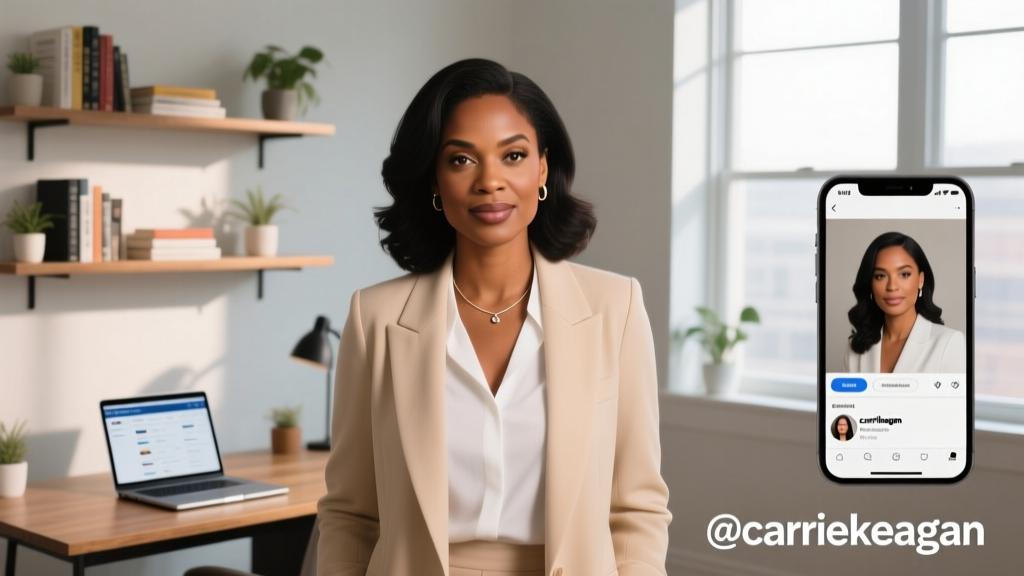
Carrie Keagan is a masterclass in personal brand evolution and digital authenticity. Long before influencers dominated social media feeds, she was pioneering unfiltered, personality-driven internet television. For creators and professionals looking to craft the perfect social media bio, studying Carrie Keagan offers a unique case study in how to pivot from niche internet fame to mainstream media, and eventually to a multi-hyphenate producing career. Her online presence is not just a digital resume; it is a reflection of a sharp, pop-culture-savvy brand that balances professional credibility with unapologetic humor. In this case study, we break down her digital footprint, analyze her bio strategies, and extract actionable personal branding takeaways you can apply to your own profiles.
Quick Facts: The Carrie Keagan Profile
| Attribute | Details |
|---|---|
| Full Name | Carrie Ann Nixon (Professionally Carrie Keagan) |
| Born | July 4, 1980 (Amherst, New York) |
| Nationality | American |
| Known For | Up Close with Carrie Keagan, VH1's Big Morning Buzz Live, The Hangover Part II |
| Primary Platforms | X (formerly Twitter), Instagram, Podcasting |
From Internet Pioneer to Mainstream TV: A Career Case Study
To understand her current social media branding, we must look at her career trajectory. Keagan first gained massive traction as the face of No Good TV (NGTV) in the mid-2000s. At a time when online video was in its infancy, her brand was built on shock value, sharp wit, and an unfiltered approach to celebrity interviews. Her early digital bios reflected this provocative, boundary-pushing persona.
However, the true test of a personal brand is its ability to evolve. When Keagan transitioned to mainstream cable television to host VH1’s Big Morning Buzz Live, her branding had to mature. She successfully pivoted her bio and public persona from "internet provocateur" to "trusted pop-culture authority." She maintained her signature humor and relatability but adapted her professional summaries to appeal to network executives, A-list publicists, and a broader cable audience. This pivot is a crucial lesson for anyone updating their LinkedIn or Instagram bio during a career transition: you can elevate your professional status without losing the core personality traits that made you stand out in the first place.
Following her VH1 tenure, she moved behind the camera, producing, directing, and developing projects, including her work featured in The Hangover Part II and various digital and podcasting ventures. Her brand shifted once again, this time to the "multi-hyphenate creator."
Analyzing Carrie Keagan's Social Media Presence
When examining her presence on platforms like X (formerly Twitter) and Instagram, a distinct pattern emerges. Keagan does not use her social media as a sterile, highly curated PR machine. Instead, she treats it as an extension of her conversational, quick-witted hosting style.
The Bio Structure: Her bios typically avoid the trap of listing every single credit, which can clutter the limited character space. Instead, she utilizes the "anchor and hook" method. The anchor establishes her current primary professional identity (e.g., Host, Producer, Director), while the hook injects a dose of self-deprecating humor or a niche pop-culture reference. This signals to followers that while she is an established industry professional, she remains accessible and deeply embedded in internet culture.
Content Strategy & Engagement: On X, Keagan is known for real-time commentary on pop culture, award shows, and industry news. This positions her as a thought leader and a peer to the celebrities she interviews. On Instagram, her grid serves as a visual portfolio, blending behind-the-scenes production shots, red-carpet moments, and candid personal updates. This mix of high-glamour industry access and grounded, everyday reality creates a parasocial bond with her audience, making her highly engaging to both fans and potential business collaborators.
The Anatomy of an Authentic Creator Bio
What can we learn from the way she constructs her digital identity? A successful bio for a multi-hyphenate creative must solve a specific problem: how do you tell people what you do when you do five different things?
Keagan’s approach relies on Umbrella Branding. Rather than listing "Host, Writer, Producer, Director, Interviewer," she often groups these under broader, more impactful terms or focuses on her current primary venture, using a link-in-bio tool to house the rest.
Furthermore, her branding leverages Tonal Consistency. Whether she is posting a promotional graphic for a new producing gig or tweeting a joke about a celebrity mishap, the "voice" remains the same. For your own bio, this means your profile picture, your header image, and your bio text must all share the same tonal DNA. If your bio is highly corporate but your content is chaotic and humorous, you create cognitive dissonance for new visitors.
Many creators stuff their bios with keywords (e.g., "SEO Expert | Marketing Guru | Content Creator | Speaker"). While this helps with platform search algorithms, it kills human connection. Keagan’s approach proves that you can be searchable by using industry-standard umbrella terms (like "Producer" or "Host") while reserving the remaining character count for a humanizing statement. This balance ensures that when a casting director or brand manager lands on your page, they immediately understand your professional utility, but they also get a sense of what it would be like to actually work with you on a set or in a writer's room.
Link-in-Bio Strategy for Multi-Hyphenates
For professionals with diverse portfolios, the bio text is only half the battle. The link-in-bio is where the conversion happens. Analyzing top-tier creators like Keagan reveals that a successful landing page must be categorized.
If a user clicks her profile link, they shouldn't just see a messy list of random URLs. They should see categorized buckets: "Watch My Latest Interviews," "Production & Directing Portfolio," and "Listen to the Podcast." When crafting your own lovemebio, think of your link tree as a digital lobby. Direct the traffic based on the user's intent. Are they a fan looking for entertainment? Are they a PR rep looking to pitch a client? Are they a brand looking for a producer? Segment your links to serve these distinct audiences simultaneously.
Personal Branding Takeaways for Your Own Profile
Based on this real-world case study, here are the core branding lessons you can apply to your own Instagram, X, or LinkedIn profiles today:
- Embrace the Pivot: Do not be afraid to update your bio to reflect your current ambitions. If you are moving from a specialist role to a generalist or leadership role, change your bio's "anchor" to reflect where you are going, not just where you have been.
- Archive the Past: When you pivot, you don't need to erase your past, but you shouldn't let it dominate your current bio. Keagan is rightly proud of her NGTV and VH1 days, but her current bio focuses on her production company and current media ventures. Use your "Highlights" on Instagram or a dedicated "Archive" section on your link-in-bio to house legacy work, keeping your primary bio text focused on the present and future.
- Inject Controlled Authenticity: Keagan’s brand thrives on her unfiltered nature, but it is always professional enough to secure A-list interviews. Find the line between "relatable" and "unprofessional" and walk it confidently in your bio's hook.
- Use the Multi-Hyphenate Formula: If you have multiple skills, use the format: [Primary Title] | [Secondary Title] | [Personality Hook/Current Project]. Example: "Digital Producer | Pop-Culture Host | Currently over-caffeinated and editing."
- Optimize Your Digital Lobby: Use your single profile link wisely. Direct different segments of your audience to specific landing pages, portfolios, or booking forms.
Sources & Further Reading
- IMDb - Carrie Keagan Filmography and Career Credits (imdb.com)
- Variety - VH1 Announces 'Big Morning Buzz Live' with Carrie Keagan (variety.com)
- Fast Company - The Evolution of Digital Media and Web Pioneers (fastcompany.com)