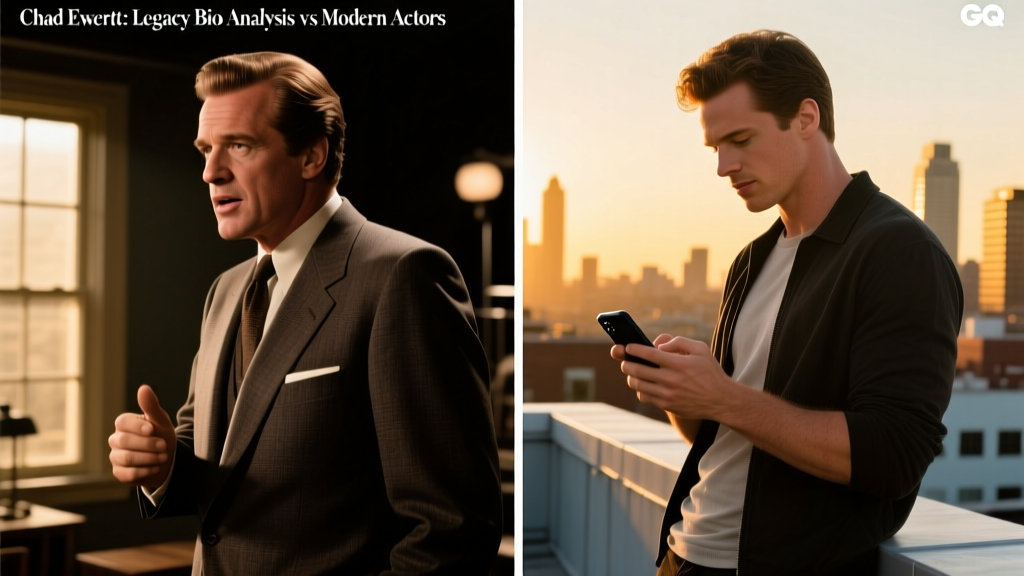
Raymond Lee Cramton, famously known to the world as Chad Everett, mastered the art of the television authority figure long before influencers curated their digital personas. As the star of the hit 1970s drama Medical Center, Everett’s personal brand was built on the archetype of the brilliant, stoic, and compassionate surgeon. But how does a legacy star’s brand hold up when compared to modern actors who curate their own Instagram bios and Twitter feeds? In this comparison and alternatives analysis, we examine the Chad Everett brand identity, contrasting classic Hollywood studio-managed PR with the self-authored digital footprints of today’s television stars.
The Chad Everett Quick Facts & Career Milestones
| Attribute | Details |
|---|---|
| Full Name | Raymond Lee Cramton |
| Born | June 11, 1937 (Grosse Pointe, Michigan) |
| Passed | July 24, 2012 (Los Angeles, California) |
| Nationality | American |
| Known For | Dr. Joe Gannon in Medical Center (1969–1976) |
| Notable Filmography | The Singing Nun, Mulholland Drive, The Star Maker |
| Digital Presence | Legacy Estate Pages, Fan Archives, IMDb, TCM |
Television and Film Highlights: Forging an Archetype
To understand Everett’s brand, one must look at the foundation of his career. Before the era of the multi-hyphenate Instagram bio, an actor’s brand was entirely synonymous with their most prominent roles. Everett’s breakthrough came with the 1962 film The Singing Nun, but it was his casting as Dr. Joe Gannon in CBS’s Medical Center that cemented his public persona. For seven seasons, Everett portrayed a dedicated, occasionally maverick surgeon who balanced medical brilliance with deep empathy.
This role wasn't just a job; it was a brand anchor. In the 1970s, television actors did not have personal websites or social media to showcase their off-screen hobbies. Everett’s 'bio' was essentially written by CBS’s publicity department, positioning him as the quintessential American leading man—handsome, authoritative, and morally grounded. Later in his career, Everett showcased his range with a memorable, chilling cameo as a Hollywood studio executive in David Lynch’s surreal masterpiece Mulholland Drive (2001), and guest spots on modern hits like Two and a Half Men and Melrose Place. These later roles proved that a strong foundational brand can evolve, allowing an actor to transition from a daytime heartthrob to a respected character actor without losing their core audience recognition.
Social Media Presence: The Legacy Digital Footprint
Because Chad Everett passed away in 2012, prior to the explosive growth of Instagram, TikTok, and modern personal branding platforms, he does not possess a self-managed digital footprint. Instead, his 'social media presence' is an interesting case study in legacy branding. His digital bio is maintained by a combination of institutional archives (like IMDb and Turner Classic Movies), estate representatives, and dedicated fan-curated tribute pages.
When analyzing fan-run Instagram and Facebook tribute pages dedicated to Everett, a distinct pattern emerges in how his bio is presented. Unlike modern actors who use their bios to promote current projects, merchandise, or lifestyle brands, Everett’s legacy bios are heavily anchored in nostalgia. Keywords such as 'Classic TV,' '70s Icon,' 'Medical Center,' and 'Golden Age Television' dominate these spaces. The imagery used is almost exclusively high-contrast, vintage studio photography. This creates a branding effect of timelessness. While a modern actor's social media feed is a chaotic mix of on-set selfies, sponsored content, and personal opinions, Everett’s digital legacy is a highly curated, unintentional masterclass in minimalist, archetype-driven branding. His 'bio' across the web remains untarnished by the daily noise of the internet, preserving the exact aura of mystery and authority that made him a star.
Comparison: Classic Studio PR vs. Modern Actor Bios
To truly understand the mechanics of Everett’s brand, we must compare it to the alternatives: the modern medical drama star and the contemporary approach to PR crises.
Alternative 1: The Modern Medical Star (e.g., Patrick Dempsey, Noah Wyle)
Consider the modern successors to Everett’s 'TV Doctor' throne, such as Patrick Dempsey (Grey's Anatomy) or Noah Wyle (ER). If you look at their Instagram bios today, you will see a deliberate fragmentation of the 'doctor' archetype. Dempsey’s bio highlights his racing career, his eyewear line, and his production company. Modern actors use their bios to signal that they are multi-dimensional entrepreneurs. In contrast, Everett’s brand was entirely monolithic. He was an actor, and specifically, he was a TV doctor. While modern bios strive for breadth, Everett’s legacy proves the enduring power of depth. By owning a single, powerful archetype, Everett achieved a level of cultural permanence that many modern, multi-hyphenate stars struggle to maintain once their flagship shows end.
Alternative 2: The PR Crisis Response
One of the most defining moments of Everett’s career occurred off-screen. In 1973, during an appearance on The Tonight Show Starring Johnny Carson, Everett made highly controversial and deeply offensive remarks regarding his wife, referring to her in a demeaning manner that sparked immediate national outrage. In the 1970s, repairing a personal brand required studio-mandated press releases, carefully orchestrated magazine interviews, and a temporary retreat from the public eye. Everett had to rely on CBS and his publicists to draft an apology and manage the fallout.
Compare this to the modern alternative: the social media apology. Today, when an actor faces a branding crisis, they bypass the studio and use Twitter, Instagram Notes, or a direct-to-camera TikTok video to issue a personal, unfiltered apology. While modern bios and social channels allow for immediate damage control and direct fan communication, they also invite immediate, unfiltered backlash. Everett’s era forced a 'cooling off' period that, ironically, allowed his core audience to separate the actor from the controversy over time, eventually allowing his Medical Center brand to survive the scandal—a feat that is increasingly difficult in today’s hyper-reactive digital landscape.
Personal Branding Takeaways for Your Own Profile
What can you learn from a 1970s television star when crafting your own Instagram, LinkedIn, or Twitter bio? The analysis of Chad Everett’s legacy offers three powerful takeaways for modern personal branding:
- 1. The Power of the Archetype: Everett didn't try to be everything to everyone. He was the authoritative, compassionate expert. When writing your own bio, resist the urge to list every hobby and side-hustle. Identify your core archetype (e.g., The Innovator, The Reliable Consultant, The Creative Disruptor) and let your bio reflect that singular, strong identity.
- 2. Longevity Outlasts Trends: Modern bios are often stuffed with current slang, trending emojis, and fleeting internet references. Everett’s legacy pages remain effective decades later because they rely on foundational descriptors. Use timeless language in your professional bios. Focus on the enduring value you provide rather than the current trend you are chasing.
- 3. Let the Work Anchor the Brand: Everett’s name is permanently linked to Medical Center because the work was undeniable. Your bio should not just be a list of adjectives; it should be a signpost pointing to your best work. Whether you link to a portfolio, a flagship project, or a published article, ensure your bio directs traffic to the 'proof' of your expertise, just as Everett’s legacy is anchored by his extensive, searchable filmography.
Ultimately, while we no longer rely on Hollywood studio executives to write our biographies, the principles of effective branding remain unchanged. A strong, focused identity, backed by undeniable work, will always outlast the noise of the daily feed.