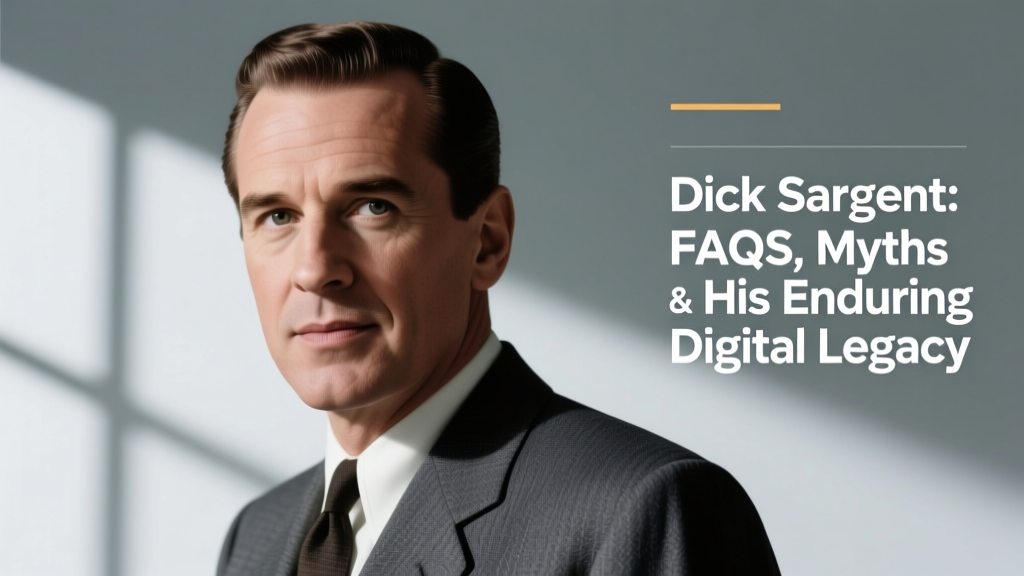
When classic television fans and pop culture historians search for Dick Sargent today, they are often met with a fascinating mix of nostalgia, trivia, and lingering confusion. Best known for stepping into one of the most controversial recasting roles in television history, Sargent's personal brand is deeply intertwined with the magical world of Bewitched. However, because he passed away in 1994—long before the advent of Instagram, TikTok, or X—his digital footprint presents a unique case study in posthumous personal branding. How does an actor's brand survive, evolve, and engage audiences in the social media era when they are no longer here to post? In this profile, we tackle the most common FAQs, debunk persistent myths, and explore what modern creators can learn from the enduring legacy of Dick Sargent.
Quick Facts: The Man Behind the Magic
| Attribute | Details |
|---|---|
| Full Name | Richard Stanford Sargent |
| Born | April 19, 1930 (Carmel, California) |
| Died | July 8, 1994 (Los Angeles, California) |
| Nationality | American |
| Known For | Darrin Stephens on Bewitched (1969–1972) |
| Official Social Media | None (Deceased); managed via fan archives and estate tributes |
Dick Sargent on Screen: Career Highlights & Filmography
Before analyzing his digital legacy, it is vital to understand the foundation of his brand. Sargent was not just a sitcom replacement; he was a working actor with a diverse portfolio. His career is a masterclass in adaptability, transitioning from studio contract player to television mainstay.
- Early Film Career (1950s): Sargent began as an MGM contract player, appearing in films like The Prisoner of Zenda (1952) and Love Me or Leave Me (1955). His early brand was that of the classic, clean-cut Hollywood leading man.
- The Bewitched Era (1969–1972): Taking over the role of Darrin Stephens, Sargent brought a more grounded, contemporary, and slightly more assertive energy to the character. He starred in 84 episodes, navigating the show's transition into the socially conscious 1970s.
- Prolific Guest Star (1970s–1980s): Post-Bewitched, Sargent became a ubiquitous presence on classic TV. His filmography includes memorable guest spots on The Partridge Family, Charlie's Angels, Fantasy Island, The Love Boat, and Dynasty.
- Late Career & Theater: He continued to work in regional theater and made his final television appearances in the early 1990s, including a nod to his magical past on the show Deadly Games.
FAQ & Common Misconceptions About Dick Sargent
A major part of managing a legacy brand involves correcting the record. For estate managers and fan pages dedicated to Sargent, addressing these common misconceptions is a daily task in comment sections and bio descriptions.
1. Was Dick Sargent the original Darrin?
The Myth: Many casual viewers assume Sargent was the first actor to play Samantha's mortal husband.
The Fact: Dick York originated the role in 1964. Due to a debilitating back injury and severe dependency on painkillers, York was forced to leave the show in 1969. Sargent was brought in as his replacement. Interestingly, Sargent had actually been the producers' first choice for the role in 1964, but he was unavailable due to a prior film contract with Universal.
2. Did Elizabeth Montgomery hate him?
The Myth: Tabloids and fan rumors long suggested that Montgomery resented Sargent for replacing her friend and former co-star, Dick York.
The Fact: While the initial transition was professionally awkward, the two developed a deep, lifelong friendship. The most powerful testament to their bond occurred in 1992, when Montgomery publicly supported Sargent by co-chairing the Los Angeles Pride Parade alongside him, shortly after he publicly came out as gay. This moment remains a cornerstone of his authentic personal legacy.
3. Does he have an official Instagram or TikTok account?
The Myth: Users frequently search for his verified social media handles to see 'behind the scenes' content.
The Fact: Sargent passed away in 1994. Any account claiming to be him is either a fan-run archive, an AI-generated tribute, or an impersonator. His true digital presence is curated by retro-television communities and estate historians.
The Digital Legacy: Social Media Presence & Fan Tributes
Because Dick Sargent does not have a personal social media presence, his brand lives on through community curation and nostalgia marketing. On platforms like Instagram and TikTok, his image is frequently utilized in specific niches:
- Retro TV Aesthetic Pages: Accounts dedicated to 1960s and 70s fashion, set design, and pop culture frequently use high-resolution stills of Sargent. His brand is visually associated with mid-century modern aesthetics, sharp tailoring, and the 'Mad Men' era of Hollywood.
- LGBTQ+ Historical Archives: Queer history accounts often highlight the 1992 LA Pride Parade moment. In these spaces, Sargent's brand transcends his sitcom work; he is remembered as a pioneer who lived authentically during a time when Hollywood was largely hostile to openly gay actors.
- Fan-Run 'Estate' Bios: The most successful tribute pages use highly optimized Instagram bios to clarify their status. A standard, well-branded fan page bio for Sargent looks like this: 'Archive & Tribute 📺 | Honoring the life and work of Dick Sargent (1930-1994) | Not affiliated with the estate | Bewitched & Beyond ✨'
From an SEO and social media perspective, the search volume for 'Dick Sargent' spikes whenever Bewitched trends on streaming platforms or during Pride Month. Pages that successfully capture this traffic are those that combine high-quality archival imagery with educational captions that debunk the myths mentioned above.
Personal Branding Takeaways: Managing a Legacy Profile
What can modern creators, estate managers, and personal branding enthusiasts learn from the digital afterlife of Dick Sargent? Even if you are managing a living brand, these legacy principles apply to how your brand is perceived when you step away from the keyboard.
1. Clarity is Crucial in Legacy and Archive Bios
If you are managing a tribute page, a business archive, or a memorial account, your bio must immediately establish boundaries. Use terms like 'Official Archive,' 'Estate Managed,' or 'Fan Tribute.' Misleading users into thinking a deceased or retired figure is actively posting damages trust and invites platform penalties for impersonation.
2. Authenticity Outlasts Typecasting
For decades, Sargent's brand was entirely defined by the 'Second Darrin' stigma—a thankless pop-culture position. However, his decision to live authentically and participate in LGBTQ+ activism alongside Elizabeth Montgomery redefined his legacy. The Takeaway: Your personal brand should not be limited to your most commercial work. Allowing your genuine values and personal truth to show in your public life creates a deeper, more resonant legacy that outlives viral trends.
3. Lean into Community Curation
Sargent's brand survives because fans love the aesthetic and history of his era. Modern brands and creators should empower their communities to curate content. Creating 'remixable' assets, encouraging fan edits, and providing high-quality media kits allows your audience to become the stewards of your brand when you are offline.
4. Address Misconceptions Proactively
Just as fan pages use pinned posts to explain the Dick York/Dick Sargent recasting, modern professionals should use their social media highlights or website FAQs to address industry rumors or common misunderstandings about their work. Controlling the narrative is a core pillar of strong personal branding.
Sources & Further Reading
- IMDb: Dick Sargent Biography and Filmography
- Los Angeles Times Archives: Dick Sargent Obituary and Career Retrospective (1994)
- Television Academy Foundation: Interviews and historical archives regarding the casting and production of Bewitched.