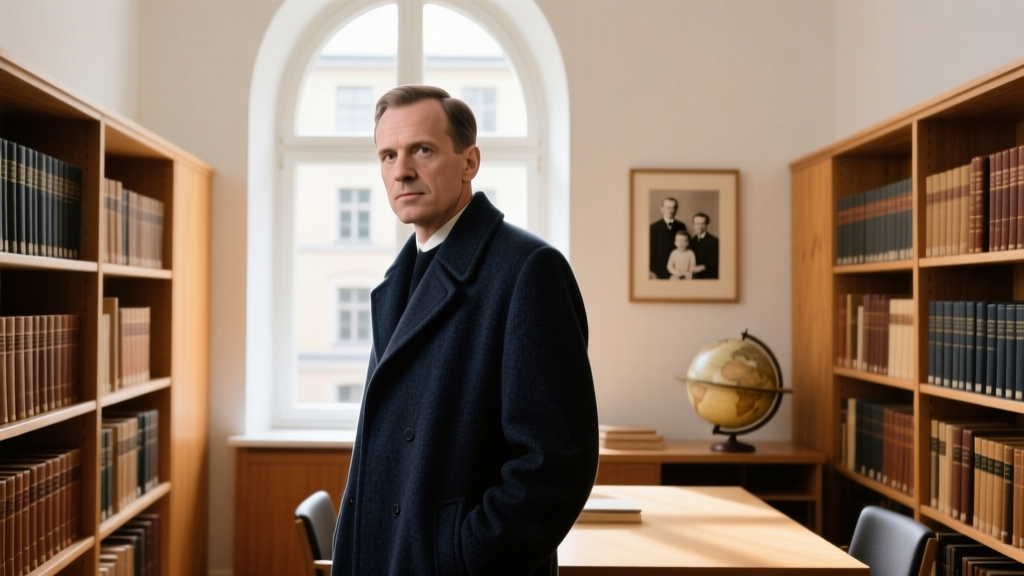
When we think of personal branding and social media bios, we rarely look back to the 1940s. Yet, Dietrich Bonhoeffer remains one of the most compelling figures of the 20th century, offering a profound masterclass in authentic identity. At lovemebio.com, we usually dissect modern Instagram profiles, but studying Dietrich Bonhoeffer provides a unique case study in legacy branding. How do you build a profile and a personal brand that outlasts your physical life? By examining his historical footprint, his smuggled prison letters, and how modern institutions curate his digital presence today, we uncover timeless lessons for crafting a bio with genuine substance and unshakeable conviction.
The Historical Bio of Dietrich Bonhoeffer
To understand the brand, we must understand the man. Dietrich Bonhoeffer was a German Lutheran pastor, theologian, and anti-Nazi dissident. His 'bio' was not crafted in a marketing boardroom; it was forged in the fires of moral crisis. While many of his contemporaries compromised their values to align with the prevailing political winds, Bonhoeffer’s personal brand was defined by radical obedience to his faith and an unwavering commitment to human dignity. He operated as a spy within the German military intelligence while simultaneously working to help Jews escape the Holocaust. His ultimate sacrifice at the Flossenbürg concentration camp in 1945 cemented his legacy not just as a thinker, but as a man whose actions perfectly mirrored his words. For modern creators, this highlights the most critical rule of personal branding: your public profile must be a direct reflection of your private convictions.
| Attribute | Details |
|---|---|
| Full Name | Dietrich Bonhoeffer |
| Born | February 4, 1906 (Breslau, Germany) |
| Died | April 9, 1945 (Flossenbürg) |
| Nationality | German |
| Known For | Anti-Nazi resistance, Theology, Martyrdom |
| Digital Curators | International Bonhoeffer Society, Fortress Press |
Major Publications and Core Philosophies
A musician has a discography; an actor has a filmography. A theologian and intellectual has a bibliography. Bonhoeffer’s written works form the pillars of his enduring personal brand. Understanding these core texts is essential to understanding how his 'bio' is summarized across the internet today.
The Cost of Discipleship (1937): This is where Bonhoeffer introduced his famous critique of 'cheap grace' versus 'costly grace.' In branding terms, cheap grace is the equivalent of buying followers or using clickbait—it requires no sacrifice and offers no real transformation. Costly grace demands everything. It is the pursuit of authentic, hard-won authority in your niche.
Life Together (1939): A masterclass in community building. Bonhoeffer wrote about the necessity of authentic, physical, and spiritual community. Today, this translates to how creators build engaged, loyal audiences rather than passive scrollers.
Ethics (Written in prison, published posthumously): A deep dive into moral responsibility in a broken world, showcasing his ability to tackle complex, real-world problems rather than staying in the safety of academic theory.
Dietrich Bonhoeffer’s Digital Footprint and Curated Presence
Because Bonhoeffer lived decades before the internet, his 'social media presence' is entirely curated by legacy institutions, publishers, and historical societies. Analyzing how organizations like the International Bonhoeffer Society and Fortress Press manage his digital footprint offers brilliant insights into legacy branding.
The Bio and Profile Aesthetics: On platforms like Instagram and X, pages dedicated to Bonhoeffer rely on stark, high-contrast black-and-white photography. His bio across these platforms is uniformly minimalist, usually citing his primary identities: Theologian, Pastor, Martyr. There is no fluff, no emojis, and no desperate calls to action. The branding is austere, reflecting the gravity of his life and work.
Posting Style and Content Pillars: The content strategy for Bonhoeffer’s digital legacy revolves around quote cards, archival letters, and historical commentary. The 'posting style' is educational and deeply reflective. Curators frequently use his prison letters to comment on modern social justice issues, proving that his brand is highly adaptable to contemporary conversations without losing its historical integrity.
Follower Engagement: The engagement on Bonhoeffer-related content is highly qualitative. Rather than viral dance trends, his digital footprint generates deep, paragraph-long comments from theology students, civil rights advocates, and history enthusiasts. His words are heavily shared as modern aphorisms, proving that profound, text-heavy content can still achieve massive reach when it speaks to the human condition.
Letters and Papers: The Original Micro-Blogging
If we view social media as a way to share raw, unfiltered thoughts with a dedicated audience, Bonhoeffer’s Letters and Papers from Prison was the 1940s equivalent. Smuggled out of Tegel prison, these writings were never intended for publication. They were intimate, questioning, and deeply personal—a stark contrast to his formal, academic books.
For modern personal branding, this duality is a crucial lesson. Bonhoeffer’s formal books established his authority (his 'LinkedIn' presence), but his smuggled letters revealed his humanity, his doubts, and his vulnerabilities (his 'Instagram Stories' or 'X' presence). Audiences today connect with creators who are willing to share their struggles and unpolished thoughts. By allowing his rawest letters to be published posthumously, Bonhoeffer’s brand achieved a three-dimensional depth that purely academic figures rarely reach. He showed that true authority does not require a facade of perfection.
Personal Branding Takeaways for Modern Creators
What can a 21st-century digital creator learn from a 20th-century theologian? The principles of Dietrich Bonhoeffer’s legacy translate directly into actionable strategies for your own social media bios and profiles.
1. Define Your 'Costly Grace' (Core Values): What are you willing to sacrifice for your brand? If your bio claims you are an advocate for a specific cause, are you putting in the hard work, or just using the buzzwords? Authentic personal branding requires a commitment to your stated values, even when it is inconvenient.
2. Embrace Duality in Your Content: Just as Bonhoeffer balanced heavy theological treatises with intimate, poetic prison letters, your profile should balance professional authority with personal vulnerability. Use your main feed for polished, high-value content, but use Stories, Threads, or X to share your real-time, unfiltered reflections.
3. Let Your Actions Validate Your Bio: Bonhoeffer’s bio claimed he was a pastor and a defender of the oppressed. He validated this by joining the resistance and ultimately losing his life for it. Your social media bio is just a promise; your content, your community interactions, and your real-world actions are the proof. Never write a bio that your actions cannot back up.
Applying the Bonhoeffer Case Study to Your Profile
To apply the Bonhoeffer case study to your own lovemebio.com profile, start by stripping away the superficial. Look at your current Instagram bio. Is it filled with trending keywords that don't actually represent your daily work? Strip it down to your core identities, just as legacy pages do for Bonhoeffer: Theologian. Pastor. Dissident.
Use your link-in-bio to direct followers to your 'Letters and Papers'—your long-form content, your manifestos, or your unfiltered newsletter. Allow your audience to see the raw, unpolished thoughts that drive your public-facing work. Finally, remember that the most powerful personal brands are not built on algorithms, but on unwavering conviction. When you build a profile rooted in deep, authentic purpose, you create a legacy brand that resonates far beyond the lifespan of any single social media trend.
Sources and Further Reading
- United States Holocaust Memorial Museum - Historical archives on the German resistance and Bonhoeffer's role in the Abwehr.
- The International Bonhoeffer Society - Curators of his legacy, academic research, and global community engagement.
- Fortress Press - The primary English publisher of the Dietrich Bonhoeffer Works, managing his modern digital and print footprint.