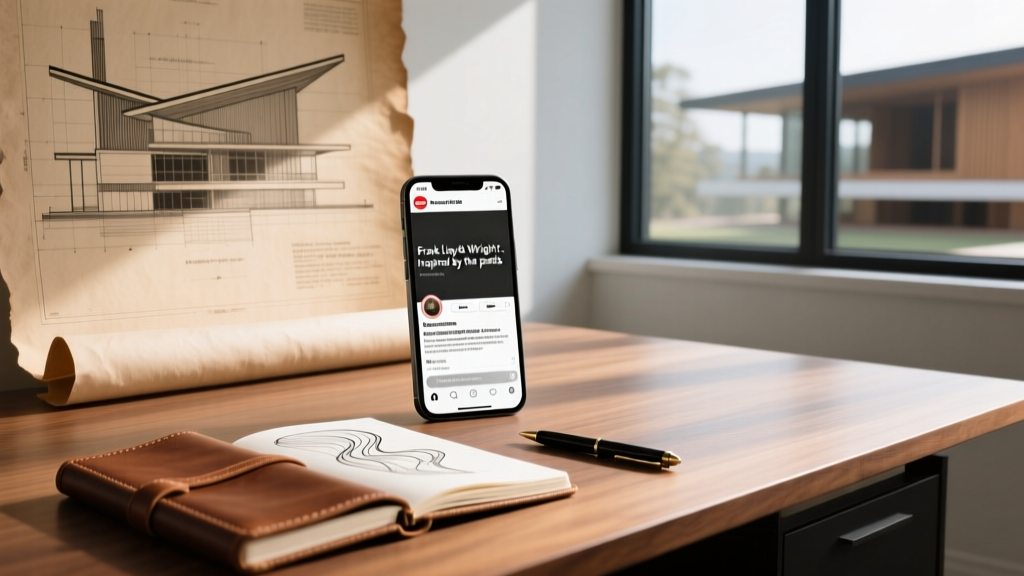
When we think of personal branding, we rarely look back to the late 19th and early 20th centuries. Yet, Frank Lloyd Wright was a master of self-mythologizing long before the internet existed. From his signature wide-brimmed hats and flowing capes to his fiercely independent manifestos on organic architecture, Wright didn't just build houses; he built a persona. Today, the digital landscape has transformed how historical legacies are maintained. The current trend in heritage branding relies on visual storytelling, archival authenticity, and educational carousels. By examining how the estate of Frank Lloyd Wright manages his digital footprint, modern creators can learn profound lessons about crafting a timeless Instagram bio and a resilient personal brand.
Quick Facts: The Architect and His Digital Estate
| Attribute | Details |
|---|---|
| Full Name | Frank Lincoln Wright |
| Born | June 8, 1867 (Richland Center, Wisconsin) |
| Died | April 9, 1959 (Phoenix, Arizona) |
| Nationality | American |
| Known For | Organic Architecture, Fallingwater, Guggenheim Museum, Taliesin |
| Official Digital Presence | @franklloydwrightfoundation (Instagram) |
The Foundation of a Legacy Brand
To understand the digital branding of Frank Lloyd Wright today, we must first understand the physical portfolio that serves as his brand's foundation. Wright designed more than 1,000 structures, of which 532 were completed. His philosophy of 'organic architecture'—the belief that buildings should exist in harmony with humanity and its environment—was not just a design principle; it was his core brand manifesto. Structures like Fallingwater in Pennsylvania and the Solomon R. Guggenheim Museum in New York are more than just buildings; they are globally recognized visual motifs. In the modern digital landscape, these physical milestones act as the ultimate 'content pillars.' They provide an endless well of visual assets, geometric patterns, and philosophical quotes that the Wright estate leverages to maintain a highly engaged, multi-generational audience online.
Social Media Presence: Curating the Wright Aesthetic
Because Wright passed away in 1959, his personal brand is actively managed and curated by the Frank Lloyd Wright Foundation. Their official Instagram account, @franklloydwrightfoundation, serves as a masterclass in legacy brand management, boasting hundreds of thousands of followers.
Instagram Bio Breakdown
The Foundation's Instagram bio is a textbook example of institutional clarity mixed with brand reverence. It typically includes:
- The Identifier: Clearly stating the official status of the account to build immediate trust.
- The Mission Statement: A concise hook focused on preservation, education, and inspiration.
- The Call to Action (CTA): A strategic Linktree or custom landing page directing traffic to museum tours, archival shop purchases, and preservation donations.
Content Strategy and Grid Aesthetics
The visual grid is a masterful blend of high-resolution contemporary photography of his surviving structures and sepia-toned archival images of Wright himself. The engagement strategy relies heavily on educational carousels—breaking down the geometry of his stained glass windows or the structural engineering of his cantilevered roofs. This transforms the account from a simple digital museum into an active educational resource, driving high save and share rates among design students, architects, and aesthetic enthusiasts.
Trend Report: The Archival Aesthetic in Modern Branding
Looking at the current landscape of social media branding, we are witnessing a massive shift away from hyper-curated, sterile digital personas. The 'Archival Aesthetic' is dominating design, architecture, and thought-leadership niches on Instagram and TikTok. Users are gravitating toward raw, historical authenticity.
For legacy brands like Frank Lloyd Wright, this trend is highly advantageous. The release of digitized blueprints, handwritten letters, and vintage construction photos taps into the modern consumer's desire for 'behind-the-scenes' transparency and historical grounding. According to digital marketing analyses of heritage brands, accounts that utilize archival storytelling see a significantly higher engagement rate compared to those that only post polished, modern promotional graphics. The Wright Foundation capitalizes on this by treating their vast physical archives (housed in places like the Museum of Modern Art and Taliesin West) as a dynamic content calendar. They celebrate anniversaries of building completions, share Wright's biting and brilliant quotes on modern society, and showcase the painstaking restoration processes, effectively turning preservation into a compelling, ongoing narrative.
Personal Branding Takeaways for Your Profile
You don't need to be a world-renowned architect or a legacy estate to apply the principles of the Frank Lloyd Wright digital strategy to your own personal brand. Here are actionable takeaways you can implement on your lovemebio profile and social media channels today:
1. Write a 'Manifesto' Bio
Wright was never shy about his opinions on how the world should be built. Instead of a generic job title in your Instagram bio, consider writing a micro-manifesto. What is your core philosophy? A graphic designer might use: 'Building digital spaces that breathe. Organic UI/UX.' This immediately elevates your profile from a simple resume to a statement of intent.
2. Create an 'Archive' Story Highlight
Authenticity is the currency of the current social media landscape. Dedicate a Story Highlight on your profile to your 'Archives.' Share your early, messy sketches, your first failed projects, or the evolution of your workspace. Showing the historical progression of your craft builds deep trust and parasocial connection with your audience, mirroring how the Wright Foundation shares early blueprints to show the evolution of Fallingwater.
3. Leverage Geometric and Visual Consistency
Wright's use of specific geometric shapes and natural materials made his work instantly recognizable, even without a signature attached. Audit your visual grid and bio link landing page. Do you have a consistent color palette, typography, or visual motif? Establishing a strict visual boundary ensures that when someone sees your content in their feed, they immediately recognize it as yours.
4. Use Educational Carousels for Thought Leadership
Don't just show the final product; explain the philosophy behind it. Use Instagram carousels to break down your creative process, much like architectural historians break down Wright's use of natural light. Educating your audience positions you as an authority in your niche, increasing the likelihood that your profile will be shared and saved.
Sources and Further Reading
- The Frank Lloyd Wright Foundation - Official archives, preservation updates, and digital resources.
- Museum of Modern Art (MoMA) - 'Frank Lloyd Wright at 150: Unpacking the Archive' exhibition insights.
- ArchDaily - Ongoing coverage of architectural preservation trends and organic design influences in modern digital media.