
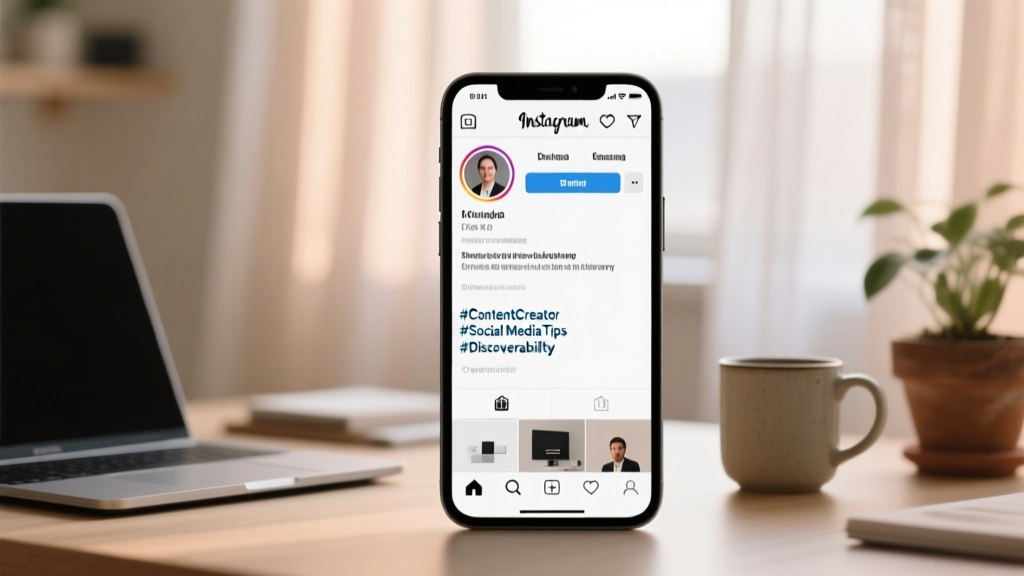
Should you stuff your Instagram bio with hashtags, or is it just digital clutter? Creators and brands have debated this for years, and the answer is more nuanced than a simple yes or no. If you are trying to optimize your Instagram bio for maximum visibility, understanding how bio hashtags actually function is essential.
In this analysis, we break down how Instagram's search and discovery systems treat bio text, compare bio hashtags against caption and comment strategies, and share what actually moves the needle for account growth.
How Instagram Actually Reads Your Bio
Your Instagram bio is indexed by the platform's search system, but not in the way most users assume. When someone types a keyword into the search bar, Instagram surfaces accounts based on username, name field, and bio content. This means the text in your bio—including any hashtags—is searchable.
However, searchable does not necessarily mean discoverable in the hashtag feed. Hashtags placed in your bio are not clickable in the same way caption hashtags are. A user cannot tap a bio hashtag and jump to a feed of all posts using that tag. This single design choice fundamentally changes how bio hashtags function compared to their caption counterparts.
According to insights from our Instagram bio SEO case studies, accounts that treat their bio as a keyword-rich description rather than a hashtag dumping ground tend to perform better in search results. The algorithm appears to weigh natural language more heavily than symbol-heavy text blocks.
Bio Hashtags vs. Caption Hashtags: The Key Differences
To understand whether bio hashtags work, you need to compare them directly against the two other primary placement options: captions and comments.
Clickability and User Behavior
Caption hashtags are clickable and lead users to a dedicated feed. Comment hashtags function identically once posted. Bio hashtags, by contrast, are static text. They serve as visual signals to human visitors but do not create interactive pathways.
This matters because hashtag discovery often happens through exploration. When a user finds your post via a caption hashtag, they might visit your profile. Bio hashtags do not generate that inbound traffic loop. They only reinforce context once someone has already arrived.
Algorithmic Weight and Indexing
Instagram's recommendation engine prioritizes content based on relevance signals. Caption hashtags directly categorize posts into topic feeds, which the algorithm uses to distribute content to interested audiences. Bio hashtags are part of your profile's metadata, which influences account-level search but not content-level distribution.
In other words, caption hashtags help your posts get seen. Bio hashtags help your account get found when someone searches for specific terms. These are two different stages of the discovery funnel, and conflating them leads to poor strategy.
What Actually Happens When You Add Hashtags to Your Bio
Let us look at two hypothetical scenarios based on real patterns we have observed.
Scenario A: A lifestyle creator with ten thousand followers adds five popular hashtags like #travel and #fashion to their bio. Over the following month, their profile visits from search increase slightly—around five to ten percent—because those terms match common search queries. However, their post reach remains flat because bio hashtags do not feed the content distribution algorithm.
Scenario B: A boutique coffee brand replaces generic bio hashtags with a clear value proposition and one branded hashtag. Their conversion rate from profile visit to follow improves significantly. The branded hashtag, used consistently in captions, builds a content hub that customers actually engage with.
These examples illustrate a critical point: bio hashtags can support discovery, but only when they complement a broader strategy. For more inspiration on crafting effective bios, check out these aesthetic bio ideas that prioritize clarity over clutter.
The SEO Angle: Can Bio Hashtags Improve Searchability?
Instagram functions as a search engine for many users, especially younger demographics. When someone searches for "vegan recipes" or "minimalist interior design," the platform surfaces relevant accounts based on profile text.
From an SEO perspective, your bio is prime real estate. Keywords—whether formatted as hashtags or natural language—help Instagram understand what your account represents. That said, readability and user experience matter just as much as keyword density.
Our research suggests that two to three highly relevant terms, woven naturally into a compelling bio, outperform a string of ten hashtags. If you are serious about Instagram SEO, your time is better spent refining your name field, bio description, and alt text than stacking hashtags in your profile. You can explore more tactics in our complete Instagram bio hashtags guide.
Best Practices for Bio Hashtags That Actually Work
If you decide to include hashtags in your bio, follow these guidelines to ensure they serve a purpose rather than creating noise.
- Limit yourself to one branded hashtag. A unique branded tag encourages user-generated content and creates a discoverable content collection when used in captions.
- Prioritize your name field for keywords. The name field carries more search weight than the bio. Use it for your brand name plus a primary descriptor.
- Write for humans first. A bio that reads like a robot wrote it turns visitors away. Clarity and personality drive follows, not keyword density.
- Use a bio generator for structure. If you are unsure how to balance keywords with creativity, try our Instagram bio generator to find a format that fits your brand voice.
- Test and iterate. Monitor your profile visits and search impressions in Instagram Insights. If adding or removing hashtags changes your numbers, let data guide your decision.
Frequently Asked Questions
Do hashtags in my Instagram bio make me appear in hashtag searches?
No. Hashtags in your bio do not make your account appear in hashtag search feeds. Only hashtags used in captions and comments surface content in those dedicated feeds. Bio hashtags may help your profile appear in general account searches, but they do not function as clickable discovery tools.
How many hashtags should I put in my Instagram bio?
Less is more. One branded hashtag is ideal. If you include more, ensure they read naturally within your bio text. A cluttered bio filled with hashtags looks unprofessional and does not improve algorithmic performance.
Are bio hashtags better than caption hashtags for growth?
No. Caption hashtags are far more effective for content discovery and reach because they categorize your posts into topic-based feeds. Bio hashtags play a supporting role in profile searchability but do not directly drive post distribution. For best results, use a strong caption hashtag strategy and keep your bio clean and keyword-rich.
Should I use a hashtag or a keyword phrase in my bio?
A keyword phrase is usually better. Instagram search treats bio text as searchable content regardless of whether it includes a hash symbol. A natural phrase like "vegan baking tips" often performs as well as #veganbaking and reads more professionally to human visitors.
Conclusion
So, do Instagram bio hashtags work? The honest answer is: partially. They can improve your profile's searchability when used sparingly and strategically, but they are not a magic bullet for discovery. The real growth drivers remain high-quality content, smart caption hashtags, consistent posting, and a bio that clearly communicates your value.
Focus on crafting a bio that converts visitors into followers. Use one branded hashtag if it aligns with your community strategy. And remember that every character in your bio should earn its place. If a hashtag does not serve your audience or your brand, leave it out.