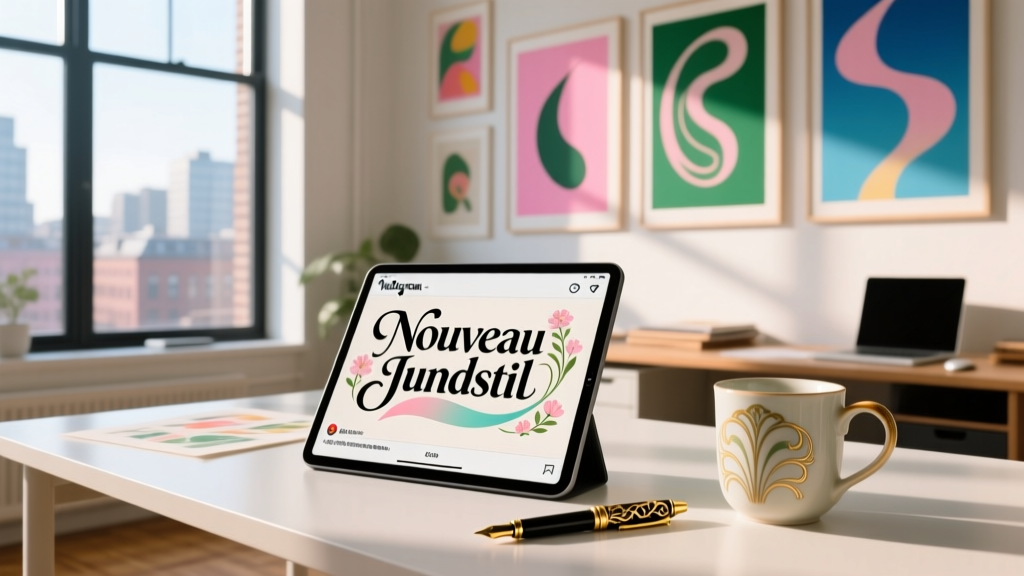
When building a personal brand in the digital art space, standing out requires more than just striking visuals; it demands a cohesive identity that bridges the gap between historical art movements and modern internet culture. Enter Nouveau Jugendstil, the pseudonymous digital artist and virtual aesthetic curator who has taken Instagram by storm. By fusing the organic, whiplash curves of late 19th-century Art Nouveau with the geometric precision of German Jugendstil and modern 3D rendering, Nouveau Jugendstil has created a highly recognizable online persona. For digital artists, illustrators, and design enthusiasts, analyzing the Nouveau Jugendstil Instagram bio and overall branding strategy offers a masterclass in niche positioning. In this comparison and alternatives analysis, we will break down how this digital influencer crafts their identity, compare their approach to other dominant aesthetic niches, and extract actionable personal branding takeaways for your own social media profiles.
Quick Facts: The Nouveau Jugendstil Persona
| Attribute | Details |
|---|---|
| Moniker | Nouveau Jugendstil |
| Identity | Pseudonymous Digital Artist / Virtual Influencer |
| Base | Berlin, Germany / Digital |
| Known For | Neo-Art Nouveau digital illustrations, typography, aesthetic curation |
| Primary Platform | Instagram (@nouveau.jugendstil) |
| Niche | Digital Art, Design History, Aesthetic Branding |
The Nouveau Jugendstil Social Media Playbook
The success of the Nouveau Jugendstil brand lies in its meticulous attention to detail, extending far beyond the artwork itself and into the very architecture of the Instagram profile. The bio is a masterclass in minimalist, symbol-driven communication. Rather than using generic descriptors like 'Digital Artist' or 'Illustrator', the profile leverages the Name Field for SEO, utilizing terms like 'Neo-Art Nouveau | 3D Design History'. This ensures the profile appears in search results for both art history students and modern design enthusiasts.
The bio statement itself is concise and evocative: 'Where organic lines meet digital grids 🌿⚙️'. This single sentence perfectly encapsulates the tension between the natural motifs of Alphonse Mucha and the rigid, mathematical precision of modern digital rendering. Furthermore, the use of specific Unicode symbols—such as the floral and gear emojis—acts as a visual shorthand for the brand's core philosophy. The link-in-bio strategy avoids cluttered directories, opting instead for a custom-coded, Brutalist-style landing page that contrasts sharply with the elegant Instagram grid, creating a memorable user experience that encourages deeper engagement.
Comparison: Aesthetic Alternatives in the Digital Art Space
While the Nouveau Jugendstil approach is highly effective for artists focusing on elegance, history, and structural design, it is not the only viable path for digital creatives. To understand the broader landscape of aesthetic personal branding, we must compare this strategy to three major alternative niches that dominate visual social media platforms.
Alternative 1: The Dark Academia Curator
Where Nouveau Jugendstil focuses on the intersection of nature and machinery, the Dark Academia aesthetic leans heavily into classical literature, gothic architecture, and moody, low-light photography. Creators in this space often use serif-heavy typography, Latin quotes in their bios, and a muted, sepia-toned color palette. While Nouveau Jugendstil's bio is forward-looking and design-centric, Dark Academia bios are nostalgic and lifestyle-centric. If your art focuses on storytelling, mood, and classical humanities rather than structural design, adopting a Dark Academia branding strategy may yield higher engagement from a community focused on literature and romanticism.
Alternative 2: Y2K Cyberpunk & Glitch Art
The polar opposite of the deliberate, historical pacing of Nouveau Jugendstil is the Y2K Cyberpunk aesthetic. This alternative relies on high-velocity visual stimulation, neon color palettes, glitch effects, and internet-native irony. Bios in this niche often feature ASCII art, chaotic spacing, and links to decentralized web3 portfolios or Discord servers. While Nouveau Jugendstil builds authority through historical reverence and polished elegance, Cyberpunk branding builds subcultural capital through rebellion, technical experimentation, and anti-design principles. This alternative is ideal for 3D motion designers, creative coders, and digital fashion artists who want to attract a younger, tech-forward demographic.
Alternative 3: Swiss Minimalism & Corporate Grid
For digital artists who work primarily in UI/UX, brand identity, or corporate illustration, the Swiss Minimalist approach serves as a powerful alternative. Rooted in the International Typographic Style, this branding strategy utilizes stark white space, Helvetica or Grotesque typefaces, and highly structured, grid-based Instagram layouts. The bio is typically devoid of emojis, relying on stark, factual statements and direct links to a Behance or personal portfolio. While Nouveau Jugendstil invites the viewer into a romantic, ornate world, Swiss Minimalism projects absolute professional reliability and clinical precision.
Visual Hallmarks and Grid Curation
The visual identity of Nouveau Jugendstil is defined by its 'whiplash' curves—a hallmark of the original Art Nouveau movement—updated for the digital age. The Instagram grid is curated in a checkerboard pattern, alternating between highly detailed, full-color 3D renders and stark, black-and-white typographic studies. This alternating rhythm prevents visual fatigue and keeps the audience engaged as they scroll. The artist frequently uses carousel posts to deconstruct their design process, showing the historical references (such as the works of Charles Rennie Mackintosh or Henry van de Velde) alongside their modern digital interpretations. This educational approach positions the account not just as a portfolio, but as a valuable resource for design history, significantly boosting save and share metrics.
Personal Branding Takeaways for Digital Creatives
Analyzing the Nouveau Jugendstil persona and its alternatives provides several actionable lessons for anyone looking to refine their Instagram bio and overall personal brand on lovemebio.com.
- Anchor Your Niche in History: Don't just call yourself a 'digital artist'. Anchor your practice in a specific historical or technical lineage. Using terms like 'Neo-Art Nouveau', 'Brutalist Typographer', or 'Y2K Motion Designer' in your Name Field instantly communicates your expertise and attracts a targeted audience.
- Use Unicode Symbols Intentionally: Emojis should not be an afterthought. Select two or three symbols that represent the core tension or theme of your work (e.g., 🌿⚙️ for organic vs. digital, or 🏛️💻 for classical vs. modern) and use them consistently across your bio and story highlights.
- Contrast Your Bio with Your Landing Page: If your Instagram grid is highly ornate and detailed, consider making your link-in-bio landing page stark and minimalist. This deliberate contrast creates a memorable user experience and showcases your versatility as a designer.
- Educate to Engage: Like the Nouveau Jugendstil carousel posts, use your platform to teach. Breaking down the history behind your aesthetic choices encourages users to save your posts, signaling to the algorithm that your content is highly valuable.
Design History Sources and Inspiration
To build a credible aesthetic brand, it is essential to understand the roots of the movements you are referencing. The Nouveau Jugendstil persona draws heavily from verified historical archives. For creators looking to deepen their knowledge and enrich their personal branding storytelling, the following resources are invaluable:
- The Victoria and Albert Museum (V&A): Their extensive digital archive on Art Nouveau provides deep insights into the organic motifs and structural philosophies that define the movement.
- The Metropolitan Museum of Art: The Met's Heilbrunn Timeline of Art History offers a comprehensive overview of Jugendstil and the Vienna Secession, crucial for understanding the geometric transition that influences modern digital design.
By studying these foundational movements, digital artists can craft bios and visual identities that are not just aesthetically pleasing, but deeply rooted in design history, much like the Nouveau Jugendstil persona itself.