When analyzing the historical foundations of personal branding, few legacies are as robust and enduring as that of Mathematicians Archimedes. Long before the concept of a digital footprint or a curated Instagram grid, this ancient Greek scholar engineered a reputation that has survived for over two millennia. By examining his historical 'bio,' his visual identifiers, and how his legacy is leveraged across modern STEM platforms, we can extract profound lessons for personal branding. This critical review breaks down the pros, cons, and timeless strategies of the ultimate ancient influencer, proving that true authority transcends eras.
Quick Facts: The Original STEM Influencer
| Attribute | Details |
|---|---|
| Full Name | Archimedes of Syracuse |
| Born | c. 287 BC, Syracuse, Sicily |
| Nationality | Greek (Magna Graecia) |
| Known For | Archimedes' Principle, Law of the Lever, Pi Approximation |
| Signature 'Hook' | 'Eureka!' (I have found it) |
| Modern Social Handles | Ubiquitous across STEM meme pages, math educator accounts, and science history forums |
The 'Bio' That Lasted Millennia: Tombstone Branding
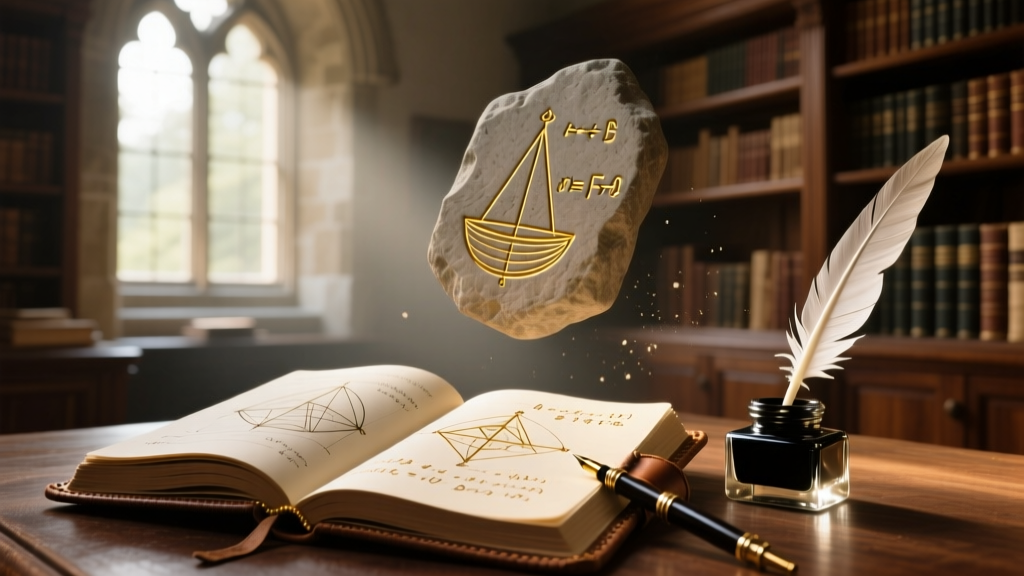
In the modern era, we obsess over our 'link in bio' and highlight covers. Mathematicians Archimedes took a much longer view: his ultimate bio was carved into his tombstone. According to the Roman orator Cicero, who discovered the overgrown tomb centuries later, Archimedes specifically requested that his grave be marked with a sphere inscribed within a cylinder. This was not a random aesthetic choice; it was a visual representation of his greatest mathematical proof, demonstrating that the volume and surface area of a sphere are exactly two-thirds that of the circumscribing cylinder.
From a branding perspective, this is the ultimate exercise in minimalist personal identity. Archimedes did not want a lengthy epitaph detailing his life story or listing his titles. He wanted a single, undeniable geometric truth that would instantly communicate his genius to anyone educated enough to understand it. It was an exclusive, high-authority 'bio' that filtered out the uninitiated while commanding instant respect from peers. For modern professionals, this highlights the power of letting your core work speak for itself, stripping away the fluff to present a singular, defining achievement.
Mathematicians Archimedes in Modern Social Media
While he lived over 2,200 years ago, the digital footprint of Mathematicians Archimedes is massive. Today, his brand is heavily utilized across social media by STEM educators, science communicators, and history enthusiasts. On platforms like Instagram, TikTok, and X (formerly Twitter), Archimedes serves as the foundational archetype for the 'eccentric genius' persona.
His most famous social media asset is the 'Eureka' moment. Modern science influencers frequently use the story of Archimedes running naked through the streets of Syracuse after discovering the principle of water displacement as the ultimate viral hook. It is a masterclass in storytelling: it combines high-level intellectual breakthrough with deeply relatable, humanizing, and slightly scandalous behavior. When modern educators want to explain buoyancy or density, they almost universally invoke the bathtub story because it guarantees audience retention.
Furthermore, the 'Archimedes Death Ray'—the legend that he used mirrors to focus sunlight and burn Roman ships—remains a staple of internet engagement. Even though shows like MythBusters have thoroughly debunked it, the myth continues to drive massive traffic to history and engineering pages. It functions as ancient clickbait, proving that a sensationalized narrative, even if historically dubious, can keep a personal brand relevant in the public consciousness for centuries.
Pros and Cons of the Archimedes Personal Brand
Evaluating the legacy of Mathematicians Archimedes through a critical branding lens reveals distinct strengths and weaknesses that modern creators can learn from.
The Pros: Authority and Timeless Hooks
- Unquestionable Authority: Archimedes is universally recognized as the father of mathematics and engineering. Aligning your content or brand with his quotes or methods instantly borrows this authority.
- The Power of a Catchphrase: 'Eureka' is arguably the most successful personal branding catchphrase in human history. It transcends language barriers and instantly communicates the joy of discovery.
- Visual Minimalism: The sphere and cylinder motif is an early example of logo design. It is simple, reproducible, and deeply meaningful, much like the best modern brand logos.
The Cons: Myth Overshadowing Reality
- The 'Mad Scientist' Trope: The focus on his eccentricities (running naked, building death rays) often undermines the rigorous, disciplined reality of his actual mathematical proofs. His brand is sometimes reduced to a caricature.
- Lack of Humanizing 'Behind-the-Scenes' Content: Unlike modern influencers who share their daily routines and struggles, the historical record of Archimedes lacks personal vulnerability. We know his mind, but very little of his heart or daily life, making him feel more like a statue than a relatable human.
- High Barrier to Entry: His actual 'content' (treatises like 'On Conoids and Spheroids') is incredibly dense. While his brand is famous, his actual work is inaccessible to the general public without heavy academic translation.
Major Mathematical Discoveries & 'Content Strategy'
If we view his surviving texts as his 'content portfolio,' Archimedes was a master of long-form, high-value publishing. He did not write for the masses; he wrote for the elite intellectual circle of his time, specifically corresponding with scholars like Eratosthenes and Dositheus at the Library of Alexandria.
- The Method of Mechanical Theorems: Archimedes anticipated integral calculus by nearly two millennia. He used mechanical analogies (levers and weights) to solve complex geometric problems, showing a brilliant ability to translate abstract concepts into tangible, understandable frameworks.
- The Sand Reckoner: In what might be the ancient equivalent of a viral 'flex,' Archimedes created a new numbering system to calculate the number of grains of sand that could fit in the universe. This was a direct challenge to the prevailing belief that some numbers were too large to comprehend, positioning him as a thought leader who pushed the boundaries of human imagination.
- Approximation of Pi: By inscribing and circumscribing 96-sided polygons around a circle, he calculated Pi to a remarkable degree of accuracy. This demonstrated his brand's core promise: relentless, meticulous precision.
Personal Branding Takeaways for Your Own Bio
What can a modern professional, creator, or student learn from the branding of Mathematicians Archimedes? Here are three actionable takeaways to apply to your own social media profiles and personal brand:
1. Define Your 'Sphere and Cylinder'
Archimedes boiled his life's work down to one visual concept. Look at your current Instagram or LinkedIn bio. Is it cluttered with buzzwords and outdated titles? Identify the single most important value you provide or the core problem you solve, and find a minimalist way to represent it. Sometimes, a clean, highly specific statement outperforms a laundry list of accomplishments.
2. Cultivate a Signature Hook
You don't need to run through the streets shouting, but you do need a memorable angle. Whether it is a unique way you explain complex topics, a recurring visual theme in your posts, or a specific catchphrase you use to open your videos, a signature hook makes your content instantly recognizable in a crowded feed.
3. Balance the 'Eureka' with the Grind
The Archimedes myth focuses entirely on the 'Eureka' moment, but modern audiences crave authenticity. While viral hooks and sensational stories (like the death ray) drive top-of-funnel awareness, you must back it up with the 'grind.' Show your audience the 96-sided polygons of your life—the messy drafts, the failed experiments, and the rigorous discipline required to achieve your breakthroughs. This builds trust and relatability that a polished, mythologized persona cannot.