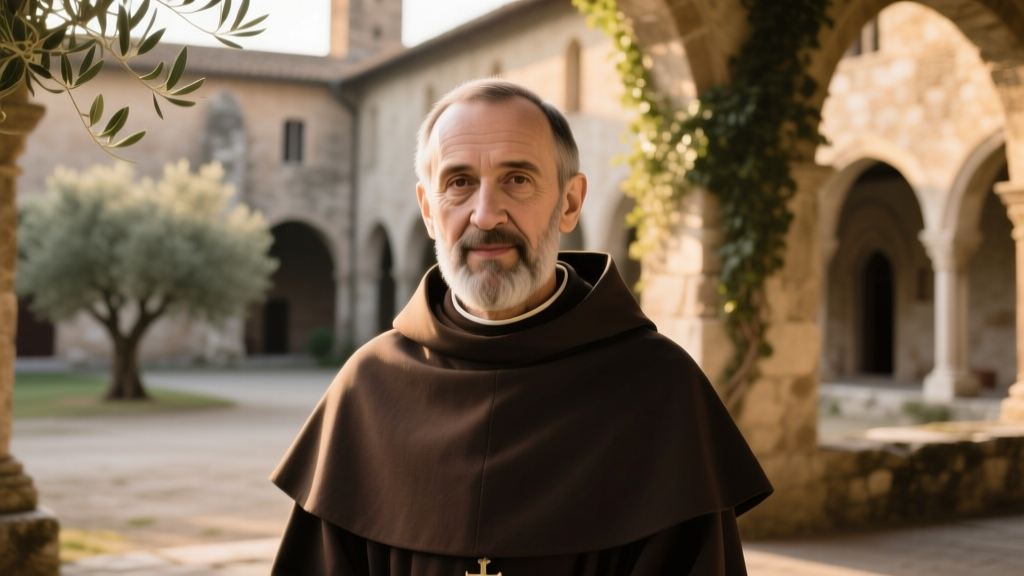
When building a personal brand, we usually look to modern influencers, tech CEOs, or pop stars. But what can we learn from a man who died decades before the internet was even invented? Enter Padre Pio. Born Francesco Forgione, this Italian Capuchin friar became one of the most venerated Catholic figures of the 20th century. Though he never took a selfie, posted a story, or tweeted, his digital footprint today is absolutely massive. By analyzing the social media ecosystem surrounding Padre Pio, we uncover masterclasses in authenticity, mission-driven branding, and community building. Here is your beginner-friendly guide to the digital legacy of a saint and how to apply these timeless bio lessons to your own profile.
Quick Facts: The Man Behind the Miracles
| Attribute | Details |
|---|---|
| Full Name | Francesco Forgione (Saint Pio of Pietrelcina) |
| Born | May 25, 1887, in Pietrelcina, Italy |
| Died | September 23, 1968, in San Giovanni Rotondo |
| Nationality | Italian |
| Known For | Stigmata, healing, spiritual direction, founding a major hospital |
| Digital Presence | Managed globally by the Capuchin Order, Vatican archives, and millions of devotee fan pages |
| Signature Mantra | 'Pray, hope, and don't worry.' |
Who Was Padre Pio? A Beginner's Guide
To understand the digital branding of Padre Pio, you first need to understand his historical 'brand identity.' Francesco Forgione joined the Capuchin Franciscans at a young age, taking the name Pio. In 1918, he reportedly received the stigmata—the physical wounds of Christ's crucifixion—which made him an instant, albeit controversial, global figure. For decades, he faced intense scrutiny and even temporary bans from public ministry by Vatican authorities who were cautious about his growing cult of following. However, his humility, obedience, and dedication to hearing confessions for up to 15 hours a day only fueled his reputation as a living saint.
Beyond his spiritual mysticism, Padre Pio was a visionary builder. In 1956, he opened the Casa Sollievo della Sofferenza (House for the Relief of Suffering), a state-of-the-art hospital in San Giovanni Rotondo that remains one of Italy's premier medical research facilities today. Canonized by Pope John Paul II in 2002, his legacy bridges deep spiritual mysticism with tangible, real-world humanitarian action. This duality is exactly what makes his modern digital presence so compelling and highly shareable across platforms like Instagram, TikTok, and YouTube.
The Social Media Ecosystem of a Modern Saint
Because Padre Pio passed away in 1968, he does not have an official, personal Instagram account. Instead, his 'social media presence' is a decentralized, user-generated ecosystem comprising official Capuchin channels, Vatican media, and thousands of independent Catholic devotion pages. Searching the hashtag #PadrePio on Instagram yields millions of posts, while TikTok videos featuring his vintage photographs and quotes routinely garner millions of views.
The aesthetic of these pages is remarkably consistent, proving the power of visual branding. Content creators almost exclusively use high-contrast, black-and-white, or sepia-toned archival photography. The recurring visual motifs—the brown Franciscan habit, the rosary, and his iconic fingerless gloves (worn to cover the bleeding stigmata on his hands)—serve as instant visual anchors. In a social media feed cluttered with hyper-edited, neon-colored modern content, the gritty, historical authenticity of Padre Pio's imagery stops the scroll. It signals reverence, history, and spiritual weight before the user even reads the caption.
Engagement on these pages operates differently than standard influencer accounts. Instead of asking followers to 'link in bio' for merchandise, the call-to-action (CTA) is almost always a request for prayer intentions. Comment sections become massive, digital prayer groups where users support one another, creating an incredibly high-retention community loop driven by shared vulnerability and faith.
Decoding the Signature Bio Strategy
If you look at the Instagram bios of the most successful Catholic pages dedicated to this saint, you will notice a distinct formula. They lean heavily on his most famous quote: 'Pray, hope, and don't worry. Worry is useless. God is merciful and will hear your prayer.' This quote is the ultimate minimalist bio. It is concise, emotionally resonant, and immediately communicates the core value proposition of the page: spiritual comfort.
Furthermore, these bios utilize emojis not as playful decorations, but as structural semiotics. The cross (✝️), the dove (🕊️), and the folded hands (🙏) are used to break up text and guide the eye, a crucial tactic for formatting a clean, readable Instagram bio. The location tag is often pinned to 'San Giovanni Rotondo' or 'Heaven,' grounding the digital page in a physical or spiritual geography that adds legitimacy to the account's mission.
Personal Branding Takeaways for Your Own Profile
You do not need to be a religious figure to learn from the digital legacy of Padre Pio. Here are four beginner-friendly personal branding takeaways you can apply to your own social media bios and profiles today:
1. Anchor Your Bio in a Signature Mantra
Padre Pio's 'Pray, hope, and don't worry' is a masterclass in personal philosophy. What is your professional or personal mantra? If you are a designer, it might be 'Create, iterate, and simplify.' If you are a fitness coach, it might be 'Move daily, eat well, stay consistent.' Distill your complex mission into a five-to-seven-word mantra and place it at the very top of your bio. It tells visitors exactly what you stand for in seconds.
2. Leverage Visual Authenticity Over Polish
The most viral images of Padre Pio are not colorized or artificially enhanced; they are raw, vintage, and authentic. When curating your profile grid or choosing your profile picture, resist the urge to over-filter. Audiences today crave authenticity. A slightly grainy, candid photo that captures you in your element (your 'fingerless gloves' equivalent) will often build more trust than a sterile, studio-lit headshot.
3. Build Community, Not Just an Audience
The comment sections on Padre Pio devotion pages thrive because they serve a communal need. Look at your own bio's Call to Action. Instead of just saying 'Subscribe to my newsletter,' try framing it around community: 'Join 5,000+ creators sharing weekly ideas' or 'Drop your biggest challenge in the comments below.' Turn your profile into a gathering space rather than a broadcast tower.
4. Align Your Brand with a Tangible Mission
Padre Pio was known for miracles, but he also built a massive, world-class hospital. His mysticism was backed by tangible, real-world infrastructure. Your personal brand should have a similar duality. If your bio claims you are a 'thought leader' or 'visionary,' ensure your link-in-bio points to a tangible project, portfolio, or charity initiative that proves your claims. A strong bio makes a promise; your linked content must deliver the proof.
Sources and Further Reading
- Vatican News: The Centenary of Padre Pio's Stigmata - Historical context and Vatican recognition.
- Opera Padre Pio (Casa Sollievo della Sofferenza) - Official archives and hospital history.
- The Holy See: Biography of Saint Pio of Pietrelcina - Official biographical data and canonization records.