
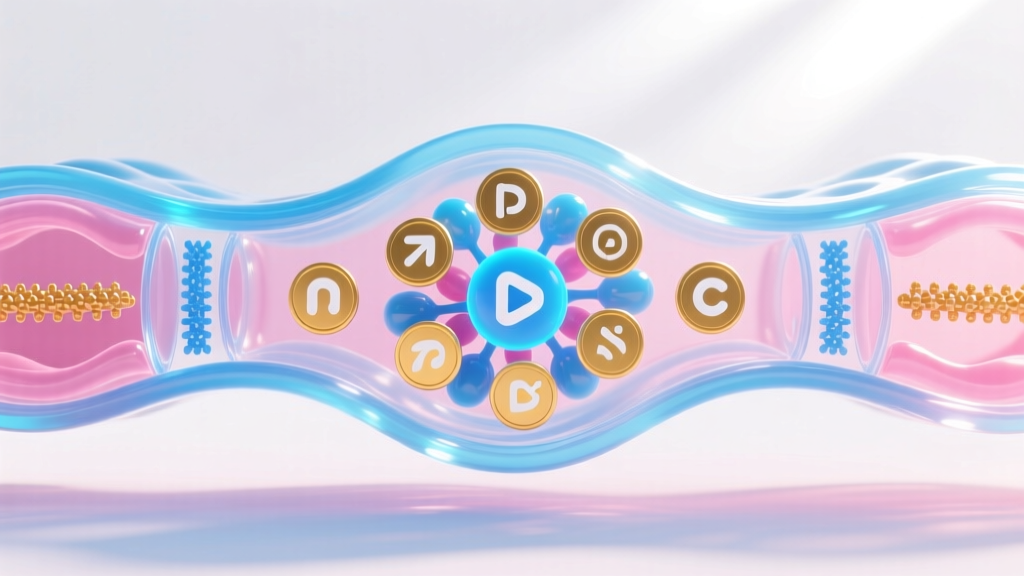
When building a personal brand, we often look to human influencers, actors, and entrepreneurs for inspiration. But what if the ultimate masterclass in identity, boundaries, and audience curation belongs to a microscopic icon? Enter Phospholipid Bilayer, the undisputed celebrity of cellular biology and the ultimate VIP of the microscopic world. In this unique case study, we explore how the structural 'bio' of the Phospholipid Bilayer offers profound lessons for digital personal branding. From its iconic Fluid Mosaic Model rebrand to its mastery of selective permeability, biology's biggest entity teaches us exactly how to protect our energy while engaging with the right audience. Let's dissect this legendary profile and see what science's most famous membrane can teach us about crafting the perfect social media presence.
| Attribute | Details |
|---|---|
| Full Name | Phospholipid Bilayer |
| Born | ~3.8 Billion Years Ago (Origin of Cellular Life) |
| Nationality | Universal (Present in All Living Organisms) |
| Known For | Cellular compartmentalization, selective permeability, the Fluid Mosaic Model |
| Social Media Niche | Science Communication, Biology Education, Micro-Aesthetics |
| Proxy Handles | @KhanAcademy, @CrashCourse, @NaturePortfolio |
Decoding the Bio: How Phospholipid Bilayer Curates Its Audience
In the realm of social media, your bio is the boundary between your public persona and your private life. The Phospholipid Bilayer is the ultimate master of this concept through a mechanism known as selective permeability. Structurally, this celebrity entity is composed of two layers of phospholipids. Each molecule features a hydrophilic (water-loving) head and two hydrophobic (water-fearing) tails. This dual nature is a brilliant metaphor for personal branding: the hydrophilic heads face outward, engaging with the aqueous environment of the public sphere, while the hydrophobic tails tuck inward, creating a protected, exclusive core that shields the cell's delicate internal machinery.
For anyone crafting an Instagram or TikTok bio, the lesson here is about intentionality. The Phospholipid Bilayer does not let every molecule pass through; it requires specific transport proteins to facilitate meaningful exchanges. Similarly, a strong personal brand uses its bio to attract a targeted audience while filtering out irrelevant noise. By clearly stating your niche, your boundaries, and your values in your digital bio, you emulate the selective permeability of the cell membrane. You invite in the nutrients of positive engagement and collaboration while blocking the toxins of burnout and misaligned opportunities.
Social Media Presence: The Science Communication Phenomenon
While the Phospholipid Bilayer itself does not hold a smartphone, its 'brand' dominates social media through the lens of science communicators, educators, and digital artists. On platforms like Instagram, YouTube, and TikTok, the visual representation of the cell membrane generates millions of impressions. Educational giants like Khan Academy and CrashCourse frequently use 3D animations of the bilayer to explain complex biological concepts, turning a microscopic structure into a highly recognizable visual asset.
The engagement metrics around this biological celebrity are staggering. Content featuring the 'Fluid Mosaic Model' aesthetic—characterized by vibrant, floating proteins embedded in a dynamic lipid sea—performs exceptionally well in the #ScienceTok and #BioArt communities. Digital artists use the bilayer's iridescent, fluid nature to create satisfying, looping animations that capture the attention of Gen Z and Millennial audiences. The branding genius here lies in its visual adaptability. The Phospholipid Bilayer is never static; it is constantly moving, shifting, and reorganizing. This dynamic visual identity keeps audiences engaged, proving that a personal brand must also remain visually fresh and adaptable to maintain follower retention in fast-paced social media algorithms.
Career Highlights: The 1972 Fluid Mosaic Rebrand
Every great celebrity experiences a pivotal rebrand that cements their legacy. For the Phospholipid Bilayer, this occurred in 1972 when S.J. Singer and Garth Nicolson proposed the Fluid Mosaic Model. Prior to this, the scientific community largely believed in the Davson-Danielli model, which depicted the membrane as a rigid, static sandwich of proteins and lipids. This older 'brand' was outdated and failed to explain the dynamic nature of cellular transport.
The 1972 rebrand was a masterstroke in scientific personal branding. Singer and Nicolson repositioned the Phospholipid Bilayer as a fluid, dynamic, and mosaic-like structure where proteins float freely like icebergs in a lipid sea. This pivot not only aligned with new empirical data but also made the concept infinitely more fascinating to study and teach. In the context of digital branding, this is a powerful case study in the necessity of the 'pivot.' When your current online persona or business model no longer serves your growth or aligns with new market realities, you must be willing to undergo a Fluid Mosaic rebrand. Shed the rigid structures that no longer work, embrace fluidity, and allow your unique skills (your integral proteins) to move freely and adapt to new environments.
Personal Branding Takeaways: Building Your Own Membrane
Analyzing the Phospholipid Bilayer as a case study in identity and structure provides actionable, high-level takeaways for your own social media profiles and personal branding efforts. Here is how you can apply the principles of biology's biggest VIP to your digital presence:
1. Establish Your Hydrophobic Core (Protect Your Energy)
Just as the hydrophobic tails create a barrier to unauthorized molecules, your social media boundaries are essential. Use Instagram's 'Close Friends' feature, limit your DMs, and curate your following list. A strong brand is not about letting everyone in; it is about protecting the core values and mental health that fuel your public-facing content.
2. Embed Your Integral Proteins (Showcase Your Niche Skills)
The bilayer is studded with glycoproteins and channel proteins that give the cell its unique functionality and identity. In your bio, these are your specific skills, achievements, and unique selling propositions. Don't just be a generic lipid; embed clear, actionable links and keywords that tell your audience exactly what specialized functions you perform.
3. Maintain Fluidity (Adapt to Algorithm Changes)
Cholesterol molecules in the membrane prevent it from becoming too rigid in cold temperatures or too fluid in hot ones. In personal branding, 'cholesterol' represents your adaptability. When social media algorithms shift from static images to short-form video, or from text to AI-driven content, your brand must maintain structural integrity while adapting your format. Stay fluid, experiment with new mediums, and never let your content strategy freeze into obsolescence.
Sources and Further Reading
The intersection of cellular biology and structural branding is grounded in decades of scientific research and modern educational communication. The following real-world sources provide the foundational data for the Fluid Mosaic Model and the ongoing digital education surrounding the Phospholipid Bilayer:
- National Center for Biotechnology Information (NCBI): The Fluid Mosaic Model and its historical impact on cellular biology.
- Khan Academy: Membranes and Transport (Educational frameworks and digital engagement strategies).
- Nature Education Scitable: Cell Membranes and the mechanics of selective permeability.
By treating the Phospholipid Bilayer not just as a biological necessity, but as a masterclass in structural branding, we unlock a completely new perspective on what it means to build a resilient, engaging, and protected personal brand in the digital age.