Long before the era of curated Instagram grids, optimized LinkedIn headlines, and viral TikTok aesthetics, personal branding was forged on the silver screen. For classic Hollywood actors, a brand was not just a logo or a catchy bio; it was an archetype, a visual uniform, and a promise to the audience. Few stars mastered this unwritten contract better than Randolph Scott. As the quintessential stoic cowboy of the mid-20th century, Scott built a legacy that continues to influence modern visual aesthetics, digital estate management, and the art of the 'silent' persona. At lovemebio.com, we believe that studying the architects of classic personal branding provides invaluable lessons for today's digital creators. Let us dive deep into the legacy, digital footprint, and timeless branding strategies of the ultimate gentleman of the plains.
Quick Facts: The Man Behind The Stetson
| Attribute | Details |
|---|---|
| Full Name | George Randolph Scott |
| Born | January 23, 1898 (Orange County, Virginia) |
| Died | March 2, 1987 (Beverly Hills, California) |
| Nationality | American |
| Known For | Classic Westerns, Budd Boetticher collaborations, Stoic Archetype |
| Social Media Handles | No official personal accounts (Deceased). Managed via Estate Archives, TCM curation, and global fan tribute pages on Instagram and X. |
The Architecture of the Stoic Archetype
To understand Randolph Scott's brand, one must understand the landscape of the Hollywood Western. While John Wayne projected an overwhelming, often boisterous bravado, and Clint Eastwood would later introduce the morally ambiguous, gritty 'Man with No Name,' Scott carved out a highly specific niche: the competent, weary, but deeply moral gentleman. His personal brand was built on restraint. He rarely raised his voice, his facial expressions were famously stoic, and his characters relied on quiet competence rather than flashy heroics.
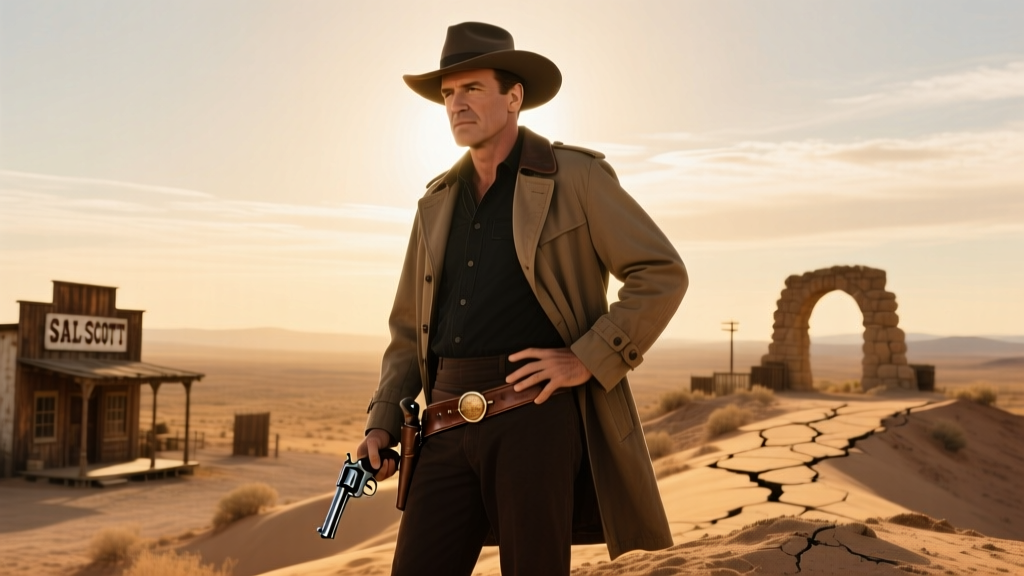
From a branding perspective, Scott's consistency was his superpower. Audiences knew exactly what they were getting when they bought a ticket to a Randolph Scott picture. He was the embodiment of reliability. In modern personal branding terms, Scott had mastered his 'brand voice' and 'visual identity.' He rarely deviated from his uniform—the dusty Stetson, the weathered denim, the upright posture. This extreme consistency created a powerful parasocial relationship with his audience, built entirely on trust and predictability.
Defining the Brand: A Curated Filmography
An actor's brand is inextricably linked to their portfolio. Scott's collaboration with director Budd Boetticher in the late 1950s (often referred to as the Ranown cycle) represents the pinnacle of his personal branding. These films stripped away the bloated tropes of the era, focusing tightly on Scott's weathered face and quiet intensity.
- The Tall T (1957): Cemented his brand as the reluctant but capable hero who values personal honor over financial gain.
- Decision at Sundown (1957): Showcased a darker, more obsessive side of his persona, proving that a 'stoic' brand can still harbor deep, complex emotional undercurrents.
- Buchanan Rides Alone (1958): Highlighted his wry, understated humor, adding a layer of approachability to his rugged exterior.
- Ride the High Country (1962): Directed by Sam Peckinpah, this film served as Scott's cinematic swan song. It was a masterclass in legacy branding, allowing Scott to play an aging lawman grappling with a changing world, effectively passing the torch while cementing his own mythic status.
The Digital Legacy of Randolph Scott: Social Media Presence
How do we analyze the social media presence of a star who passed away in 1987? We look at digital estate management, fan curation, and aesthetic trends. While Scott does not have a verified Instagram account posting daily stories, his digital footprint is remarkably vibrant, driven by classic film communities and modern aesthetic movements.
On platforms like Instagram and Pinterest, Randolph Scott is a central figure in the 'Westerncore' and classic Americana aesthetics. Fan-run tribute pages and classic cinema archives frequently post high-contrast, black-and-white stills from his Boetticher films. The engagement on these posts is highly specific: users are drawn to the authenticity, the rugged textures of his wardrobe, and the timeless cinematography.
Furthermore, institutions like Turner Classic Movies (TCM) and the American Film Institute (AFI) act as the digital stewards of his brand. When TCM promotes a Randolph Scott marathon on X (formerly Twitter) or Instagram, the engagement reflects a deep, nostalgic reverence. The 'bio' of his digital legacy is not written in a single Instagram caption, but in the collective curation of film historians and fans who use his image as shorthand for integrity, resilience, and classic American stoicism.
Personal Branding Takeaways For The Modern Creator
What can a modern entrepreneur, freelancer, or influencer learn from a Western star of the 1950s? The principles of Randolph Scott's brand translate surprisingly well to the digital age. Here are the core takeaways you can apply to your own social media bios and profiles:
1. The Power of the 'Silent' Bio
Scott's characters didn't need to give long monologues to prove their worth; their actions spoke for them. In an era of oversharing, there is immense power in a minimalist, confident bio. Instead of stuffing your Instagram or LinkedIn bio with buzzwords, try a 'stoic' approach. State exactly what you do, link to your best work, and let your portfolio do the heavy lifting. A bio that reads 'Architect. Building sustainable spaces.' often carries more authority than a paragraph of self-aggrandizing text.
2. Establish Your Visual Uniform
Randolph Scott's Stetson and weathered jacket were his armor and his identifier. On social media, your 'uniform' is your color palette, your photography style, and the recurring motifs in your content. Whether it is a specific filter, a consistent backdrop for your videos, or a signature accessory, visual consistency makes your content instantly recognizable in a crowded feed.
3. Niche Down to Your Archetype
Scott didn't try to play the romantic lead, the comedic sidekick, and the gritty anti-hero all at once. He owned the 'competent gentleman' archetype. Identify your core professional archetype (e.g., The Visionary, The Analytical Problem-Solver, The Empathetic Coach) and align your content, tone of voice, and bio to serve that specific identity. Trying to be everything to everyone dilutes your brand.
4. Plan Your Digital Legacy
Scott's brand survives because his body of work was curated and preserved. For modern creators, this means thinking about the evergreen value of your content. Are you creating disposable trends, or are you building a digital archive of knowledge and art that will retain value in five or ten years? Furthermore, it highlights the importance of digital estate planning—ensuring your family or team knows how to manage, archive, or memorialize your digital assets and domains when you step away.
Conclusion
Randolph Scott proved that true personal branding is not about being the loudest voice in the room; it is about being the most reliable. By mastering his archetype, maintaining strict visual consistency, and delivering on his brand promise film after film, he created a legacy that outlived the golden age of Hollywood. As you craft your own digital presence, remember the lessons of the stoic cowboy: sometimes, the most powerful statement you can make is a quiet, unwavering commitment to your craft.
Sources & Further Reading:
1. IMDb - Randolph Scott Biography & Filmography
2. American Film Institute (AFI) Catalog
3. Turner Classic Movies (TCM) Database