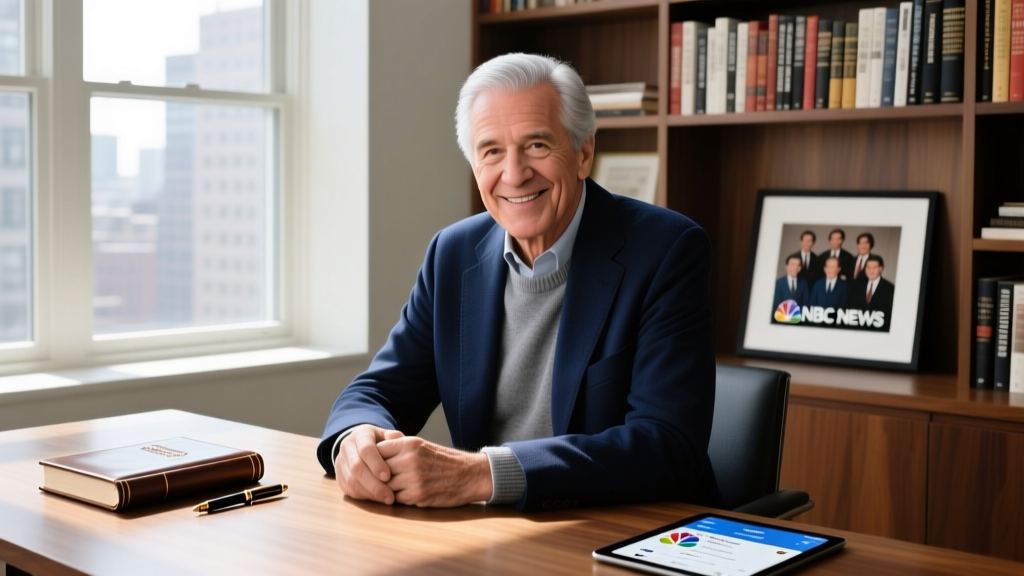
In an era where social media bios are cluttered with emojis, link trees, and desperate calls to action, the personal branding strategy of legendary journalist Tom Brokaw offers a masterclass in quiet authority. As a trend report on the current digital landscape reveals, audiences are experiencing severe fatigue from hyper-curated influencer culture. They are increasingly seeking out voices that possess institutional weight, historical perspective, and unshakeable credibility. Tom Brokaw, the former anchor of NBC Nightly News and author of the seminal book The Greatest Generation, represents the pinnacle of 'Legacy Branding.' By examining how Brokaw maintains his towering reputation in a noisy digital ecosystem, we can uncover profound lessons for professionals, authors, and thought leaders looking to craft a bio and personal brand that commands genuine respect.
The Current Landscape: Quiet Authority vs. Viral Noise
The current social media landscape is defined by a 'Trust Deficit.' According to ongoing data from the Pew Research Center and the Edelman Trust Barometer, public trust in traditional media and digital influencers has fluctuated wildly, with audiences growing skeptical of sensationalism and sponsored content. In this environment, a new trend is emerging: the premium placed on 'Quiet Authority.' Unlike digital natives who must constantly feed the algorithm with daily vlogs and trending audio, legacy figures are leveraging their decades of verified experience to stand out.
For professionals building a personal brand today, the takeaway is clear. You do not need to participate in every viral trend to remain relevant. In fact, stepping back from the noise and anchoring your digital presence in deep expertise, long-form thought leadership, and historical consistency is becoming a highly effective branding strategy. Brokaw’s digital footprint is not built on engagement bait; it is built on the unassailable foundation of a forty-year career in broadcast journalism.
Quick Facts: The Anchor of American Journalism
| Full Name | Thomas John Brokaw |
|---|---|
| Born | February 6, 1940 (Webster, South Dakota) |
| Nationality | American |
| Known For | Anchor of NBC Nightly News (1982–2004), Author, Peabody Award Winner |
| Primary Digital Channels | Institutional Archives (NBC News), Publisher Pages (Random House), Op-Eds |
| Brand Archetype | The Sage / The Historian |
Career Highlights and Defining Bibliography
To understand the weight of Brokaw's personal brand, one must look at the career highlights that serve as the ultimate 'bio' across the internet. His tenure at NBC News spanned over four decades, including serving as the White House correspondent during the Watergate scandal and anchoring the NBC Nightly News for 22 years. He is one of the few journalists to have interviewed every U.S. President from Richard Nixon to Barack Obama.
Beyond the broadcast desk, Brokaw successfully transitioned his brand into the literary world. His bibliography is a cornerstone of his digital identity:
- The Greatest Generation (1998): A cultural phenomenon that redefined how Americans view the World War II cohort, cementing Brokaw as a premier historical storyteller.
- Boom!: Voices of the Sixties (2007): An exploration of the cultural shifts of the 1960s.
- A Lucky Life Interrupted (2015): A deeply personal memoir detailing his battle with multiple myeloma, showcasing vulnerability and resilience.
- The Soul of America (2019): A reflective look at the nation's historical triumphs over division.
These works are not just books; they are brand pillars that are continuously referenced, quoted, and linked to across digital platforms, ensuring his SEO dominance and authoritative presence.
Analyzing Tom Brokaw's Digital and Social Media Presence
If you search for Tom Brokaw on Instagram or TikTok, you will not find a verified personal account filled with behind-the-scenes selfies or daily musings. This is not an oversight; it is a deliberate branding choice. In the current landscape, high-level executives, legacy journalists, and esteemed authors often practice 'Digital Restraint.'
Brokaw’s online presence is primarily amplified through third-party institutional channels. When he shares a perspective, it is often via a guest op-ed in The New York Times, a rare sit-down interview on a major network, or through curated posts by his publisher, Penguin Random House. This strategy relies heavily on Third-Party Endorsement. Instead of Brokaw telling the internet how important he is via a boastful Instagram bio, the internet tells the audience how important he is through institutional reverence.
Furthermore, his digital 'bio' across the web is remarkably consistent. Whether on a PBS documentary credits page, a military history forum, or a publisher's author page, the framing is always anchored in trust, integrity, and historical witness. He has successfully protected his brand equity by refusing to dilute it with the trivialities of daily social media posting. For the modern professional, this highlights a crucial lesson: your digital absence in certain spaces can be just as powerful as your presence in others.
Personal Branding Takeaways for Your Own Bio
How can you apply the 'Brokaw Method' to your own social media bios, LinkedIn profiles, and personal websites? Here are three actionable takeaways inspired by his legacy branding approach:
1. Lead with Credentials, Not Clout
In your LinkedIn summary or website 'About' page, avoid using buzzwords like 'guru,' 'ninja,' or 'obsessed.' Instead, adopt the Brokaw approach: state your tenure, your core areas of expertise, and your most significant milestones with quiet confidence. A bio that reads 'Investigative Journalist with 20 years covering global markets. Author of [Book Title].' carries infinitely more weight than a bio packed with emojis and hyperlinks.
2. The Power of the 'Implied' Bio
Brokaw’s brand is upheld by the institutions he is associated with. You can replicate this by ensuring your digital footprint is tied to reputable organizations, guest posts on established industry blogs, or speaking engagements at recognized conferences. Let your affiliations do the heavy lifting in your bio. Adding 'Contributing Analyst at [Major Firm]' or 'Board Member at [Respected Non-Profit]' instantly borrows authority from those entities.
3. Define Your Core Thesis
Tom Brokaw’s overarching brand thesis is 'American resilience and historical perspective.' Every book he writes and every interview he gives feeds back into this core identity. Audit your current social media bios. What is your core thesis? If you are a tech founder, is your thesis 'Democratizing AI for small business'? If you are a designer, is it 'Sustainable urban architecture'? Condense your thesis into a single, powerful sentence and make it the anchor of your Instagram, X, and LinkedIn bios.
Sources and Further Reading
- Penguin Random House Author Profile – For insights into consistent publisher bios and bibliography branding.
- NBC News Archives – For historical career milestones and institutional brand association.
- Pew Research Center – For ongoing data regarding public trust in media and the shift toward authoritative voices.
Ultimately, the digital landscape will continue to evolve, with new platforms rising and falling. However, the currency of trust remains unchanged. By studying legacy figures like Tom Brokaw, we learn that the most powerful personal brand is not the loudest one in the room, but the one that has earned the right to be heard.