The Current Landscape: The Return of Authority
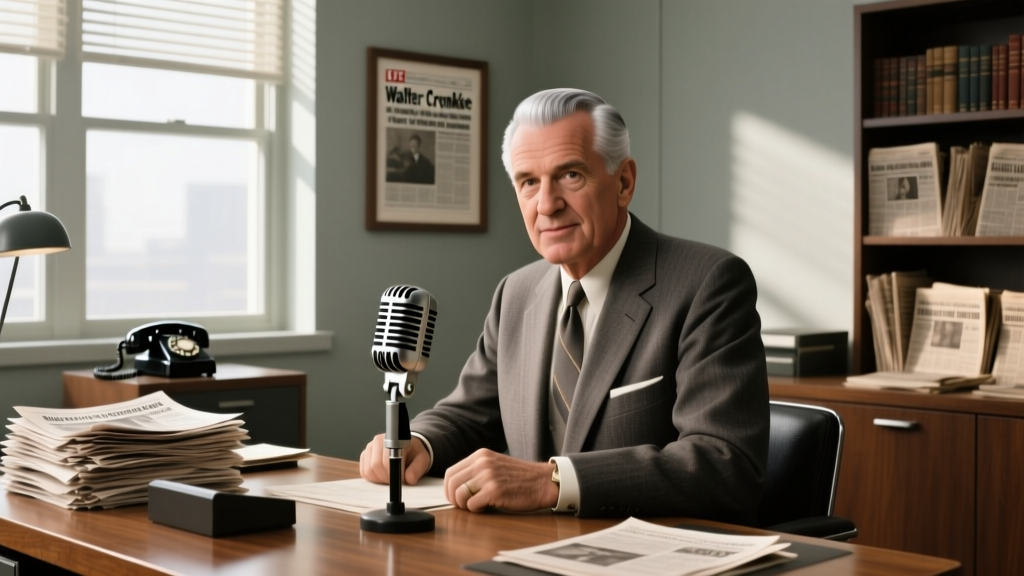
Long before algorithmic feeds and character limits, the concept of a personal brand was defined by broadcast presence. When analyzing the evolution of public trust, one name remains the undisputed gold standard for authority: Walter Cronkite. As the anchor of the CBS Evening News from 1962 to 1981, he did not have a Twitter bio or an Instagram grid, yet he cultivated a personal brand so powerful that it fundamentally altered how the public consumed information.
In the current social media landscape, a fascinating trend is emerging among journalists, creators, and thought leaders: the pivot from 'clout' to 'credentialism.' Audiences are experiencing severe fatigue from hyper-curated, emoji-laden influencer personas and unverified viral opinions. According to ongoing data from the Pew Research Center regarding public trust in media, consumers are actively seeking out verifiable expertise and unembellished authority. Modern digital creators are realizing that a bio built on hype is fragile, while a bio built on the 'Cronkite model' of objective authority is enduring. This trend report explores how the legacy of Walter Cronkite continues to dictate the modern landscape of digital trust, and how you can apply his timeless branding principles to your own social media profiles.
Quick Facts: The Man Behind the Anchor Desk
| Full Name | Walter Leland Cronkite Jr. |
|---|---|
| Born | November 4, 1916 (St. Joseph, Missouri) |
| Died | July 17, 2009 (New York City) |
| Nationality | American |
| Known For | CBS Evening News Anchor, Space Exploration Coverage, Vietnam War Reporting |
| Brand Moniker | 'The Most Trusted Man in America' |
| Digital Legacy | ASU Walter Cronkite School of Journalism, CBS News Archives |
Broadcast Legacy and the Original Personal Brand
Before the internet allowed individuals to curate their identities through highlight reels, a personal brand was forged through consistency, tone, and reliability. Cronkite’s 'bio' was essentially his nightly introduction and his unwavering on-air demeanor. He understood that in the business of news, the messenger is just as critical as the message. His branding was rooted in a unique selling proposition (USP) that is rare today: radical objectivity.
Consider his legendary sign-off: 'And that's the way it is.' In modern marketing terms, this was the ultimate brand anchor and Call to Action (CTA). It was not a plea for likes, nor was it a sensationalized cliffhanger. It was a definitive statement of closure and truth. By repeating this phrase nightly, Cronkite created a psychological trigger for his audience. When they heard those words, they felt informed, secure, and grounded. Modern creators often underestimate the power of a consistent sign-off or recurring content pillar, yet Cronkite proved that a simple, repeated phrase can cement a legacy of absolute trust.
Social Media Presence and the Digital Archive
Because Walter Cronkite passed away in 2009, he does not maintain personal, active social media accounts. However, analyzing his posthumous digital footprint provides a masterclass in institutional legacy branding. The 'Cronkite' name has transcended the individual to become a digital seal of approval, managed primarily by two major entities: Arizona State University and CBS News.
The Walter Cronkite School of Journalism and Mass Communication at ASU leverages his name as a powerful halo effect across platforms like X (formerly Twitter) and Instagram. By tagging @CronkiteSchool and utilizing the Cronkite moniker, the institution attracts top-tier journalism students and showcases award-winning student reporting. Their social media bios and content strategies rely heavily on the inherited trust of the Cronkite name, proving that a strong personal brand can be successfully licensed to elevate an entire organization.
Simultaneously, CBS News utilizes its vast archival footage of Cronkite on platforms like TikTok and YouTube Shorts. In an era where news outlets struggle to capture the attention of Gen Z on short-form video apps, CBS frequently deploys clips of Cronkite’s Vietnam War editorials or Apollo 11 moon landing coverage. The algorithmic engagement on these posts is remarkably high. Users stop scrolling not just for the historical event, but for the recognizable cadence and authority of Cronkite’s voice. His digital ghost serves as a vital trust-building mechanism for CBS, reminding modern audiences of the network's foundational credibility.
Personal Branding Takeaways for Modern Creators
How do you translate the gravitas of a 20th-century broadcast journalist into a modern Instagram, X, or LinkedIn bio? Here are three actionable branding takeaways inspired by the Cronkite standard:
- 1. Optimize for Trust, Not Just Engagement: The current trend of stuffing bios with buzzwords like 'Dreamer,' 'Hustler,' or 'Disruptor' often dilutes professional credibility. If you are a journalist, consultant, or industry expert, adopt the Cronkite approach: state your credentials clearly and without hyperbole. A bio that reads 'Senior Financial Correspondent | Covering Global Markets | 15 Years at Reuters' immediately establishes authority. Let your work prove your disruption; let your bio prove your competence.
- 2. Establish a Brand Anchor: Cronkite had 'And that's the way it is.' Modern creators need a consistent thematic anchor that audiences can rely on. This could be a recurring weekly newsletter format, a specific sign-off phrase on your videos, or a pinned post that clearly outlines your core values and editorial standards. Consistency in your messaging creates a psychological safety net for your followers.
- 3. Master Tonal Authority: Cronkite’s brand was visually and tonally consistent. He rarely deviated from his composed, authoritative posture, even when delivering devastating news. On social media, your visual branding (profile photography, color grading, typography) and your written tone should align with your professional niche. If your brand is built on serious industry analysis, ensure your profile picture and bio formatting reflect that professionalism. Avoid the temptation to chase fleeting, out-of-character viral trends that might fracture your audience's perception of your expertise.
Conclusion: The Enduring Blueprint
The digital landscape will continue to evolve, with new platforms and algorithms constantly shifting how content is distributed. However, the fundamental human desire for truth, clarity, and trusted guidance remains unchanged. Walter Cronkite did not need a link-in-bio tool or a verified checkmark to prove his worth; his brand was built on the relentless pursuit of factual integrity. By stripping away the digital noise and focusing on verifiable expertise, modern creators can build personal brands that do not just capture fleeting attention, but command lasting respect.
Sources
- Pew Research Center: Public Trust in Media and Journalism Metrics.
- Arizona State University: Walter Cronkite School of Journalism and Mass Communication Digital Archives.
- CBS News Archives: Historical Broadcast Data and Digital Short-Form Strategy.